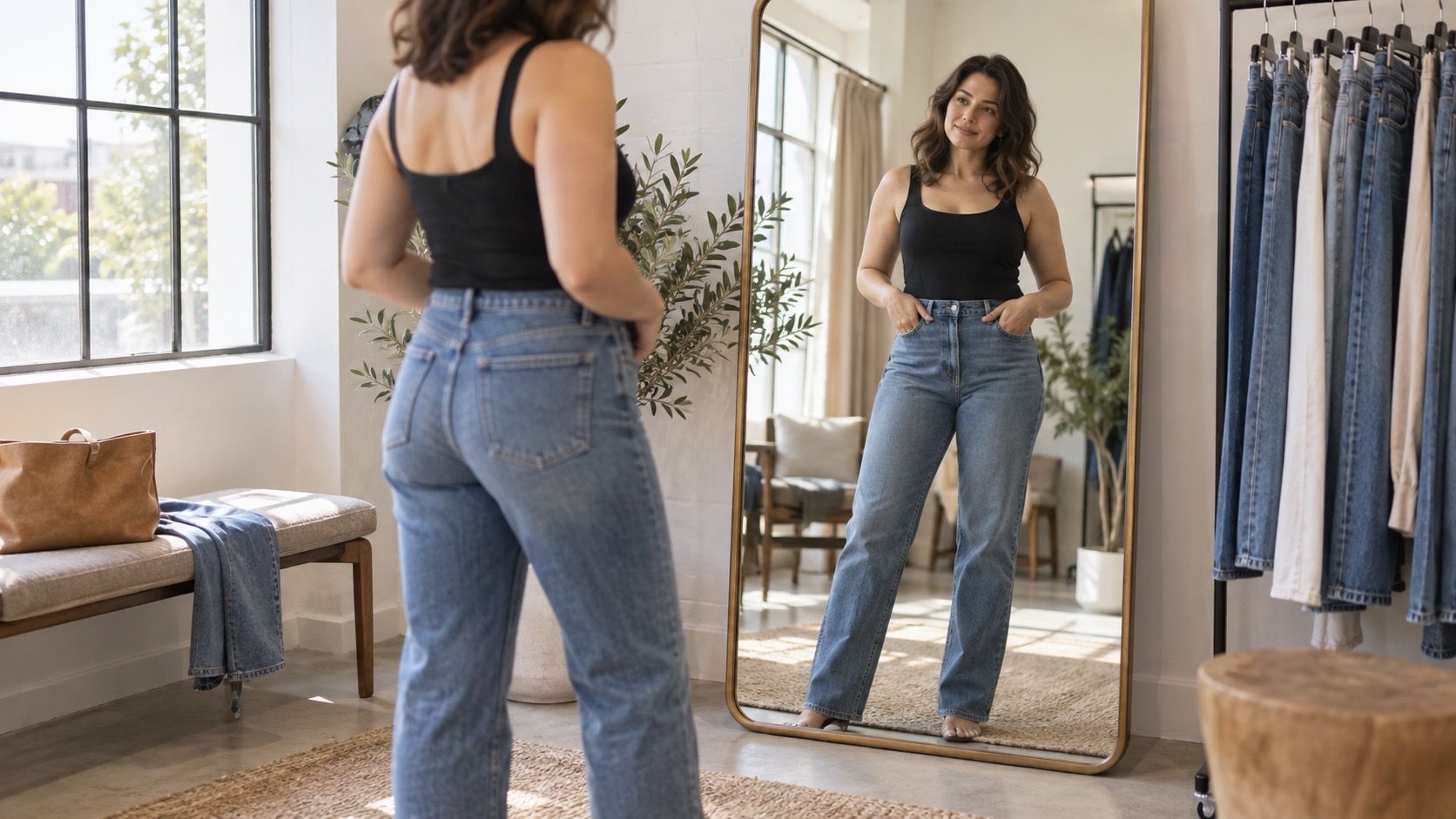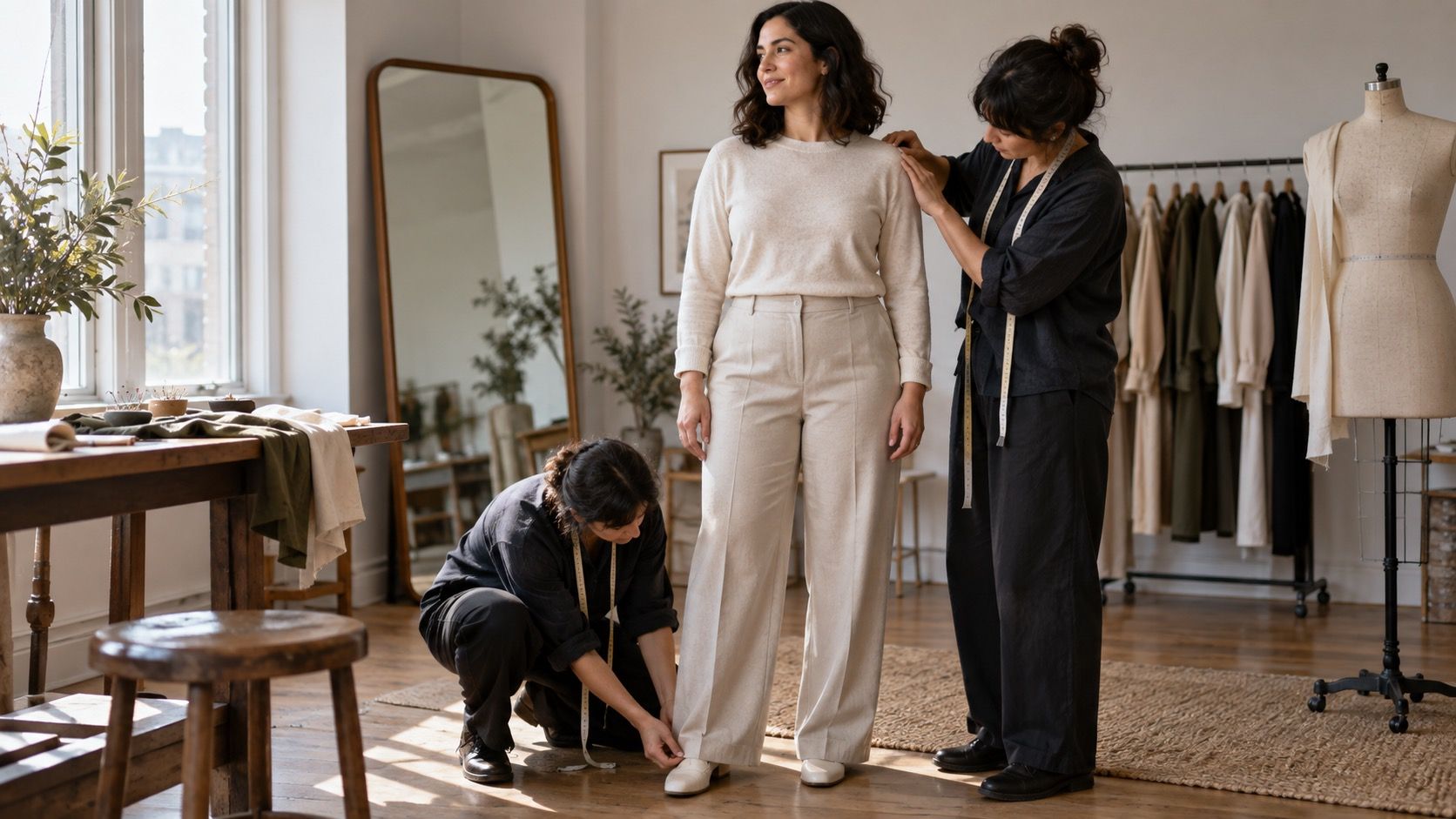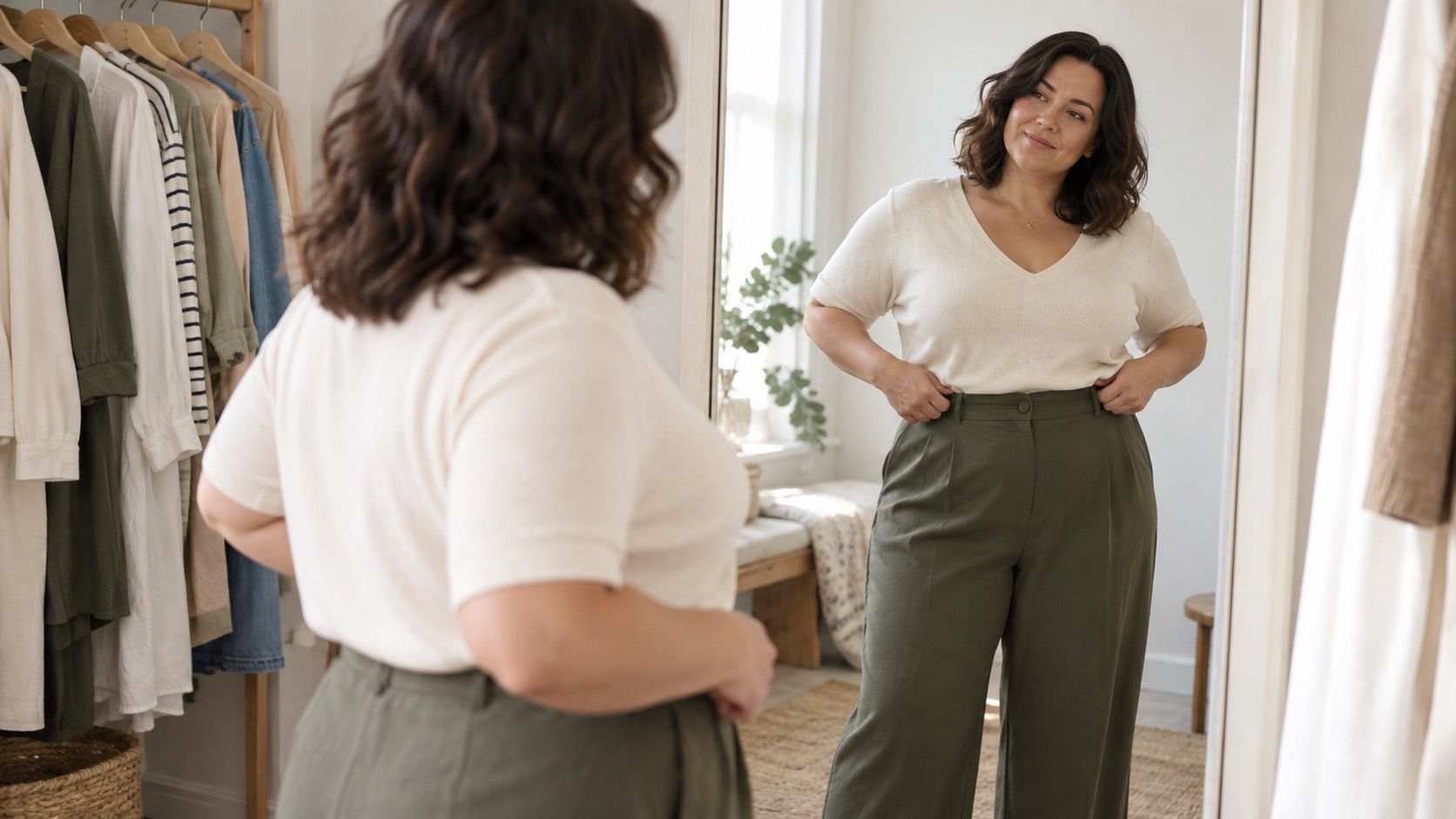
The apple body shape, sometimes called a round body shape, is often used for people whose bust and midsection carry more visual weight than their hips. It is a broad description, not a set of instructions. Some people with an apple shape have slim legs and full shoulders; some have a soft waist with narrow hips; some simply find that fitted shirts pull in the middle before they fit anywhere else. Clothing works better when you begin with comfort and movement, then decide which proportions you enjoy looking at.
Start with the places clothes feel difficult
A body-shape chart cannot tell you whether a waistband presses after lunch or whether a blouse rides up every time you raise your arms. Your current wardrobe can. Notice where you adjust a garment during the day: perhaps a fitted dress catches under the bust, trousers cut into the front waist when seated, or a cardigan falls open in a way you dislike. Those details point toward useful changes in rise, fabric, or ease. They say much more than whether your outline resembles an apple.
There is a small trap here. People are often told to hide the midsection, then end up buying overly loose tops that catch on the bust and hang like a tent. Extra fabric is not automatically more comfortable. A top with shoulder seams in the right place, enough room through the body, and a hem that does not cling can feel lighter than a size-up with no shape at all. Try sitting, reaching for a shelf, and walking before you decide a piece is easy to wear.
Find your comfortable waist point before choosing a rise
For apple shape clothing, waist placement matters more than forcing a visible waist. Some people prefer a high rise that sits above the softest part of the midsection. Others find that same rise rolls or feels crowded under the ribs and are happier with a mid rise. Put on several rises with the same top if you can. Look at the front, side, and back, then sit on a chair rather than standing at attention in front of the mirror.
The waistband should stay level and let you breathe. It should not have to be pulled up every few minutes, nor should it leave a deep line when you take it off. Curved waistbands, elastic inserts, and trousers with a little give can help, but stretchy fabric is not a cure by itself. Very thin stretch denim can cling and then slide down. A slightly firmer fabric with a well-cut waistband often feels more secure, even if its tag sounds less forgiving.
| Garment | Useful starting point | What to test |
|---|---|---|
| Trousers or jeans | Mid or high rise that stays level when seated | Check the front waist, back waist, and comfort after bending |
| Top | Enough ease at the bust with a neckline you like | Raise your arms; the hem should not jump up |
| Dress | Skimming fabric and a waist seam placed deliberately | Walk and sit to see whether the fabric catches at the middle |
| Jacket | Open or softly shaped layer with a good shoulder fit | Fasten it if intended; do not judge it only worn open |
Choose tops for the neckline and fabric, not for a camouflage job
Open necklines, V-necks, scoops, and soft collars are often suggested for an apple body shape because they create space around the neck and chest. That can be useful, especially when a high crew neck feels crowded, but it is not a command. A well-cut crew neck, a button shirt left open at the collar, or a square neck can work just as well. The important check is the shoulder line. If it droops or pulls, the rest of the top rarely settles.
Fabric has a louder voice than many styling lists admit. A very clingy jersey can show every fold and then make you spend the day tugging it down. A heavy, stiff knit can add more bulk than you expected. Look for fabric that moves without sticking: a soft woven shirt, a knit with some weight, or a smooth jersey with enough recovery. In a changing room, turn sideways under ordinary light. The question is not whether it makes you look smaller. It is whether you can forget about it once you leave.
Use vertical lines as an option, not a disguise
An open cardigan, a long shirt worn unbuttoned, or a jacket with a clean front can create a vertical line through the outfit. This is a simple visual tool, and it can be pleasant when you want a more elongated look. It does not require black clothing or a long, narrow silhouette. A short jacket can work if it ends where you like the break; a colourful overshirt can work if it does not catch tightly at the bust or middle.
Pay attention to hems. A top that ends at the widest point of the midsection may be fine if the fabric falls freely, but a tight elastic hem there can gather and ride up. Longer hems can be comfortable, yet an arbitrary tunic length may make proportions feel heavy to you. Try a half-tuck, a front tuck, or a straight untucked hem with the same trousers. The mirror usually settles the argument faster than a rule about where a top is supposed to end.
Dresses and bottoms should leave space for a real day
Empire seams, wrap styles, shifts, shirt dresses, and gently shaped knit dresses can all suit a round body shape, but the details are not interchangeable. An empire seam that sits too high can feel like it is cutting across the bust. A wrap dress may open at the neckline or pull at the tie. A shift needs enough ease at the bust and upper back, otherwise it turns restrictive despite looking loose. Take a few steps and sit down with your bag in your lap. That is the test most product photos avoid.
For bottoms, straight-leg, wide-leg, and tapered cuts are all worth trying. The leg shape should work with your shoes and your stride, not with a diagram. A cropped wide leg can feel balanced with a close-fitting top, while a longer straight leg may suit a tunic or blazer. Skirts with smooth waistbands and some room through the hip are often easier than tight pencil cuts, though a pencil skirt with a good stretch lining can be surprisingly comfortable. Keep the pair that lets you walk normally.
Leave the one-size-fits-all rules behind
Apple body shape advice often becomes a list of things to avoid: belts, fitted clothes, cropped jackets, horizontal stripes, anything light-coloured. That is exhausting and rarely useful. A belt can work when it is placed where you like it, or it can be left out. A fitted knit can be comfortable if it has the right amount of ease. A cropped jacket may look great over a dress even if someone else's chart says it should not.
Build from evidence you can feel. Keep track of the rises that stay put, the necklines that do not crowd you, and the fabrics you stop noticing after an hour. If your measurements change, let the clothes change with them; there is no need to defend a category. The best apple shape wardrobe is not one that makes the body disappear. It is one that makes getting dressed less of a negotiation and leaves you free to get on with the day.