The best jeans for body shape are usually the pair that stays comfortable after an hour, not the pair that produces the most flattering fitting-room pose. Denim has a talent for looking convincing while you stand still under bright lights. Sit down, walk to the next shop, eat lunch, and the truth shows up around the waistband and knees.
Begin at the waist and hips
Start with the place that has the least room for compromise: the waistband. If you have to hold your breath to close it, do not assume the fabric will become friendly. If you can slide two fingers in at the back before the jeans have been worn, they may be too loose by the third outing. Denim with elastane can relax noticeably, especially in a close skinny or slim cut.
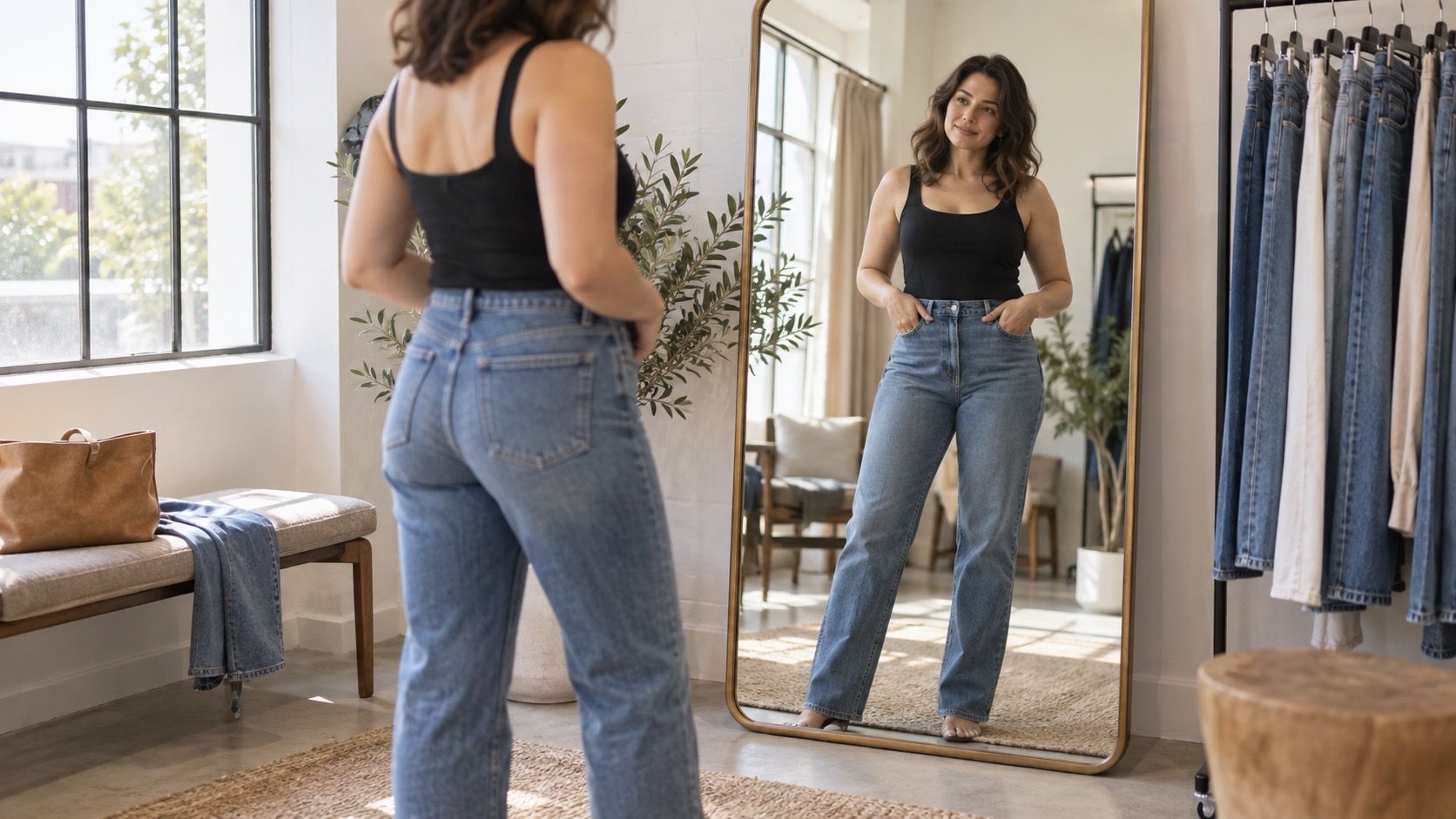
The hip fit matters before the leg shape does. Check the side seams in a mirror and then turn around. A smooth fit across the seat should not require the pockets to stretch sideways or the back yoke to pull into a sharp V. Pockets placed very high can change the visual balance, but they cannot fix a pair that is cutting in at the hip.
For many people, the annoying problem is a waist gap with an otherwise good hip fit. That is not a personal failure or proof you chose the wrong body type. It often means the brand's waist-to-hip ratio does not match yours. Try a curvy cut, a contoured waistband, or a size that fits the hips and plan a small waist alteration. A tailor can solve more than another three-hour shopping trip.
Know what the rise changes when you move
Rise is the distance from the crotch seam to the top of the waistband. A high rise can make a tucked shirt look neat and may feel stable through the lower back. It can also dig into the ribs when seated, especially if the front rise is short for your torso. Mid-rise is often the quiet workhorse, but the label is not standardized. One brand's mid-rise is another brand's high-rise after a wash.
Low-rise jeans sit lower on the hips and can feel less restrictive through the waist. They are not reserved for a particular figure. The useful check is whether the back stays covered when you bend to pick up a bag and whether the front does not pull upward when you walk. Bring the underwear and top you actually wear, because both alter the result.
When trying on jeans for body type, do a small squat and sit on the fitting-room bench. Notice where the pressure lands. A waistband that feels firm at the mirror may be perfectly fine; one that leaves a deep mark after two minutes is sending a clearer message. Comfort is not a detail you earn after looking good.
| Rise | Often useful when... | Test it this way |
|---|---|---|
| High rise | You want a secure waist or plan to tuck tops in | Sit fully, then check for rib pressure and front pulling |
| Mid rise | You want an easy everyday position | Bend forward and see if the back waistband stays put |
| Low rise | You prefer less coverage at the waist | Walk and squat to check coverage and crotch comfort |
Choose the leg shape after the top half works
A straight leg is a sensible first comparison because it follows the leg without gripping it. It works with trainers, loafers, and most boots, and it gives you a useful baseline for inseam length. If the straight leg looks dull, change the shoe or hem before dismissing it. A one-inch difference in hem break can turn a sloppy stack into a clean line.
Wide-leg jeans need room at the hip, but they do not need to start wide at the waist. A pair that is fitted through the upper hip and opens gradually often feels easier to wear than a dramatic shape that balloons from the side seam. Check the back view and take a few steps. Some wide legs swing nicely; others catch on the calf or drag on the floor.
Bootcut and flare shapes put volume below the knee. They can balance a fitted knit or a structured jacket, but the hem has to work with your usual shoes. Try them with the heel height you expect to wear. A bootcut that barely clears a platform sneaker will sweep the pavement in flats, and wet denim is nobody's idea of good value.
Skinny and slim jeans still have a place if you enjoy them. The issue is not whether they suit a body category; it is whether they pull across the thigh, twist at the knee, or feel like compression wear by mid-afternoon. If they do, size up or change the fabric blend rather than arguing with your legs.
Read the warning signs in the fitting room
There are a few problems worth spotting before you remove the tags. Horizontal lines across the front hip usually mean the jeans need more room there. A crotch that hangs low or folds into a heavy pouch may mean the rise is wrong, not that you need a smaller size. Seams twisting around the leg can come from construction, so grab another pair before judging the whole style.
Pay attention to the back yoke, the V-shaped seam above the pockets. A deeper yoke can follow a curved seat more closely; a shallow one may lie flatter. Neither is better in the abstract. The back should feel smooth when you sit, and the pocket placement should not leave you thinking about it all day.
Stretch deserves a little suspicion. A rigid or mostly cotton jean often takes a few wears to soften but keeps its shape better. A very stretchy pair can feel brilliant on day one and turn loose at the knees by dinner. Read the fiber label, then test a small squat. You are buying the version the jeans will become, not the version they are for six minutes.
Make inseam and hems part of the choice
Length changes the whole pair. Cropped straight jeans expose the ankle and work well with a low shoe, while a full-length pair may need a deliberate hem break over a boot. Do not accept a puddle of denim because the waist and hips are right. Hemming is normal, and it is often the difference between jeans that look accidental and jeans that look made for you.
Check the hem with two shoe types if your wardrobe changes through the week. A wide leg that is perfect with a chunky trainer may be too long with a sandal. If you wear one pair of jeans mostly with one boot, that is easy. If you need them to cover every possible shoe, you may end up with a compromise that works with none.
Raw hems can be shortened, but ask whether the original hem matters to you. A tailor can preserve it on many pairs, though the finish may sit slightly differently. This small conversation costs less than leaving jeans at the back of a drawer because they were always just a bit too long.
Shop like you are collecting evidence
Bring a close-fitting top, the shoes you use most, and enough patience to compare two sizes. Photograph the front, side, and back if the store allows it. Mirrors are unreliable, and a phone photo shows bunching and hem length with rude clarity. Walk outside the fitting room if you can; a few steps reveal a lot.
Keep notes on brands rather than chasing a universal jean fit guide women can supposedly share. One label may work for your rise and another for your thighs. Once you know that, shopping becomes less theatrical. You can start with a good chance of success and use body shape only as one clue among many.
The right jeans should leave you thinking about your day, not about whether the waistband is rolling, the hem is collecting dirt, or the pockets are pulling. That is a modest standard. It is also a very good one.