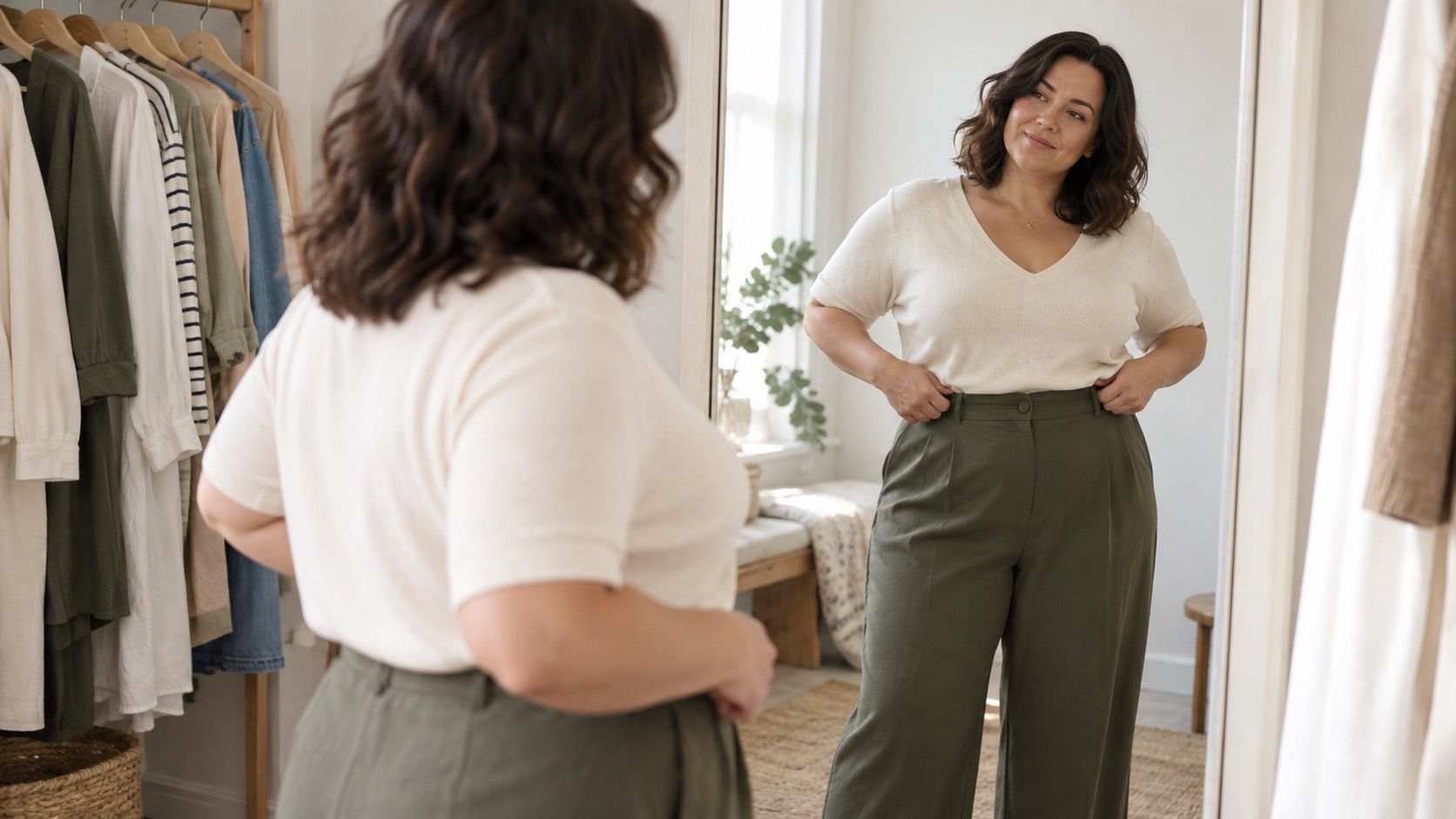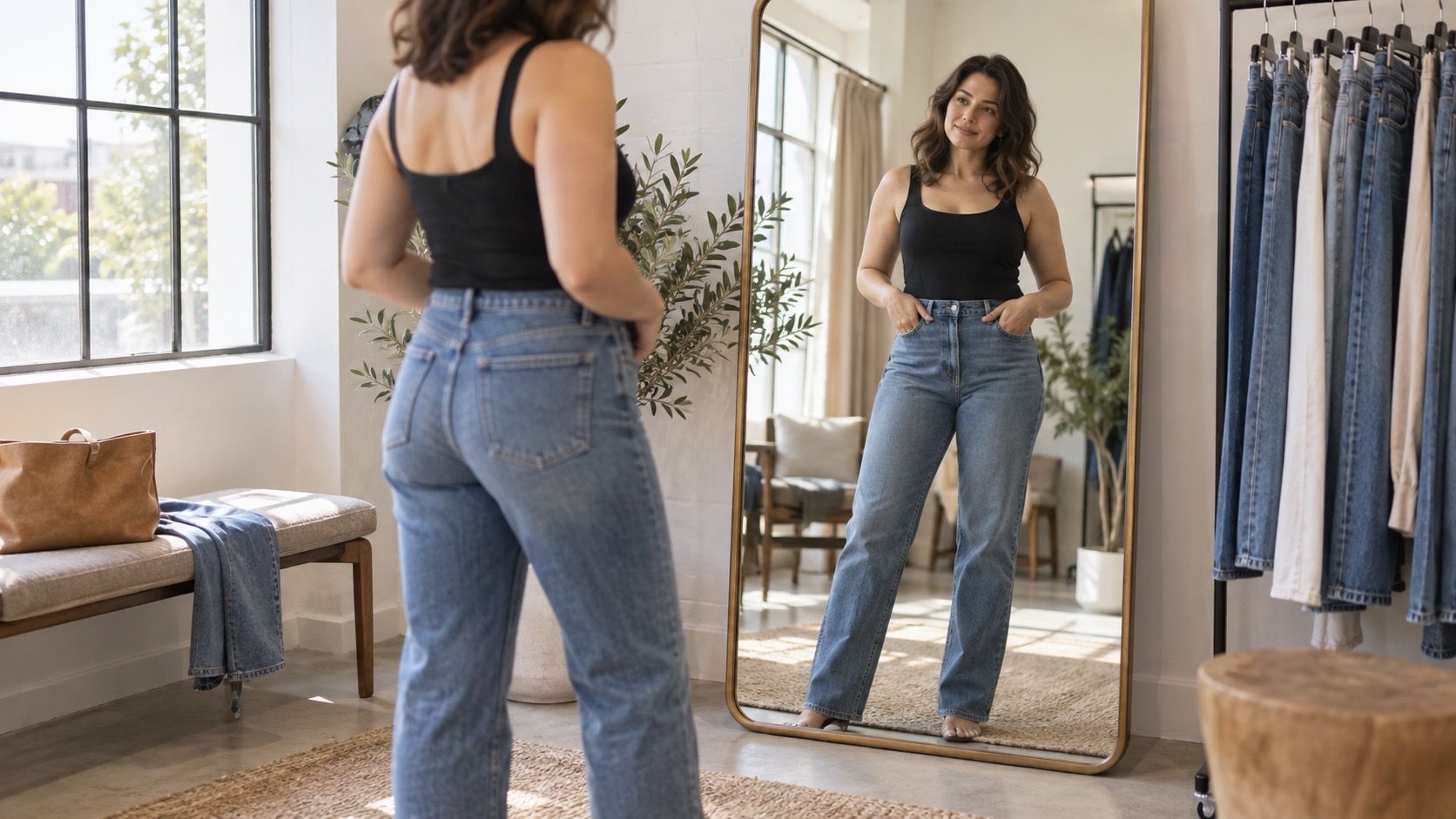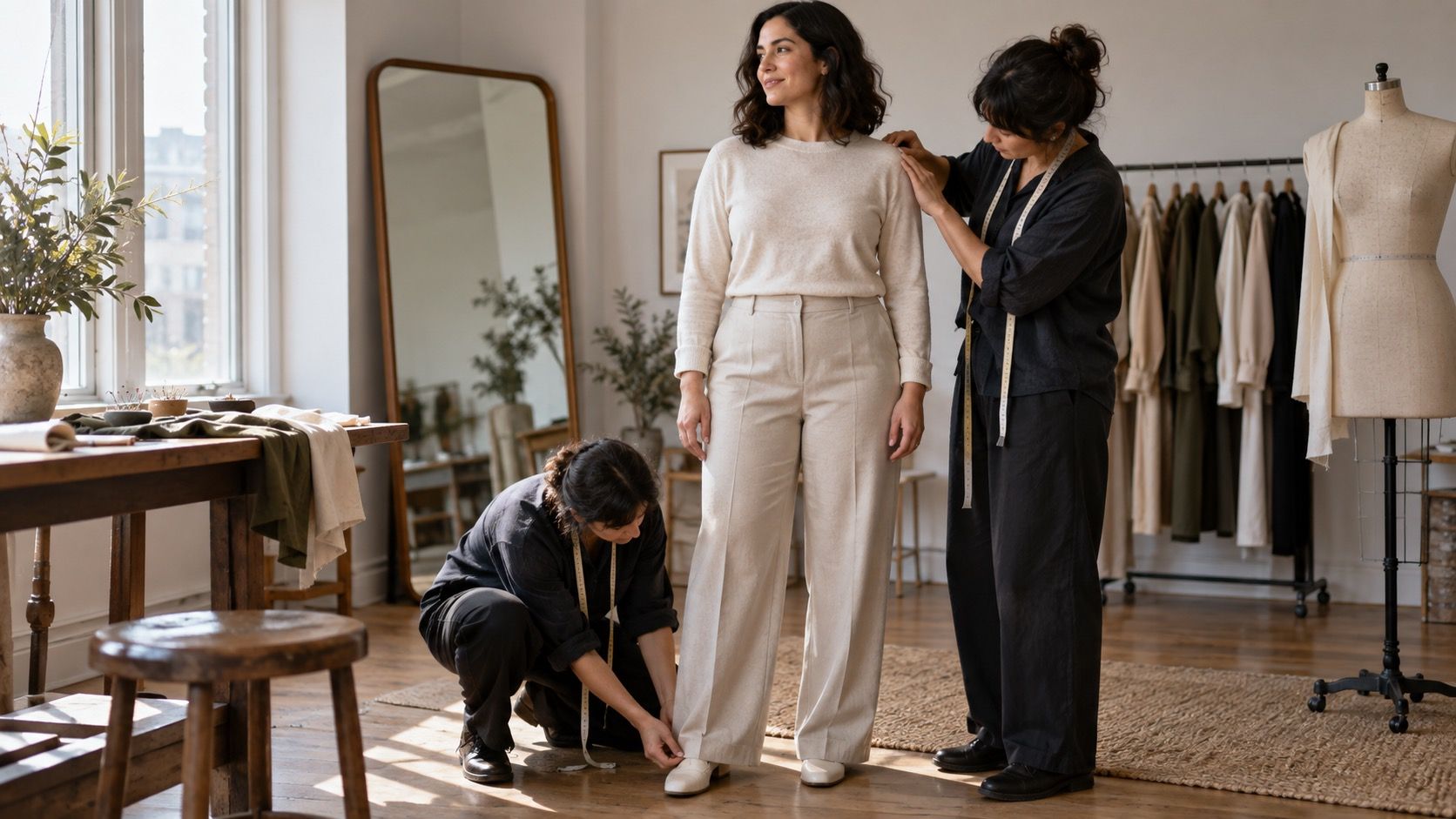
When weight changes, people often ask whether their body shape has changed too. Usually the question is less theoretical than it sounds. A pair of trousers has started twisting at the waist, a trusted bra feels wrong, or a dress that used to need a belt now hangs from the shoulders. The honest answer is that bodies can change in several ways, but a category name rarely explains the practical part. Measurements and comfort do.
What may change, and what may stay recognisably yours
Weight change can affect circumference measurements, how clothing rests on the body, and where you notice pressure from waistbands or armholes. It does not redraw the skeleton. Shoulder width, rib cage structure, pelvic shape, and the general relationship between your frame and your clothing remain part of the picture. This is why two people can lose a similar amount of weight and find that their wardrobes behave very differently.
Distribution is also personal. One person may first notice a change at the waist, another at the bust, thighs, face, or upper arms. Hormones, age, training, medication, stress, and sleep can influence where changes show up. That is a reason to avoid making promises based on a body-shape chart. A chart cannot predict which seam will become loose on you next month.
I find it more useful to separate two observations. The first is visual: perhaps the waist looks less defined, or the shoulder line appears stronger. The second is mechanical: does the waistband stay put, does the blouse pull when you reach, and do you need to keep adjusting the straps? Clothing fit after weight change is about both, but the mechanical part gives better clues for a purchase.
Measure at home before you replace half the wardrobe
There is no need to measure every week unless you enjoy spreadsheets. If your clothes are starting to feel different, take a simple set of measurements once: bust or chest, natural waist, full hip, upper thigh, and inseam. If bras are part of the problem, measure the underbust as well. Use the same soft tape and the same conditions each time, preferably in the morning before a meal or workout makes the numbers noisier.
Write down both the number and what you were wearing comfortably at that point. A 74 cm waist tells you less than “74 cm waist; mid-rise jeans in this cut fit without a belt.” The second note connects your body to an actual garment pattern. It is what helps when a retailer's size chart leaves you between two sizes.
Do not treat a measurement as a verdict. Bodies fluctuate through the day, and a half centimetre is not a crisis. The point is to replace guesswork with a baseline. If your waist stays much the same while your hips change, you may need a different trouser cut rather than a smaller or larger size across the board. If a shirt is now loose through the body but still tight in the shoulders, its old size may remain the better starting point.
| What has changed | Useful check | Wardrobe response |
|---|---|---|
| Waistbands slide or gap | Measure natural waist and high hip | Try belts, adjustable waists, or a small waist alteration |
| Bras feel loose or dig in | Check underbust and cup fit separately | Get refitted before buying several new bras |
| Jeans fit in one place only | Compare waist, hip, rise, and thigh room | Change cut before changing brand loyalty |
| Sizes change from shop to shop | Use garment measurements and fabric content | Order two sizes only when returns are straightforward |
Read the fit signals, not the number on the label
Sizes are especially unreliable during a period of body change because every brand uses a different fit model. A smaller label may feel good for a moment and still be a bad choice if the buttons strain or the trousers restrict sitting. A larger size may hang better through the shoulder and need only a simple waist adjustment. Neither option says anything useful about success, discipline, or how you should look.
Try garments in motion. Sit down in the trousers, put a coat on over the top, raise your arms, and walk to the other end of the fitting room. Notice whether you are comfortable before you inspect the mirror. A garment that passes the mirror test but makes you hold your stomach in all afternoon has failed the job.
Pay particular attention to rise and armholes. Weight change can make a previously tolerable rise feel intrusive, even if the waist measurement still technically fits. Similarly, a blouse can be roomy at the bust while the armhole chafes because the whole garment now sits differently on the shoulder. These are cut issues. Buying the same garment in a different size may not fix them.
Give your wardrobe a transition period
Replacing everything at once is expensive and usually premature. If your measurements are still moving, build a small working group of clothes that can tolerate variation: trousers with a little stretch or a flexible waistband, shirts that can be worn tucked or loose, a jacket with comfortable shoulder room, and layers that do not depend on a precise waist. The aim is to get dressed without negotiating with every zip.
Keep the pieces that still earn their place. A wool coat can work across several sizes because it is worn over layers. An oversized knit may still be useful. A fitted sheath dress that now has excess fabric at the bust is less forgiving, though a tailor may be able to reshape it. Sort items into three piles: wearable now, worth altering, and not worth storing out of guilt. That last pile is often larger than expected.
For jeans, trousers, bras, and close-fitting work clothes, buy one or two good options rather than a full replacement set. Wash and wear them before deciding they are the new standard. I have seen people buy five pairs of the same jean because it felt right under bright shop lights, then discover after a day at a desk that the waistband rolls. One trial pair is cheaper information.
Be careful with body-shape labels during a changing period
Terms such as pear, rectangle, apple, and hourglass can be convenient shorthand when you are looking for a starting point. They become unhelpful when they turn into rules. A person may have a visible waist, broad shoulders, and a fuller hip at the same time. They may also find that different clothes emphasise different parts of the same body. There is no need to select a single label before buying a shirt.
Rigid advice often arrives disguised as kindness: hide this, balance that, create a waist, never wear those trousers. Much of it assumes that visual balance is the only goal. Comfort, ease of movement, temperature, work requirements, and personal taste deserve equal weight. If you like a boxy jacket because it feels sharp and useful, you do not need to defend it against a rule about “flattering” lines.
A body can change and still be familiar. It can also feel unfamiliar for a while. Body neutrality is a practical stance here: notice the fit without turning each change into a compliment or complaint. The tape measure is a tool for choosing clothing, not a scorecard.
Use a simple reassessment routine when something stops working
Start with the item that annoys you most. Put it on with the shoes and underlayers you normally wear. Identify the first problem: waistband, shoulder, bust, hip, length, or fabric cling. Then compare it with a similar item that still works. The contrast is often clearer than staring at a size chart. If the working pair has a higher back rise and more room through the thigh, you have a useful shopping filter.
Take photographs only if they help you see the garment from all angles; you do not owe yourself a before-and-after archive. Check care labels too. Some natural fibres relax with wear, while others tighten after washing. A fit issue that appears only after laundry may be a fabric-care issue rather than evidence that your body is changing again.
Weight changes can affect body shape and clothing fit, but the sensible response is rarely to chase a new identity through a size chart. Measure when you need information, test garments in real movement, and buy for the body you have on the day you need to get dressed. That approach leaves room for change without making your wardrobe feel like a running commentary on it.