A number on a label can tell you whether a garment might get over your hips, but it cannot tell you where the waist will land, whether the shoulder seam will sit on your shoulder, or whether you will spend the day tugging at the back of a jacket. That gap is why two people can buy the same size, from the same rail, and have completely different opinions about the fit. I have learned to treat the size as the start of the conversation, not the answer.
When the usual size looks wrong before you leave the fitting room
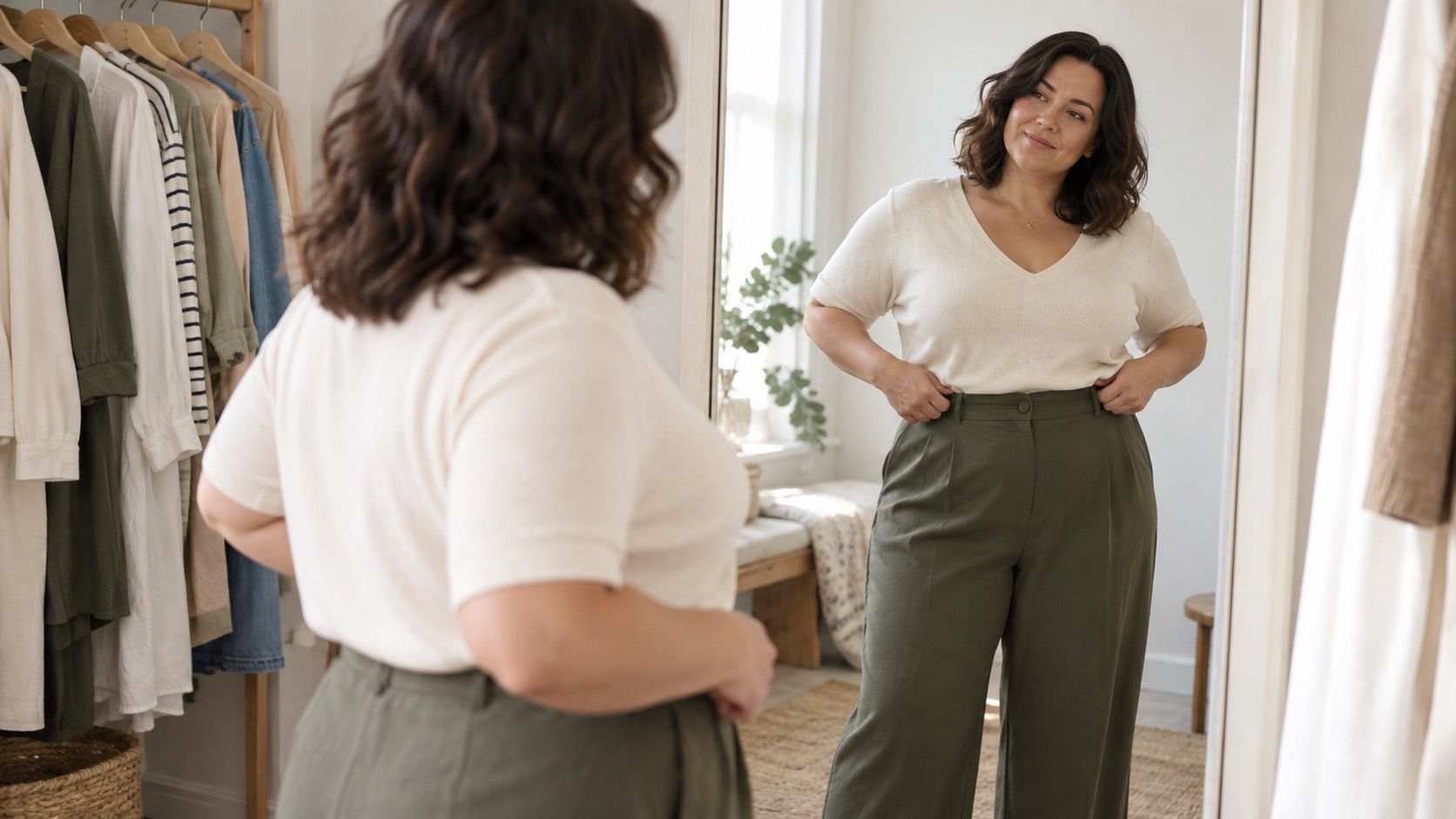
The familiar scene is a pair of trousers that closes comfortably at the waist yet pulls across the thighs, or a shirt that fits the chest but leaves a suspicious amount of fabric at the lower back. It is tempting to call the item badly sized and move on. Sometimes it is badly graded. More often, the garment pattern was drafted around a proportion that is not yours.
Ready-to-wear clothing has to work for a broad range of bodies. A UK size 12, for example, is not a single physical shape. Brands choose a fit model, decide on a waist-to-hip difference, then grade that pattern up and down. One brand may allow more room through the hip curve; another may add length through the torso. Neither choice is morally correct. It just means the label is a poor substitute for trying on the cut.
Pay attention to the exact point of resistance. If a zip is hard to close only at the high hip, a larger size may solve that one issue and create excess fabric at the waist. If a blazer feels tight when you reach for a bag, the problem may be the armhole shape or shoulder width rather than your chest measurement. Those are different problems, and they lead to different buying decisions.
Four measurements that explain more than a size label
You do not need a full tailoring appointment to understand your body proportions. A soft tape measure, a mirror, and a few minutes in close-fitting clothes are enough. The useful measurements are the ones that correspond to garment construction: shoulder width, bust or chest, natural waist, full hip, inseam, and the distance from shoulder to waist. Write the numbers down once and update them when your body or preferences change.
Torso length matters most in one-piece garments. On a shorter torso, a dress with a fixed waist seam can sit low on the hip and look as if it belongs to somebody taller. On a longer torso, the same seam can sit too high and pull when you sit. In trousers, rise is the hidden measurement. A high rise can be comfortable on one person and feel as though it is competing with the rib cage on another; a low rise can do the opposite.
Arm length and shoulder slope are easy to overlook because many people focus on the front view. Check the shoulder seam first. It should end near the point where your shoulder turns into your upper arm. If it falls well below that point, the body of the shirt may look oversized even when the bust is correct. Sleeve hems can be shortened fairly easily. Moving a shoulder seam is possible, but it costs enough that I would only do it for a jacket I genuinely expect to wear for years.
| What you notice | Likely proportion issue | What to check next |
|---|---|---|
| Waistband fits, hips pull | Greater waist-to-hip difference | Try a curvier cut or size for hips and alter the waist |
| Dress waist sits too low | Shorter torso or long bodice | Compare shoulder-to-waist length with the size chart |
| Trouser hem bunches over shoes | Inseam is too long | Check whether hemming keeps the knee in the right place |
| Jacket pulls when arms move | Narrow shoulder, armhole, or back width | Test a different cut before sizing up |
How to read a size chart without talking yourself into the wrong size
A size chart is most useful before an online order, when it helps you rule out a bad bet. It becomes less useful when you use it to argue with your own mirror. Start by finding the garment measurements if the retailer gives them. Body measurements tell you who the brand had in mind; garment measurements tell you how much ease was added for movement and the intended silhouette.
Compare the measurement that matters for that item. For a non-stretch pencil skirt, the full hip usually decides the size. For a fitted button-up, chest and shoulder width carry more weight. For a relaxed knit, the listed garment width and intended ease matter more than a precise body match. Do not assume a larger number will make every part more comfortable. It will also move darts, pockets, knees, and waist placement.
Fabric changes the calculation. A rigid denim waistband has little patience on a warm day after lunch. A ponte trouser may feel close at first and settle after ten minutes of walking. Look at fibre content and reviews for remarks about recovery, not only stretch. A garment with elastane can still be restrictive if the cut is narrow, while a woven piece with enough ease can feel easier than a clingy knit.
The fitting-room checks that catch trouble early
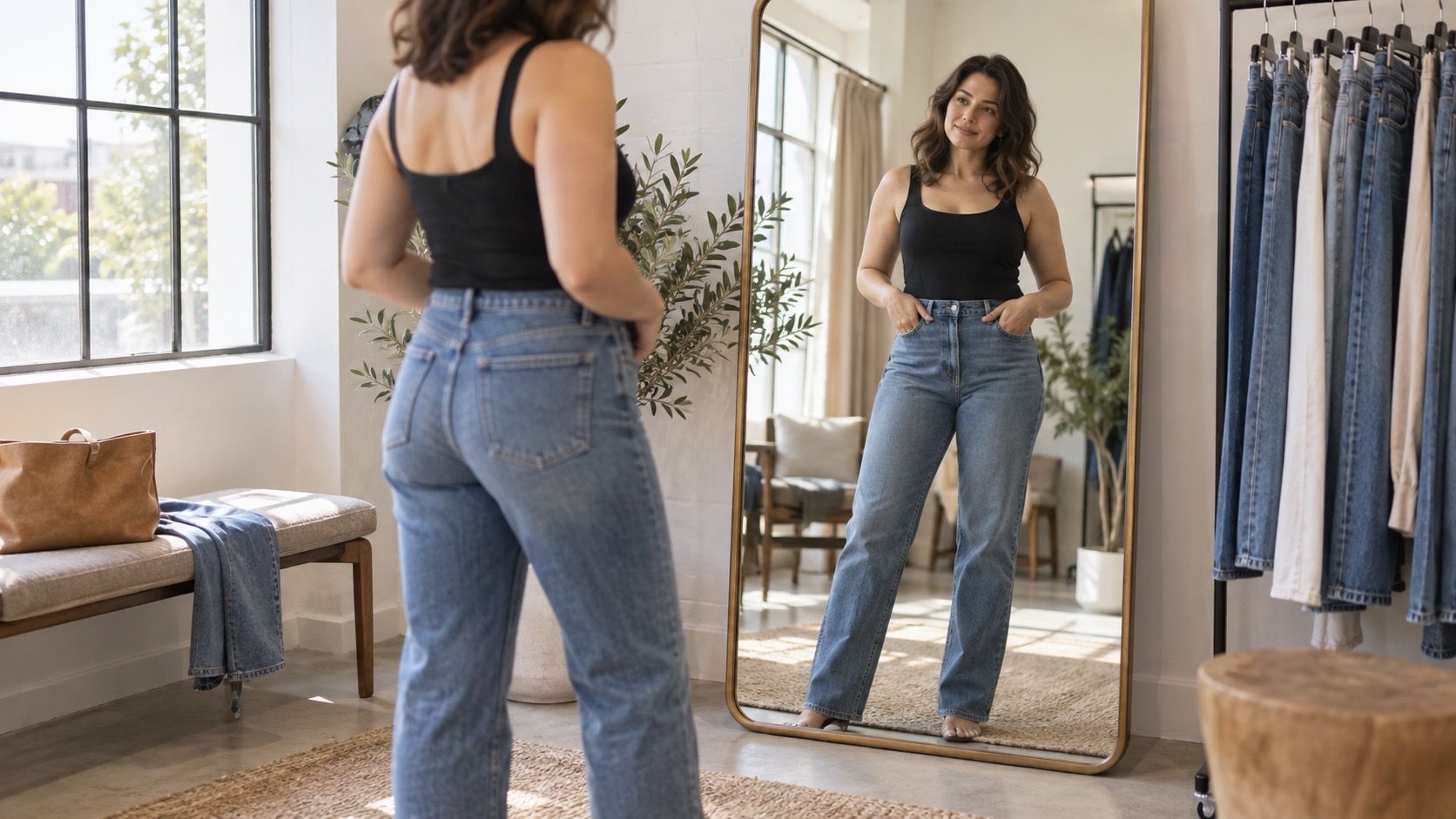
Standing still in good light makes almost anything look acceptable for thirty seconds. Test the movement you actually make: sit on the bench, lift both arms, take a long step, bend to pick up a shoe. Then look at the garment from the side and back if there is a mirror. A front view alone misses a raised hem, an exposed waistband, and the pull lines that show where the fabric is losing the argument.
With trousers, check the rise while sitting and the placement of the knee. If the knee is already too low or too high, hemming will not repair the underlying pattern. With a dress, check whether the bust seam and waist seam still sit where they should after you move. With a jacket, fasten it, cross your arms lightly, and see whether the lapels buckle. A little structure is normal; a deep X-shaped pull across the front is a warning.
I also look at pocket placement. Pockets that gape at the hip can create the impression that the whole garment is too small, even when the waistband fits. On some trousers they are only decorative, and on others they can be sewn shut or removed. It is a small detail, but it is one of those things that separates a garment you keep reaching for from one that stays in the wardrobe with the tag still attached.
When alterations are worth the money
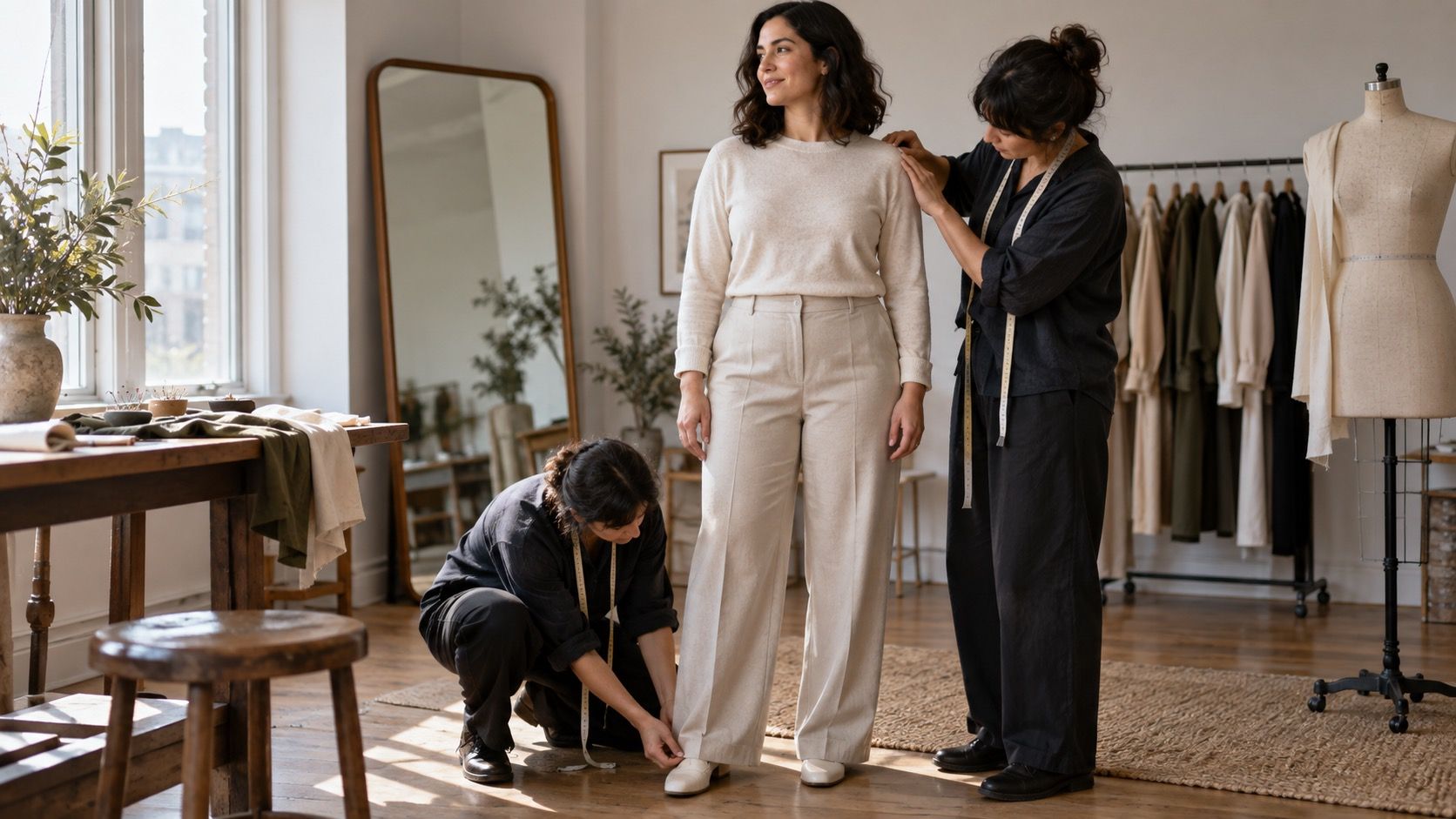
Alterations work best when the garment fits the largest or least changeable part of your body and needs a local adjustment. Hemming trousers, shortening sleeves, taking in a simple waist, or repairing a loose waistband are routine jobs. They can turn a good near-miss into a reliable piece. Ask the tailor to pin the alteration while you wear the shoes and bra you would normally use with it.
More complicated changes deserve a pause. Altering the shoulder width, raising a jacket armhole, recutting a dress bodice, or changing a trouser rise can cost more than the garment itself. Darts and seams may also be placed too far from where they need to be, which gives the tailor less to work with. If the silhouette is wrong in three places, I would leave it behind rather than treating the receipt as a commitment.
There is a useful middle ground for basics. A pair of jeans that fits through the hip and thigh but gaps slightly at the back waist is often worth a small adjustment, especially if the denim is sturdy. A cheap shirt with a narrow shoulder and twisting side seams is usually not. Price matters, but so does fabric quality and how often you expect to wear the item.
Build a fit note instead of repeating the same mistake
Keep a short note on your phone after a successful purchase. Record the brand, style name, size, fabric, rise, inseam, and the detail that made it work: straight leg in a 30-inch inseam, dropped shoulder in a medium, wrap dress with an adjustable waist. After a few entries, patterns appear. You may find that certain high-rise cuts work only in softer fabrics, or that a particular brand's petite length suits your torso but not its trousers.
Add the failures too. A note such as “size 10 fit the waist but pulled at the upper arm” is more useful six months later than a vague memory that the brand runs small. Online shopping gets calmer when you can compare a product page with clothes you already know. It also keeps you from buying three versions of the same almost-right item because a different colour made you hopeful.
Body proportions are not a flaw to correct and clothing fit is not a test you can fail. The useful aim is simpler: learn where a garment needs room, where it needs structure, and where you do not want compromise. Once you know that, size becomes a rough filing system and the cut does the real work.