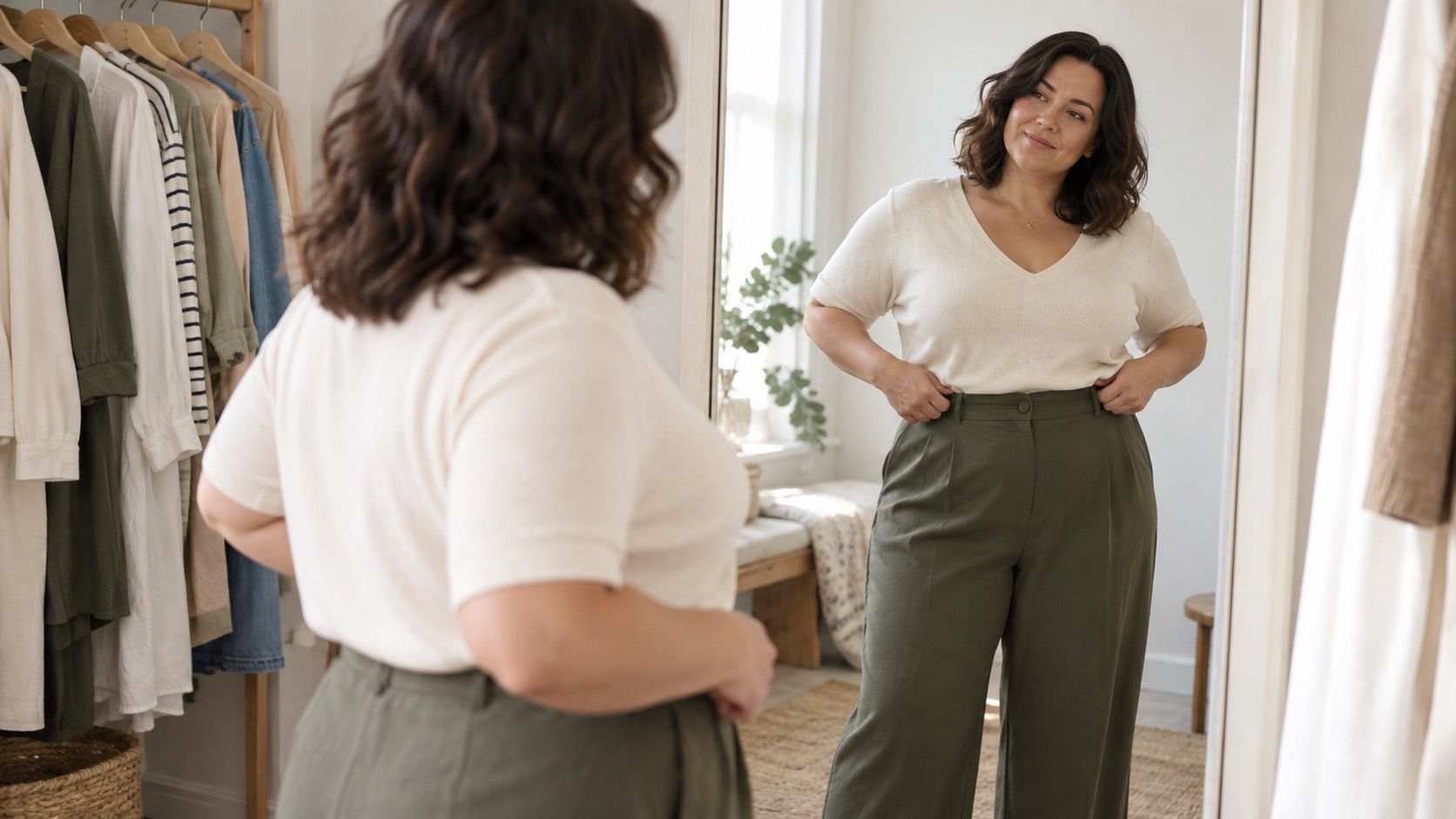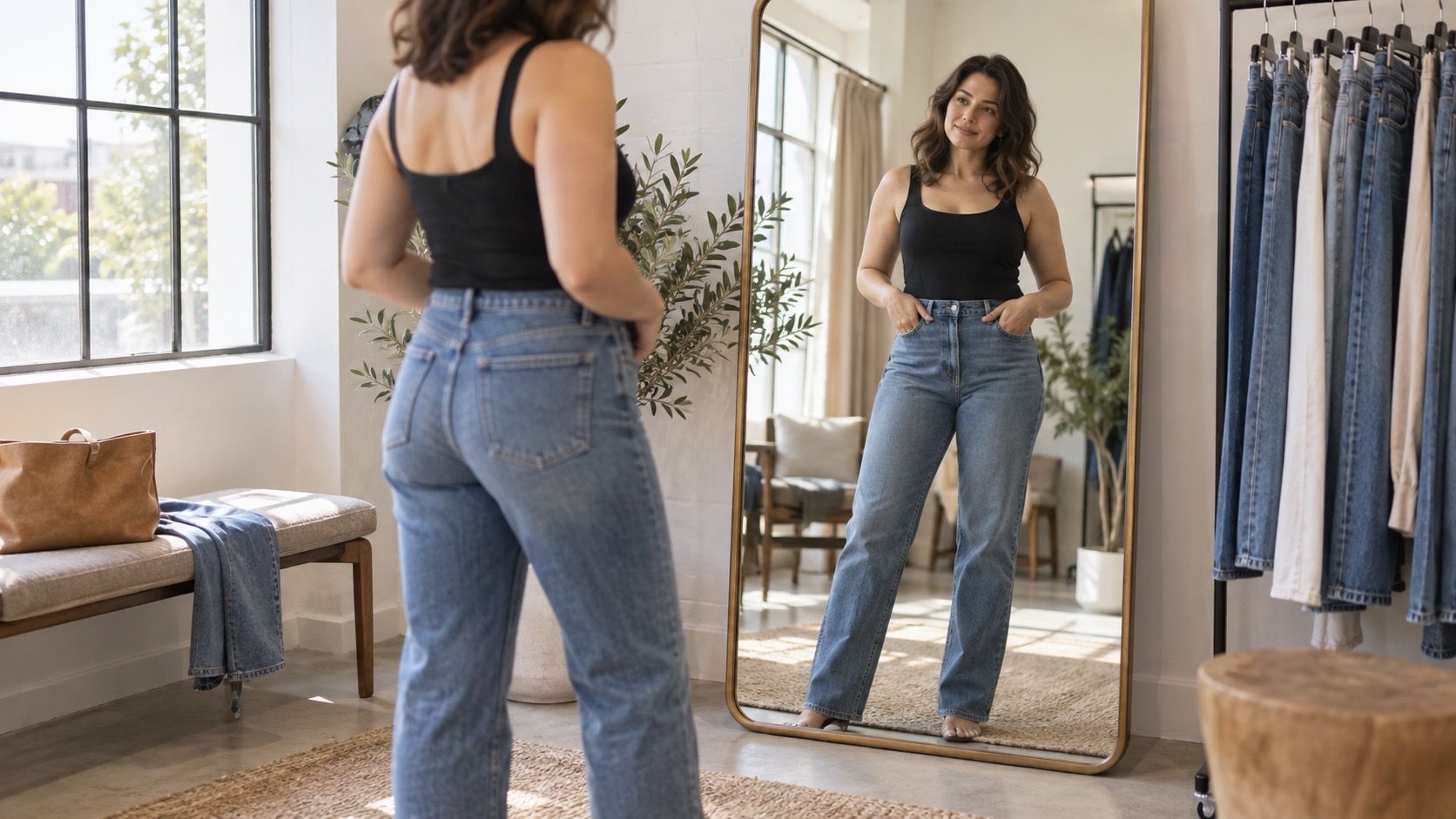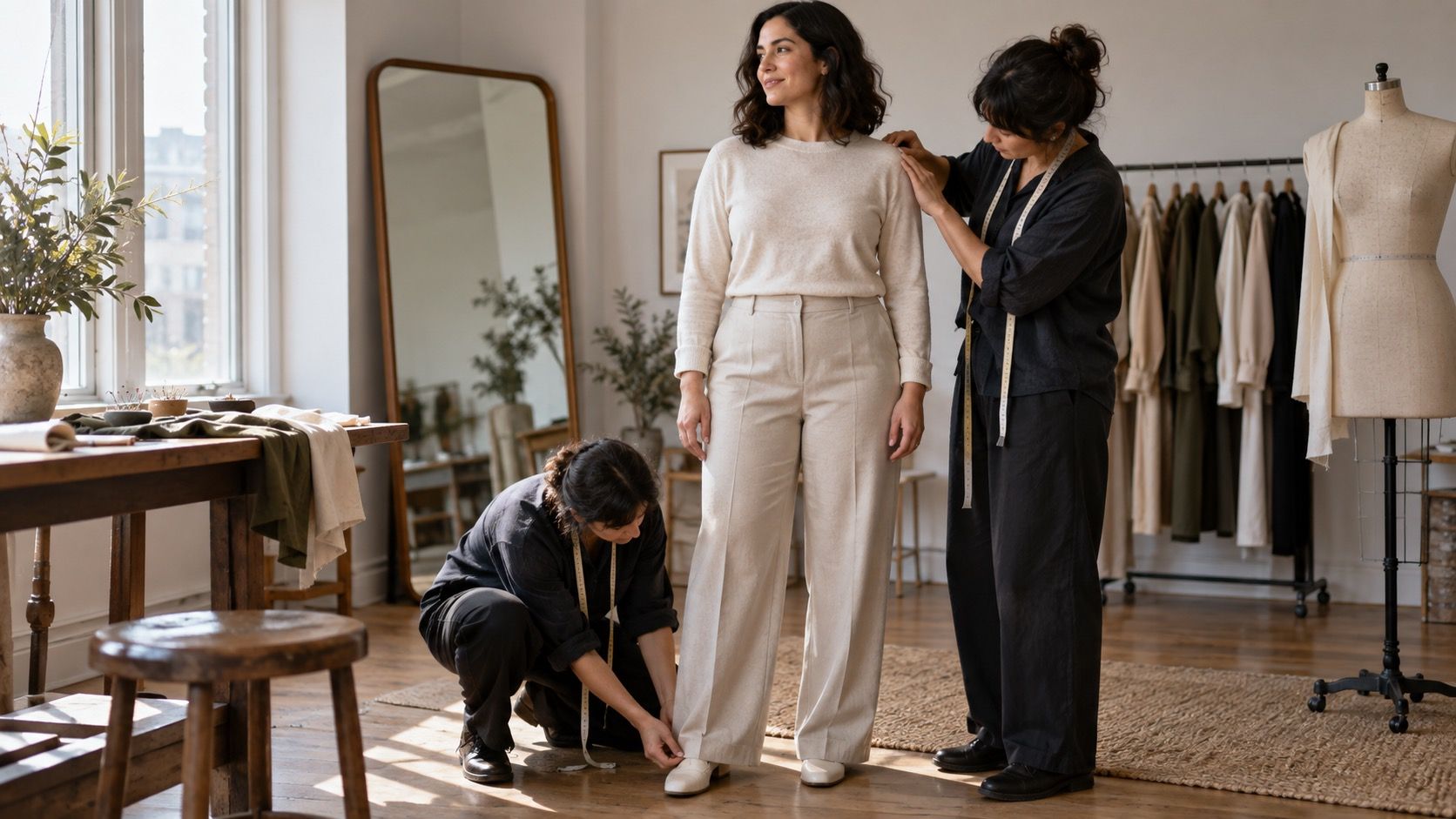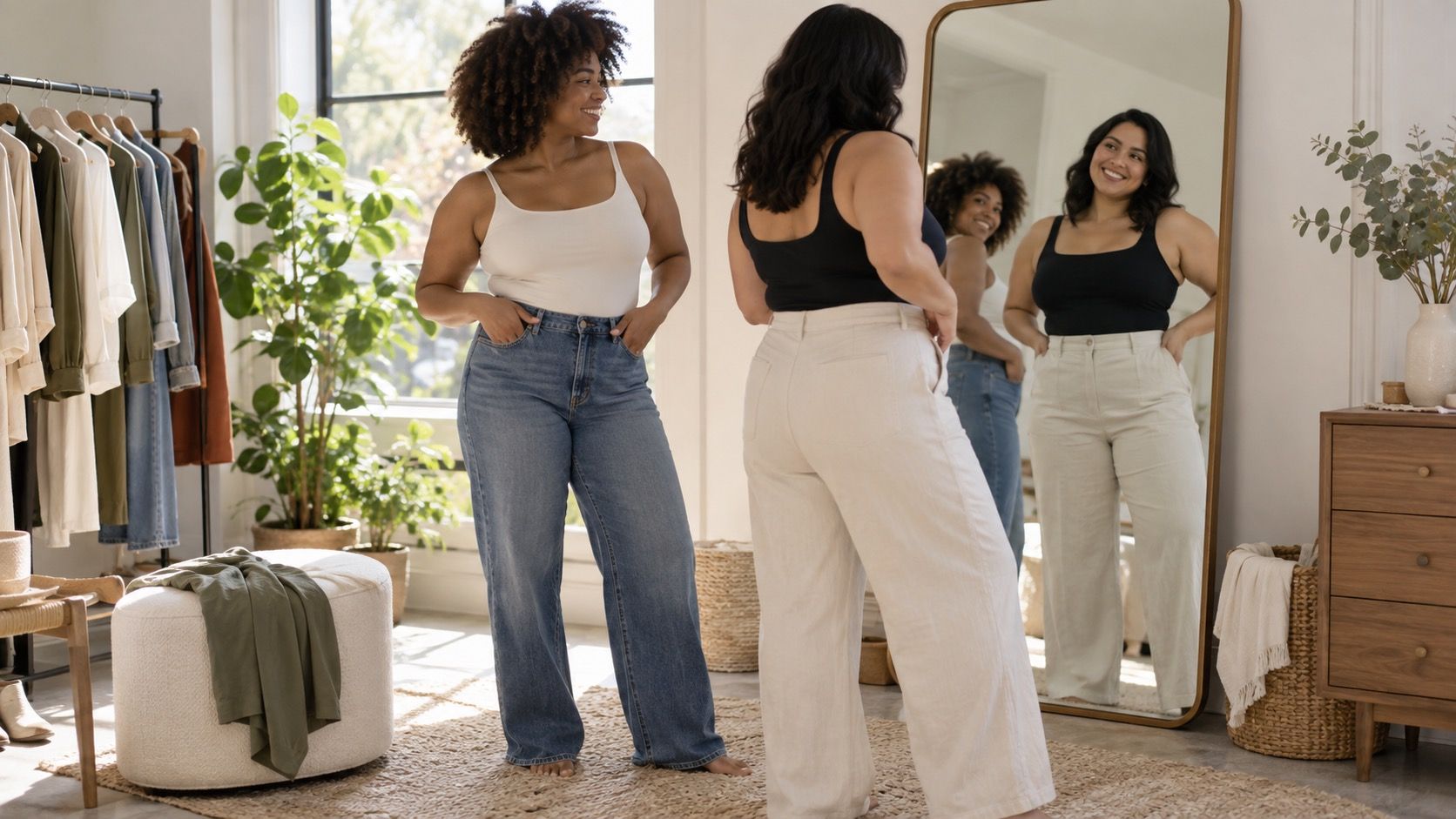
A body shape guide is most useful when it helps you stop blaming yourself for a garment that was cut for different proportions. The aim is not to earn a label or correct your body; it is to notice the relationship between your shoulders, waist, and hips, then use that information when a dressing-room mirror gives a mixed verdict.
Start with the problem you are actually trying to solve
People often search for how to determine body shape after one frustrating purchase: a blazer that pulls across the upper back, jeans that fit the thighs but gape at the waist, or a dress that looks fine on a hanger and oddly flat at home. Those are fit questions, not personality tests. Before reaching for a chart, name the recurring problem. Is it shoulder room, waist placement, hip ease, or simply a hem that lands in an unhelpful spot?
Look at a few familiar outfits rather than one posed photograph. A close-fitting knit, straight-leg trousers, and an unstructured jacket reveal more than a shapewear-heavy occasion dress. I find the hallway mirror, taken at eye level in daylight, more honest than the changing-room mirror angled to make every shopper look taller. The useful observation is relative: which horizontal line reads widest, where your middle narrows, and how fabric moves between those points.
Read shoulders, waist, and hips as a conversation
Body proportions rarely divide into neat, permanent bands. Shoulders may look broader than hips in a crisp shirt but balanced in a soft T-shirt; a defined waist can disappear under a boxy sweater and reappear in a belted coat. Stand relaxed, feet hip-width apart, arms loose. First compare the visual width of the shoulder line and the fullest hip line. Then ask whether the waist creates a visible inward break between them.
That sequence prevents a common mistake: treating the bust measurement as shoulder width. The bust is a circumference around a three-dimensional area, while the shoulder line is a straight visual span. Likewise, the point where your trousers sit may not be your natural waist. For a body shape guide, the natural waist is the narrowest comfortable part of the torso, often above the navel; it is not where a low-rise waistband happens to sit.
| What you notice | A practical interpretation | A useful next check |
|---|---|---|
| Shoulders look clearly wider than hips | Upper-body structure may lead the silhouette | Try a jacket with room at the shoulder before sizing up the waist |
| Shoulders and hips look similar, with a marked waist | Balance and waist definition are doing most of the visual work | Check where a dress seam or belt naturally settles |
| Hips look wider than shoulders | The lower half may set the visual width | Compare trouser cuts for hip ease rather than chasing a smaller size |
| Few strong inward or outward lines | A straighter silhouette may be the clearest description | Test shape through fabric and proportion, not forced waist emphasis |
Measure once carefully, then check it another day
A soft tape measure can ground what the mirror suggests. Measure the fullest part of the bust, the natural waist, and the fullest part of the hips with the tape parallel to the floor. For shoulders, measure across the back from the outer edge of one shoulder to the other, keeping the tape level. Write the numbers down without tightening the tape or holding your breath. A number that only exists while you are braced is not useful for clothes.
Repeat the set at a similar time of day a few days later. Posture, a fuller lunch, menstrual-cycle changes, and even a different bra can shift a measurement slightly. That is normal. If the measurements disagree by a small amount, keep a range instead of declaring one result wrong. Clothing brands use varying blocks and ease allowances anyway, so a consistent method matters more than a supposedly perfect centimeter.
Use categories as shorthand, not as a verdict
Names such as hourglass, pear, rectangle, apple, or inverted triangle can offer a quick starting language. They are not medical categories and they are not a complete description of anyone. Two people called hourglass may have very different shoulder slopes, torso lengths, bust placement, or preferred levels of ease. A category is only useful if it predicts something practical, such as why a fitted shirt needs a different size through the bust than through the waist.
Mixed results are especially common. Someone can have shoulders and hips that measure similarly but carry more visual weight in the upper body; another person may have a defined waist yet prefer straight silhouettes because belts feel fussy. Keep the description that helps you make a decision, and discard the rest. The goal is not to make every outfit announce a category. It is to give yourself a better first guess in the fitting room.
Turn the observation into better fit choices
Once you see your usual proportions, test garments deliberately. If shoulder seams frequently sit too far inward, start with a size or brand that accommodates the shoulder line and alter the waist if needed. If trousers gap at the back, look for a contoured waistband, more hip room, or a style designed for a larger hip-to-waist difference. A tailor can often adjust a waist or hem; adding width to a tight shoulder is much harder.
Silhouette is also shaped by length and fabric. A cropped jacket can make the waist look higher, while a long cardigan can create a more vertical line. Stiff denim holds a different outline from fluid trousers, even at the same measurements. Bring one reliable item when shopping and compare the new piece against it. That small control is more revealing than trying to remember how you looked in last season's jeans.
Leave room for change and personal taste
Your body shape is a snapshot of proportions, not a rulebook for what you may wear. Weight changes, training, age, hormones, and posture can all alter how clothes sit. More importantly, style is allowed to be a choice. You may know that a certain cut emphasizes your shoulders and still love it; you may have a defined waist and prefer a loose linen shirt in summer.
Use the information when it saves time, money, or irritation. Ignore it when it tries to become a restriction. The best result from learning your body proportions is a calmer edit of the rack: you know which details deserve a closer look, which fit problem is fixable, and when a garment is simply not doing its job.