Body-shape advice often begins with a friendly promise: work out whether you are an apple, pear, rectangle, or hourglass and shopping will become easier. The labels can be a useful shortcut, but they carry far more authority than they deserve. Most people who search for body shape myths are not looking for a lecture on anatomy. They want to know why the advice does not match the person in the mirror, and whether they are allowed to ignore it. Yes.
Why the familiar categories became so popular
The categories are memorable because they turn a complicated body into a picture. Fashion magazines, retailers, and styling quizzes could put four or five silhouettes beside a few outfit suggestions and make the whole thing feel manageable. A reader who felt lost in a changing room got a label, a small list of “best” shapes, and the relief of having somewhere to start.
There is a practical reason these systems survived. Ready-to-wear clothing is built from standardised blocks. A retailer needs to decide how much difference to allow between waist and hip, where to place bust darts, how broad to make shoulders, and how long to cut a rise. Body shape categories seem to translate that construction language into everyday language. The trouble starts when a retail shortcut becomes a claim about what a body ought to wear.
Genetics influence frame, fat distribution, and muscle development, but they do not organise people into four clean groups. Age, pregnancy, training, hormones, injury, and ordinary weight change can alter measurements or how a garment sits. Even across a single month, a waistline can feel different after a long flight, a warm day, or a salty dinner. A rigid label is not built for that much variation.
Where a label can still be useful in a fitting room
A category can help when it points you toward a question rather than an answer. If you tend to have a larger waist-to-hip difference, a so-called pear-shape guide may remind you to check whether trousers gape at the back waist. If your shoulders often make jackets feel narrow, an inverted-triangle description may encourage you to compare shoulder width before looking at the size number. That is useful information.
The good version of body-shape advice sounds like this: try a few cuts and notice the fit. The bad version says a person with a certain outline must wear a specific neckline, must “create” a waist, or should never put volume near the hips. One offers a test. The other offers a restriction dressed up as expertise.
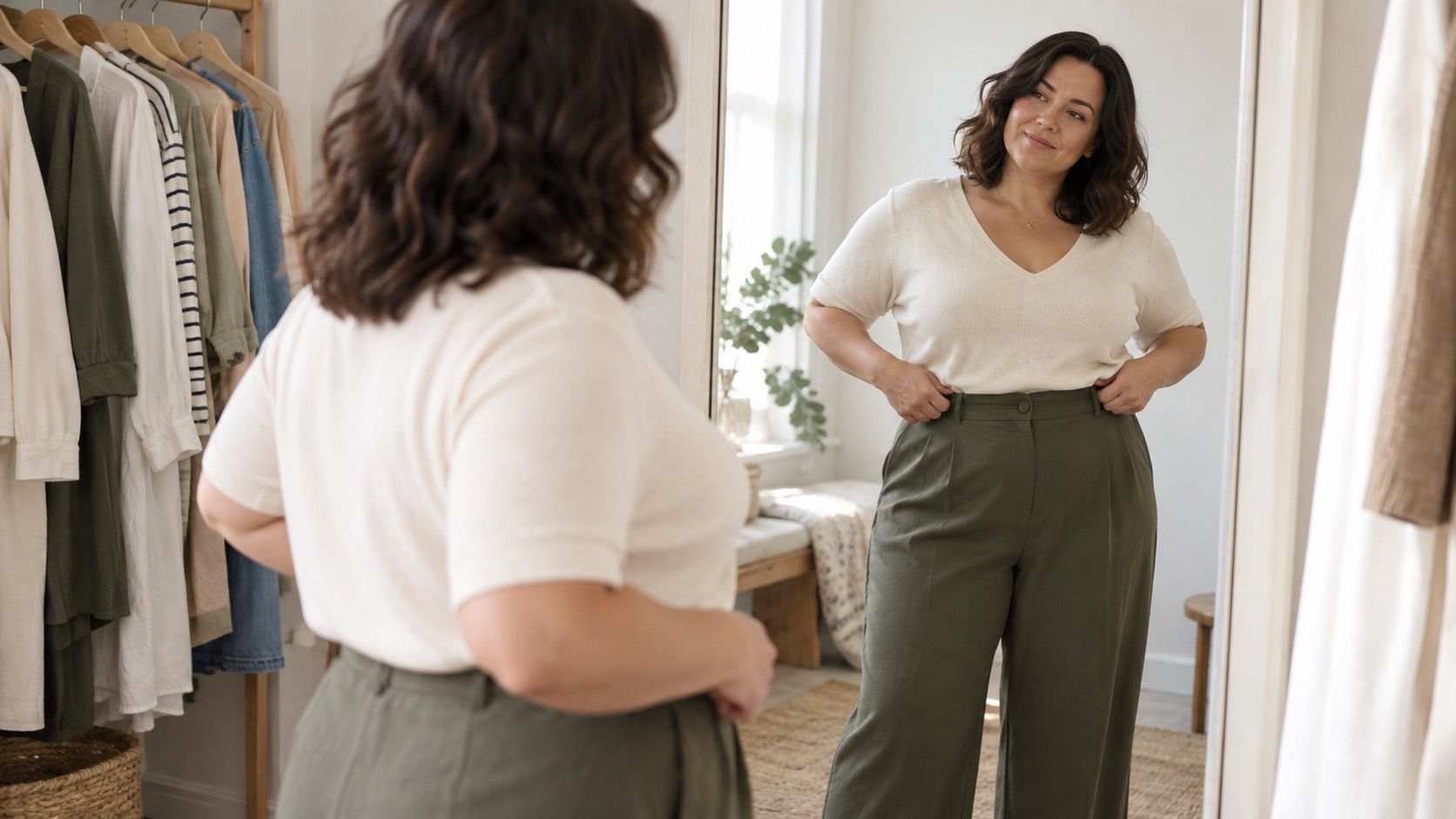
Think about garments separately. You may prefer a wide-leg trouser because it gives your thighs room, a fitted knit because you like its shape, and an oversized coat because it layers well. Those choices do not have to resolve into one category. The body under the coat is the same body; the construction and purpose of each item have changed.
| Common claim | What it misses | A more useful question |
|---|---|---|
| You are one body shape forever | Bodies and measurements can change | What is changing in fit right now? |
| A label tells you your best cuts | Fabric, rise, shoulder and ease matter too | Where does this garment pull or hang well? |
| Flattering means looking smaller or balanced | Style has more than one goal | Do I like the line and can I move comfortably? |
| Avoiding a body part solves fit | Hiding does not repair a poor pattern | Would another cut or alteration work better? |
Why most people overlap more than the quizzes admit
Body shape categories are usually based on a few circumference measurements. They leave out height, torso length, shoulder slope, rib cage, arm length, posture, hip curve, and the way muscle or soft tissue sits on the frame. Two people can have the same bust, waist, and hip numbers and still need different trousers because one has a longer rise or a fuller upper thigh.
That overlap explains a common shopping frustration. A quiz calls someone an hourglass, so they try a dress marketed for an hourglass body. The waist is technically in the right place, but the bust seam is too high and the skirt catches at the hip. The problem is not that the person failed the category. The dress was drafted for another set of proportions.
Posture changes the picture as well. A forward shoulder can make a shirt pull across the back. A pronounced lower back curve can create a waistband gap that a body-shape chart treats as a mystery. These are ordinary variations, not faults. A mirror check from the side and a few minutes of movement reveal more than an online quiz made from three tape measurements.
The “flattering” rulebook often has a hidden agenda
Much style advice uses flattering as if everyone agreed on what it means. In practice, it often means look taller, look slimmer, minimise the hip, or make the waist more visible. Those can be legitimate visual choices if you want them. They are not neutral laws of dressing. A woman may prefer a straight silhouette, a cropped boxy shirt, or a low-contrast outfit even if an article says it does not “balance” her proportions.
Marketing rules can become expensive. If you believe that only one dress shape works, you may keep buying versions of it despite poor fabric or a bad neckline. If you believe you must hide your upper arms, you might avoid a comfortable sleeveless top on the hottest day of the year. I am skeptical of any rule that sends you back to the shop anxious about a body part you were not thinking about ten minutes earlier.
Fit and personal preference are separate checks. Fit asks whether the garment gives you the room and support you need. Preference asks whether you enjoy its colour, line, and level of attention. A garment can fit perfectly and still be boring. Another can be slightly dramatic, structurally sound, and exactly what you want to wear. Neither needs a category's permission.
Use the mirror, the chair, and the tape measure in that order
When you try something on, start with a practical sequence. Look for obvious pull lines, drooping shoulders, a waist seam in the wrong place, or pockets that gape. Sit down and raise your arms. Then decide whether you like the visual effect. The tape measure comes last, mainly for comparing the garment with a size chart or with a piece you already own.
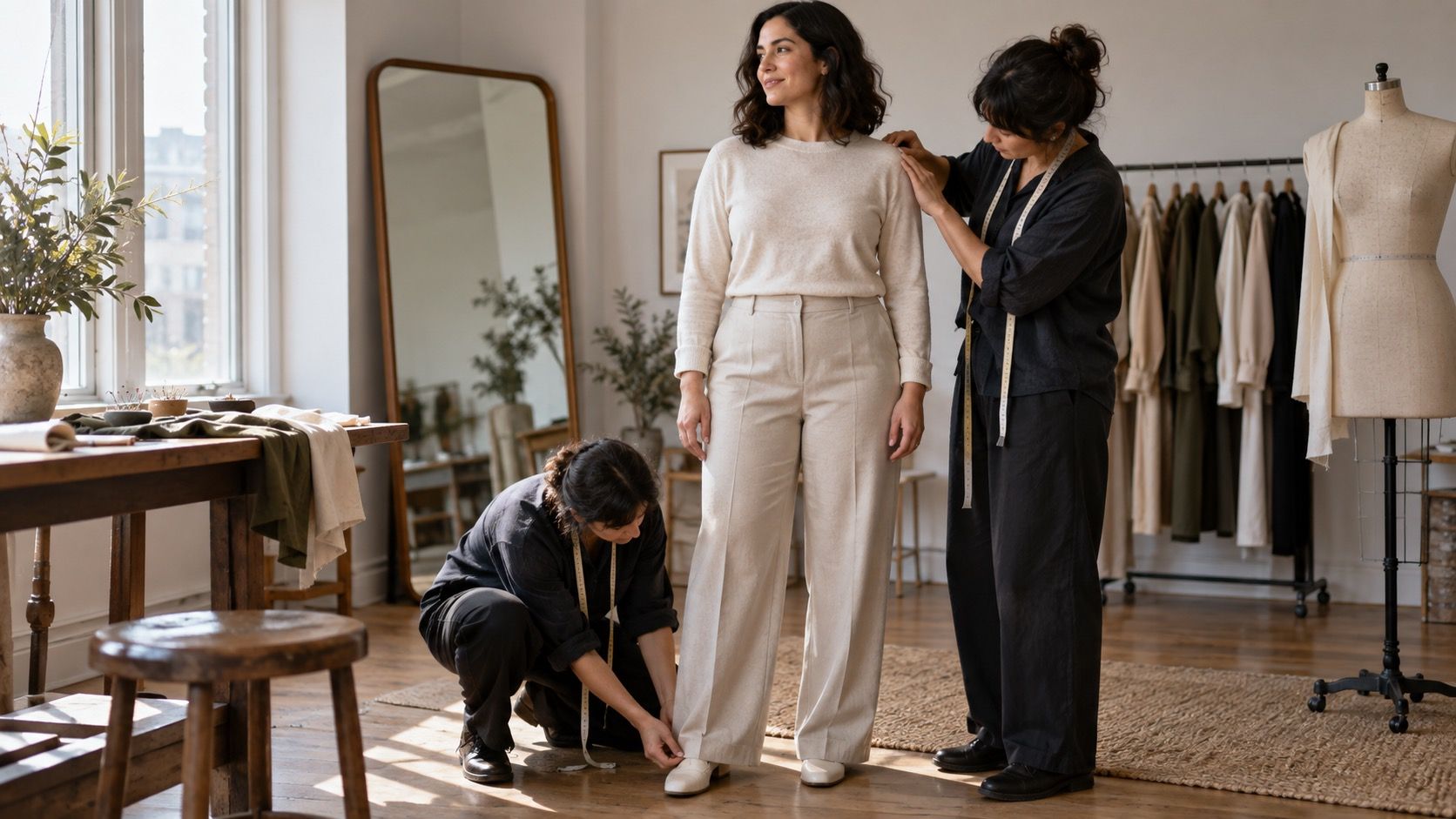
This order matters because numbers can make people override their own evidence. A chart may say that your measurements belong in a medium, yet the medium may twist at the side seam while the large hangs cleanly. If the difference is caused by shoulder width or hip room, a label is less relevant than what the garment does when you move. You can alter a waist or hem; you cannot easily give a narrow armhole more space.
Keep a few notes on successes. Perhaps high-rise trousers with room through the thigh work better than a particular body-shape description suggests. Perhaps a dropped shoulder helps with your arm length, or an adjustable wrap waist gives you flexibility. After several purchases, this private list becomes far more reliable than generic body type misconceptions on social media.
A more practical way to choose clothes
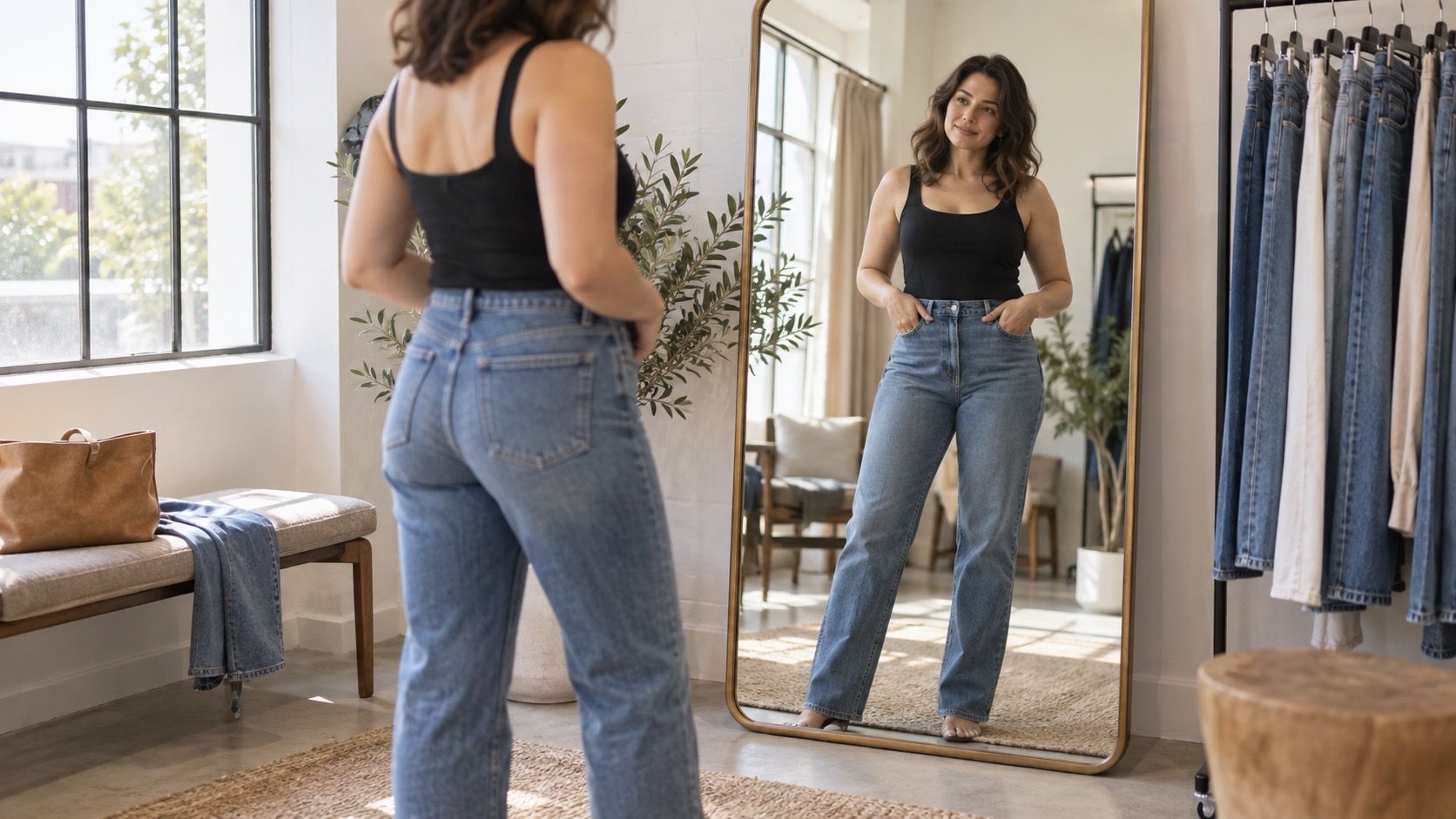
Build your own criteria around situations. For work trousers, you may need a rise that stays comfortable at a desk and pockets that do not pull. For a summer dress, you may care about bra compatibility, airflow, and whether the straps stay put while carrying a bag. For jeans, decide whether you need room in the thigh, a defined back waist, or an inseam that works with your usual shoes. These are real decisions with testable answers.
Try different silhouettes on purpose, including ones a quiz would reject. Take three versions of a garment into the fitting room: a cut you normally choose, a close alternative, and something you are curious about. Use the same shoes and underlayers if possible. It is a quiet way to gather evidence without turning a shopping trip into a personality test.
Are body shapes real? The measurements and proportions are real; the neat categories are simplified maps. A map can help you find a starting point, but it cannot tell you how a particular garment will feel at the end of a long day. Use the labels lightly, trust concrete fit checks, and let personal preference have a seat at the table. Clothes are supposed to serve your life, not classify your body.