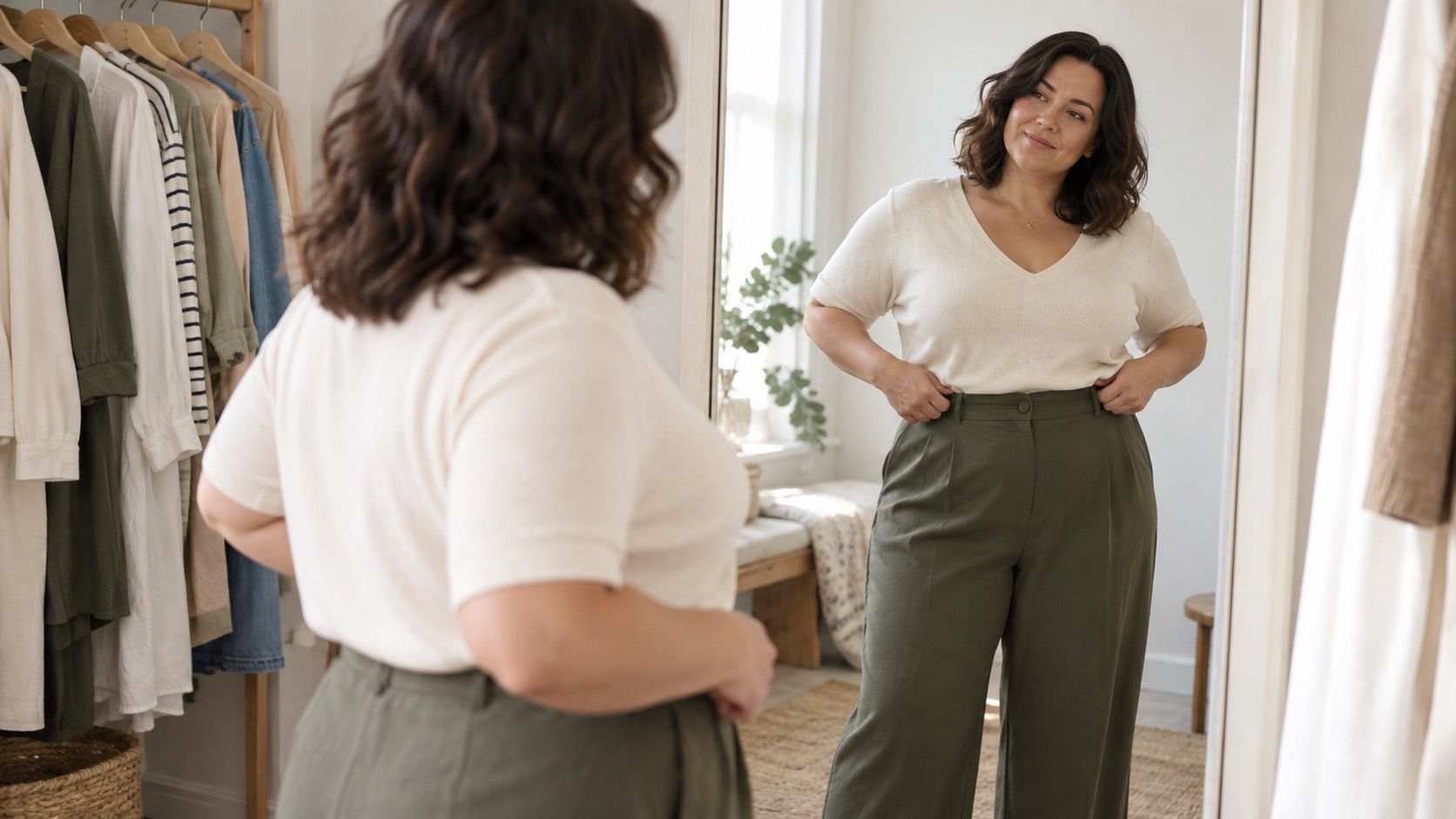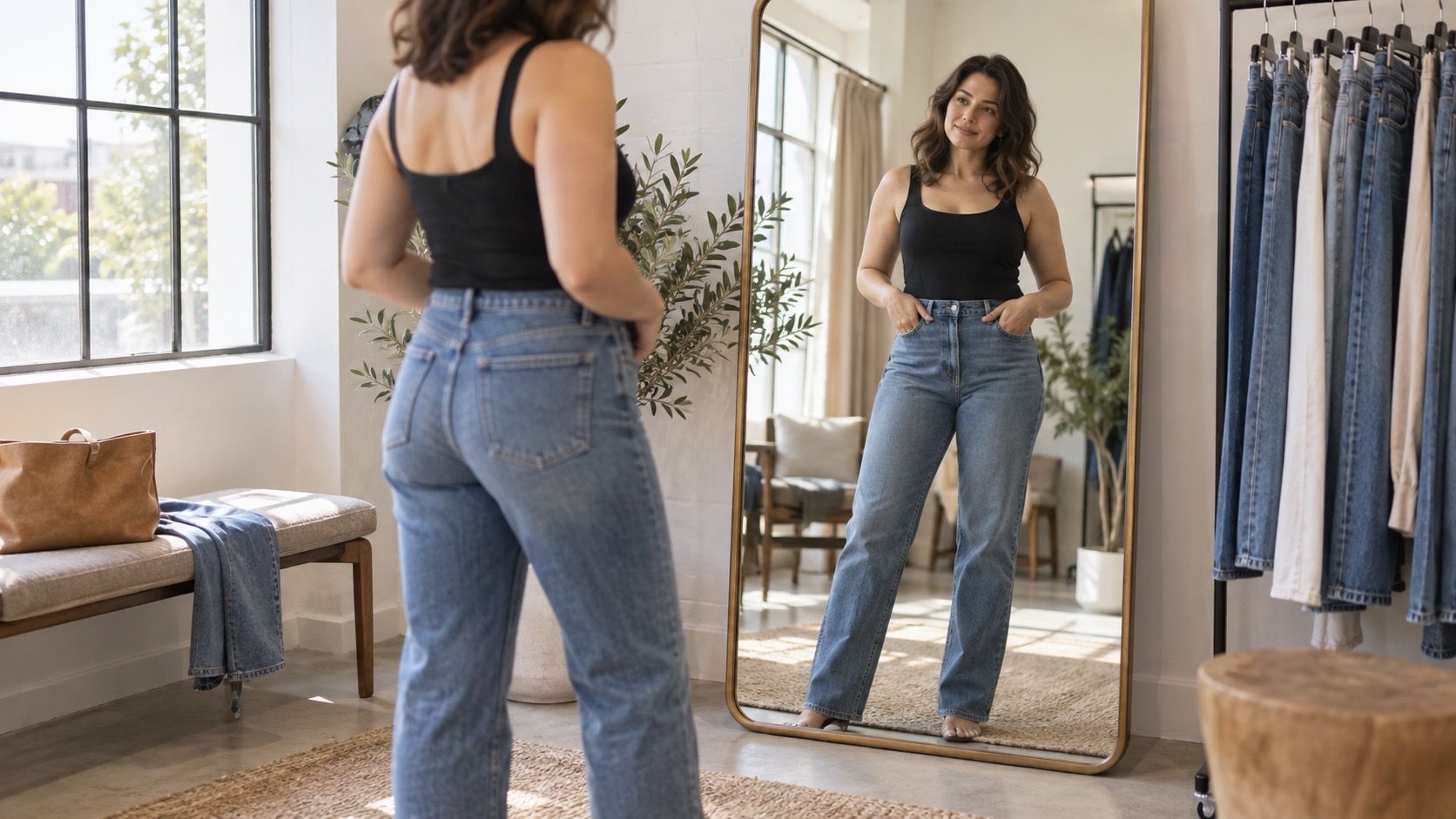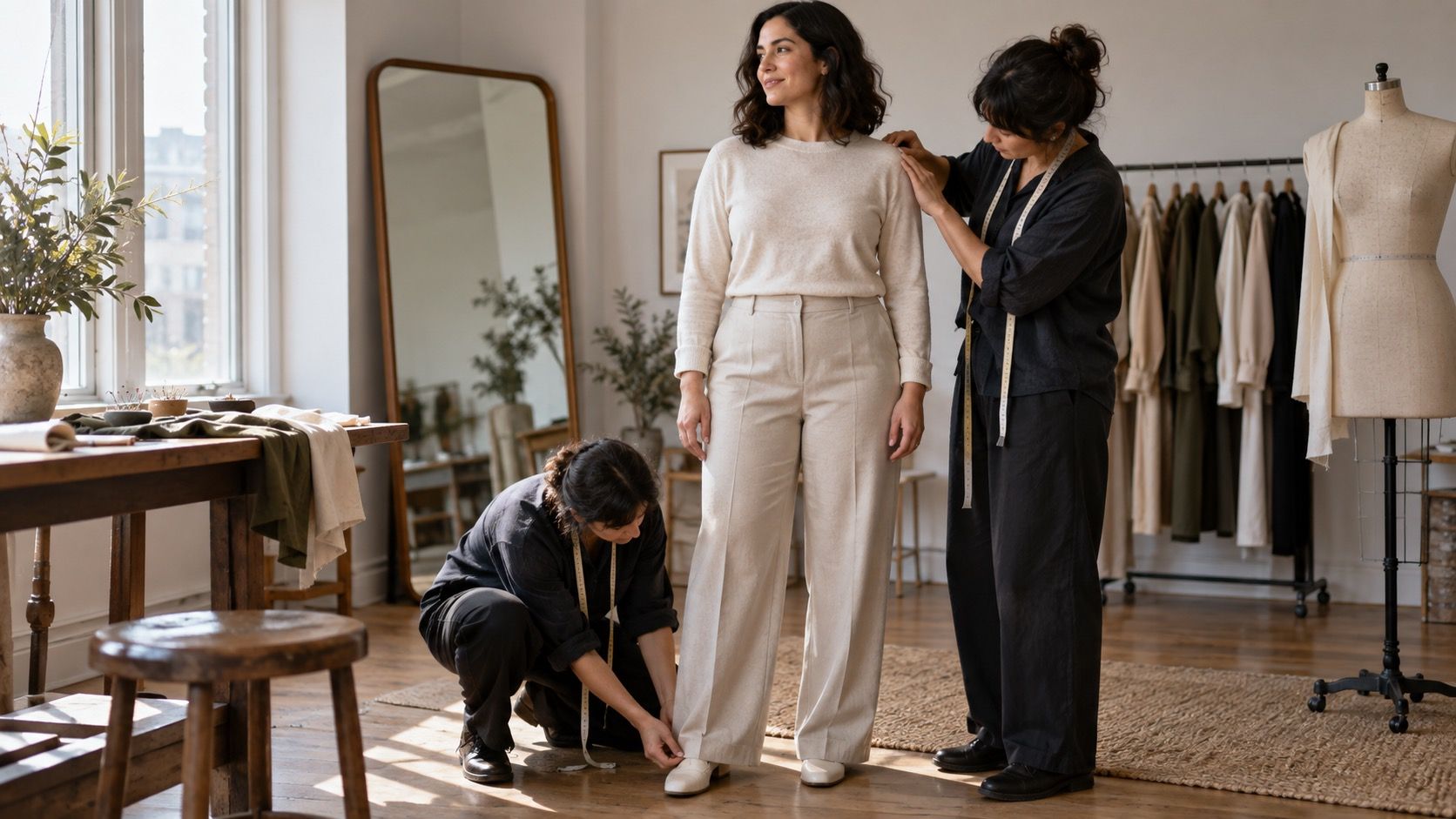
Most body shape advice begins with a diagram and ends with somebody telling you what to hide. That is a poor way to get dressed. A label can give you a starting point, but the useful work happens in front of a mirror: where a shoulder seam lands, whether you can sit in a skirt, and whether an outfit still feels like you after lunch.
Start with the garment that already fits
Before deciding whether you are pear, rectangle, apple, hourglass, or something that refuses to sit neatly on a chart, pull out one outfit you wear without thinking. Look at the boring details. Does the shoulder seam end at your shoulder? Is there enough room across the back when you reach for a shelf? Does the waistband stay put when you walk?
Those checks tell you more than a measuring tape used once on a Sunday evening. A dress may suit a so-called body type on a retailer's graphic and still pinch at the ribcage or hang oddly at the bust. Fit is not a reward for having the right proportions. It is the first condition for clothes looking intentional.
When I help a friend sort a crowded rail, I start with the pieces she reaches for on a rushed morning. There is usually a reason: a V-neck that leaves room at the neck, a trouser rise that does not fold when she sits, or a jacket with enough ease to layer over a knit. Keep that evidence. It is better than any rulebook.
Pick one proportion to change, not your whole outline
People often buy an entire new silhouette because one photo made them feel wrong about their shape. That is expensive and usually unnecessary. Choose one area you want to alter visually for the day: a clearer waist, more length through the leg, less bulk around the shoulders, or a stronger vertical line. Then let the rest of the outfit stay quiet.
A cropped cardigan over high-rise trousers can make the waist more obvious. A longer open shirt over a close-fitting column of color creates a vertical line without pretending to change your body. If your hips are wider than your shoulders, you might enjoy a jacket with a little structure at the shoulder. You also might hate it. Both reactions are useful information.
Hem length has a larger effect than many people expect. A midi skirt that stops at the widest part of the calf can feel heavy; moving it a few inches up or down changes the balance. The same is true of a blazer that ends at the hip versus one that reaches past it. Try the adjustment before buying a different category of clothes.
| If you want to notice... | Try changing... | Check before keeping it |
|---|---|---|
| A more defined waist | A higher rise, wrap shape, or shorter top layer | Can you sit and breathe without the waist pulling? |
| More length through the body | Similar-color top and bottom, longer open layer | Does the layer move cleanly rather than swallow you? |
| Less emphasis on one area | Simpler fabric and fewer seams there | Are you comfortable, or merely trying to disappear? |
| More shape at the shoulder | A crisp collar, sleeve seam, or light jacket | Can you lift your arms and wear a bag comfortably? |
Let fabric do some of the work
The same cut behaves differently in poplin, jersey, linen, denim, or a thin satin that clings to every seam. This is where a body shape style guide becomes too abstract. A straight dress in a medium-weight knit may skim the body and feel relaxed; the same dress in stiff cotton can stand away from the hips and create a completely different outline.
Look at fabric recovery, especially in trousers, fitted skirts, and ribbed tops. Stretch that does not recover soon turns a good fitting-room result into knees that bag and a waistband that slides. Bend, sit, and take a few steps. If the fabric twists at the thigh or rides up after thirty seconds, it will not become kinder at a desk or on public transport.
Structure is not automatically formal. A small amount of weight in a shirt collar or trouser crease can make a soft outfit feel finished. On the other hand, heavy shoulder pads, thick pleats, and a stiff belt all together can feel like costume. Use one structured piece when you want definition, then give the rest of the outfit room to breathe.
Use necklines and waistlines as adjustable tools
Necklines sit close to the face, so they affect an outfit before anyone notices your body shape. A crew neck can feel contained and graphic. A scoop or V-neck opens the chest. A square neck makes a clean horizontal line. There is no moral hierarchy here; the question is whether the line works with your haircut, jewelry, bra, and the temperature outside.
Waistlines deserve the same practical treatment. A high waist can lengthen the look of the leg, but it may press into the ribs on a long drive. A low rise can feel easy on a short torso for some people and awkward for others. A natural waist seam is often less fussy than a belt because it does not keep rotating during the day.
For dresses, check where the waist seam sits from the side as well as the front. A seam placed too high can look deliberately empire-line, but it can also make the bodice feel skimpy. A seam placed too low may drag the skirt down. The right answer is the one that lets you move without spending the day tugging it back into place.
Dress for the occasion you will actually have
Clothes do not exist under fitting-room lights. A body-conscious slip dress may be fine for a dinner where you sit for ninety minutes and less charming for a wedding involving grass, stairs, and a warm train platform. A roomy linen suit can be excellent in dry heat and miserable in rain when the hem starts drinking from the pavement.
Build around the part of the event with the most friction. If you will walk twenty minutes, test the shoes with the trousers. If you will be photographed outdoors, look at the outfit in daylight and check whether the fabric goes sheer. If there is a long meal, make sure the waistline is not an enemy. These are not glamorous checks, which is probably why they prevent so many bad purchases.
Personal style also needs a place in the decision. Someone who likes sharp tailoring may feel more like herself in a slightly oversized blazer than in the wrap dress prescribed for her body type. Someone else may prefer softness and movement. Clothes work best when proportion and personality point in roughly the same direction.
Keep a record of what works, then break a rule on purpose
Take quick mirror photos of outfits that felt good at the end of a real day, not just at eight in the morning. Note the rise, hem, fabric, and shoes. After a month, patterns show up: perhaps you prefer a defined waist only in dresses, or wide trousers only with a fitted top, or sleeves that end above the elbow. This is your own evidence base.
Then test one rule you have absorbed without checking. If you were told that a certain body type cannot wear a boxy jacket, try one with the right shoulder width. If you avoid wide-leg trousers, try a pair with a clean hip fit and the right inseam. The goal is not to prove a chart wrong. It is to stop giving it authority over a changing, ordinary human body.
How to dress for your body shape comes down to repeated small decisions: fit first, one proportion at a time, fabric that behaves, and enough comfort to forget about your clothes. That is less dramatic than a makeover formula. It is also far more likely to survive a busy Tuesday.