An hourglass body shape is usually described as a fuller bust and hips with a noticeably narrower waist between them. That description is useful only up to a point. Bodies are not diagrams, and a tape measure taken after breakfast can tell a different story from one taken before dinner. The better question is practical: where do ordinary clothes pull, gap, or lose their line? Once you know that, the hourglass figure becomes a fit clue rather than a rule you have to live up to.
When the label helps, and when it gets in the way
Many people land on the hourglass label because the bust and hips look broadly similar in width and the waist is easier to spot from the front. A pair of straight-leg jeans may fit at the hip but float at the back waist; a woven shirt may button over the bust and then hang loose below it. Those are more useful observations than chasing an exact ratio. Shoulder width, ribcage, height, and muscle distribution change the picture, so two people with similar hourglass body measurements can need completely different cuts.
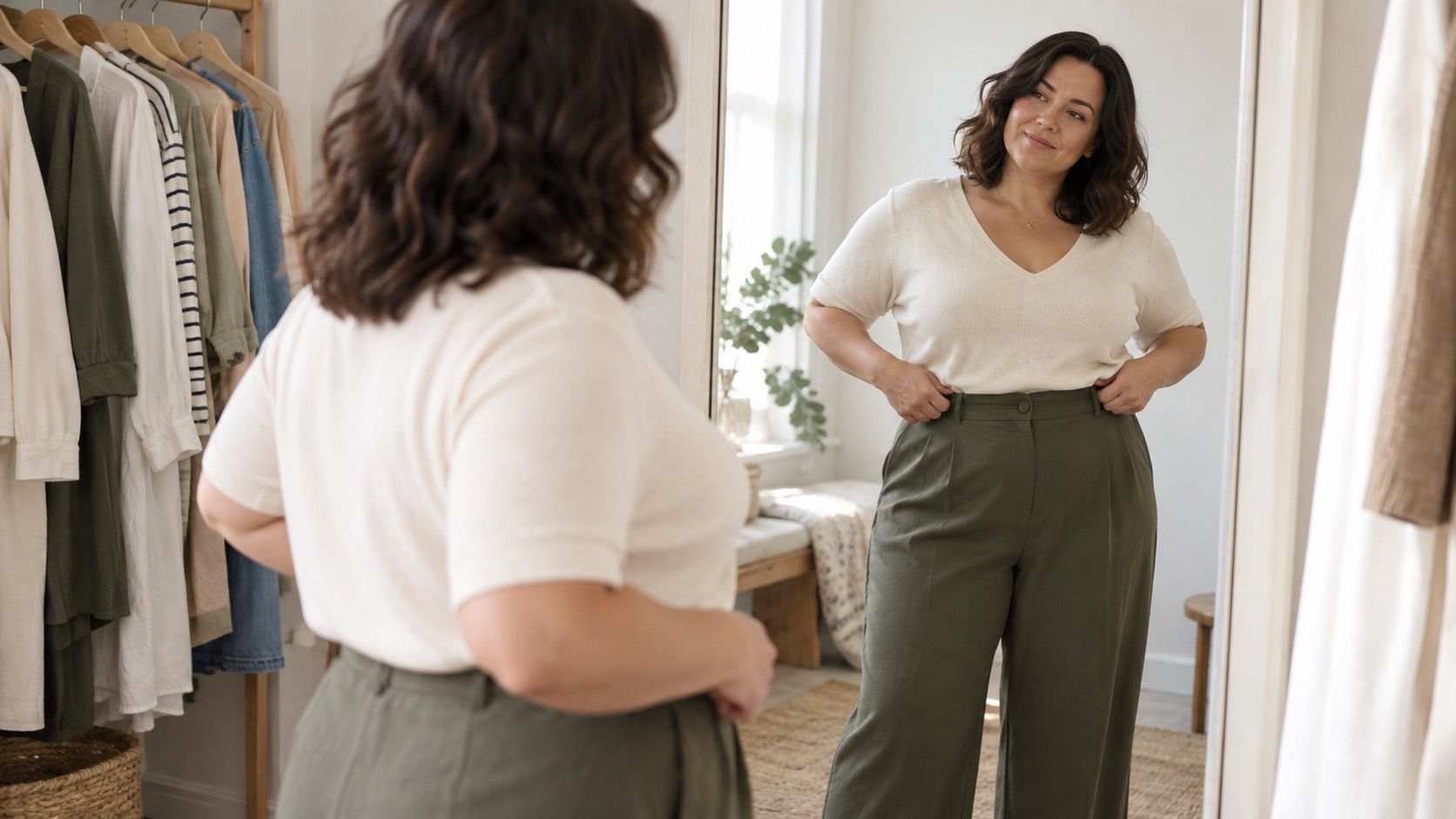
I would treat a mirror check as a starting point, not a verdict. Stand in simple underwear or close-fitting clothes, look at the front and side, then put on the trousers and dress you wear most. Notice whether the waist seam stays where your waist actually bends and whether fabric pulls across the chest or hips. A body can have an hourglass outline and still prefer relaxed shirts, low-rise jeans, or no belt at all. Comfort is not evidence that the category is wrong.
Measure for fit instead of trying to pass a body-shape test
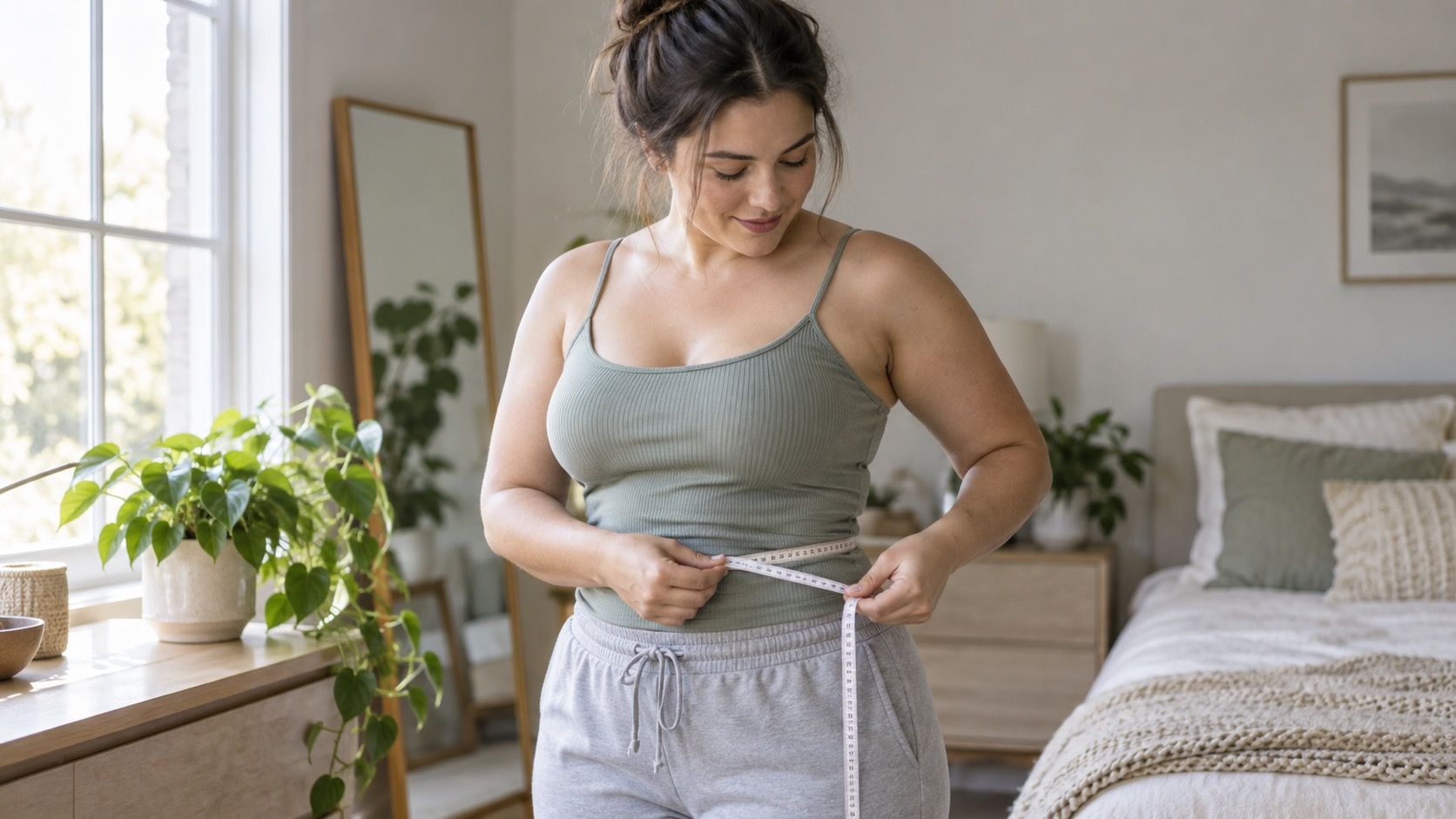
If measurements are useful to you, take bust, natural waist, and fullest hip measurements with a soft tape held level. Do not suck in, and do not pull the tape tight enough to leave a mark. Write down the numbers, then compare them with a brand's garment chart rather than a generic chart on social media. Ready-to-wear sizing has a habit of making this unnecessarily theatrical: one label's size 10 can be another label's size 14, even when the garment itself is nearly identical.
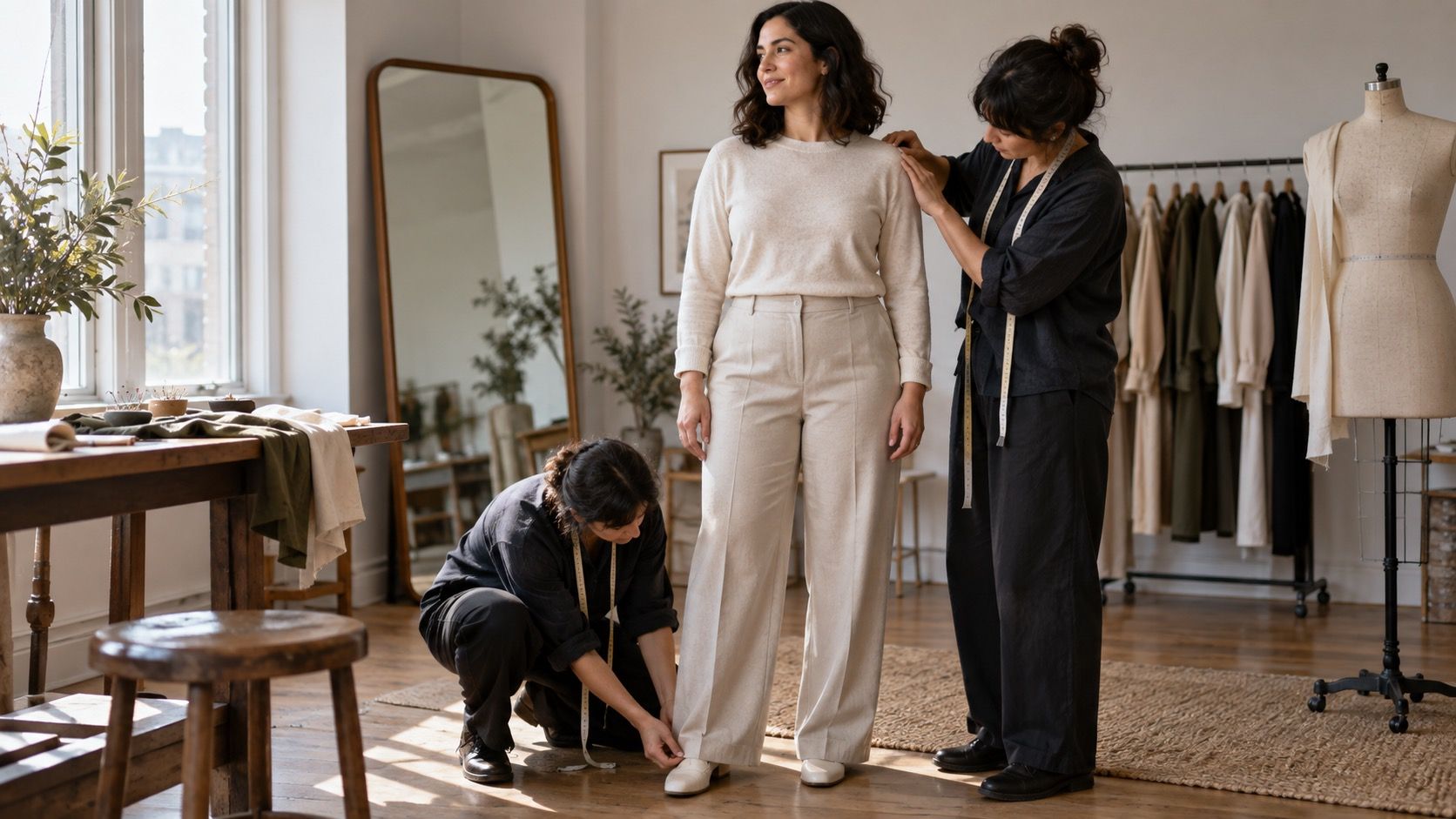
For an hourglass figure, the most revealing checks are often on the garment. In a fitted jacket, can you fasten it without horizontal lines across the bust? In a skirt, does the waistband sit flat while you walk and sit? In a dress, is the seam intended for the waist actually at your waist? A dress that fits the bust and hips but has a loose middle can look boxy; a dress that nips too hard can feel like a costume by lunchtime. Neither problem means your proportions need fixing.
| Garment | Try first | Check before keeping it |
|---|---|---|
| Button-front shirt | Enough room through the bust, with light waist shaping | Sit down and check for gaping at the buttons |
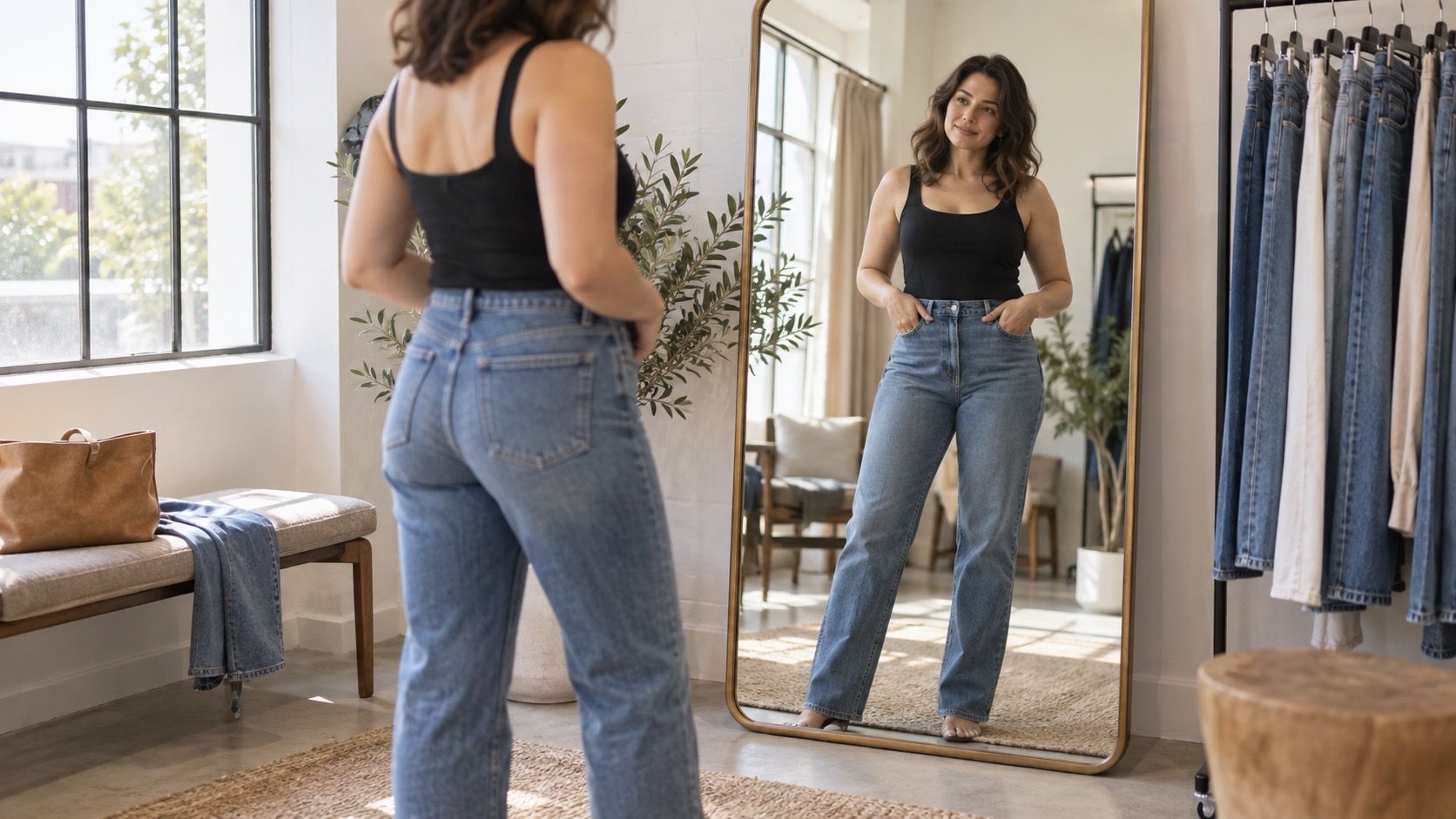
| Jeans or trousers | A rise that reaches your comfortable waist point | Look for back-waist gaps and pulling at the hip pockets |
| Wrap or fitted dress | A waist seam or tie that can be adjusted | Make sure the neckline stays put when you move |
| Blazer | Soft shaping through the waist and enough bust ease | Reach forward; the back should not lock your arms |
Start with the waist only if you enjoy wearing it
Advice for the hourglass body shape tends to repeat one instruction: define the waist. It is not bad advice, but it gets repeated as if every outfit needs a belt. A waist seam, a shaped side seam, a cropped knit, or a half-tucked shirt can create a similar sense of proportion with less fuss. On a humid day or a long train ride, a stiff belt may be the worst part of an otherwise good outfit. There is no prize for enduring it.
The useful distinction is between waist placement and waist compression. High-rise trousers can meet a short torso too close to the ribs. A low-slung skirt can sit comfortably but make a tucked top bunch at the middle. Try the same top with two rises and look at where the visual break falls. If you like a looser silhouette, choose fabric that drapes from the shoulder or bust without catching at the widest hip point. That gives room to move while still following the body underneath.
Build outfits from the difficult piece outward
The difficult piece is often a bottom, not a top. If trousers fit your hips and waist without a belt, start there. Add a close-fitting tee, an open cardigan, or a shirt with enough room at the bust. If you already own a dress that works, pay attention to why: perhaps its wrap tie is adjustable, its knit has recovery, or its skirt begins below the natural waist. Those details travel better from one shopping trip to the next than a list of approved silhouettes.
Jackets deserve a fitting-room test of their own. A sharply tailored single-button blazer can be lovely, but it needs enough ease over the bust and across the upper back. Softer knit blazers and unstructured coats are often easier, especially when the hips are close to the bust in width. For layers, I like to check the side view under ordinary lighting. A long cardigan that catches at the hip can feel fine at home yet look strained in a shop window. A straighter, open layer may fall more cleanly.
Dresses, skirts, and the problem of fabric that does not cooperate
Dresses are where hourglass styling advice gets overconfident. Wrap dresses, fit-and-flare shapes, pencil skirts, and bias cuts can all work, but the fabric decides a lot. Thin jersey may cling to underwear lines and stretch out at the waist. Crisp cotton can fit the bust but stand away from the back. A bias-cut slip dress may skim beautifully when still, then twist around the body after ten minutes of walking. Check it in motion, not only under the kind fitting-room mirror.
A skirt that begins at the waist does not have to be narrow. A gentle A-line can leave room at the hip while keeping the top half of the outfit clear. With a pencil skirt, look for a back vent and enough room to take a normal stride. With a fuller skirt, tuck or shorten the top only if you like the effect; a slim knit worn loose can be more believable than a forced little waist. The aim is to make getting dressed easier, not to manufacture a textbook outline.
Rules worth leaving in the changing room
You do not need every top to be fitted, every dress to wrap, or every coat to have a belt. Oversized shirts, boxy jackets, straight dresses, and wide trousers are available to an hourglass body shape too. The question is whether the piece gives you enough room at the bust and hips, stays comfortable when seated, and feels like something you will actually reach for on an ordinary Tuesday. A good outfit can blur the waist completely if that is the mood you want.
It also helps to separate clothing fit from self-assessment. Weight changes, hormones, age, posture, and strength training can change measurements and how fabric sits. You do not have to rename your body each time. Keep a few notes about rises, necklines, and fabrics that felt good; return items that only work when you stand perfectly still. That small record is more useful than an hourglass checklist, and it leaves space for personal taste, which is usually the part no chart can predict.