If you are wondering what is my body shape, a quiet ten minutes at home is usually more useful than an online quiz built around one number. You need a soft tape measure, a mirror, and a willingness to let the result be slightly untidy. The point is to understand proportions for fit, not to squeeze yourself into a category.
Set up a measurement that does not flatter or punish you
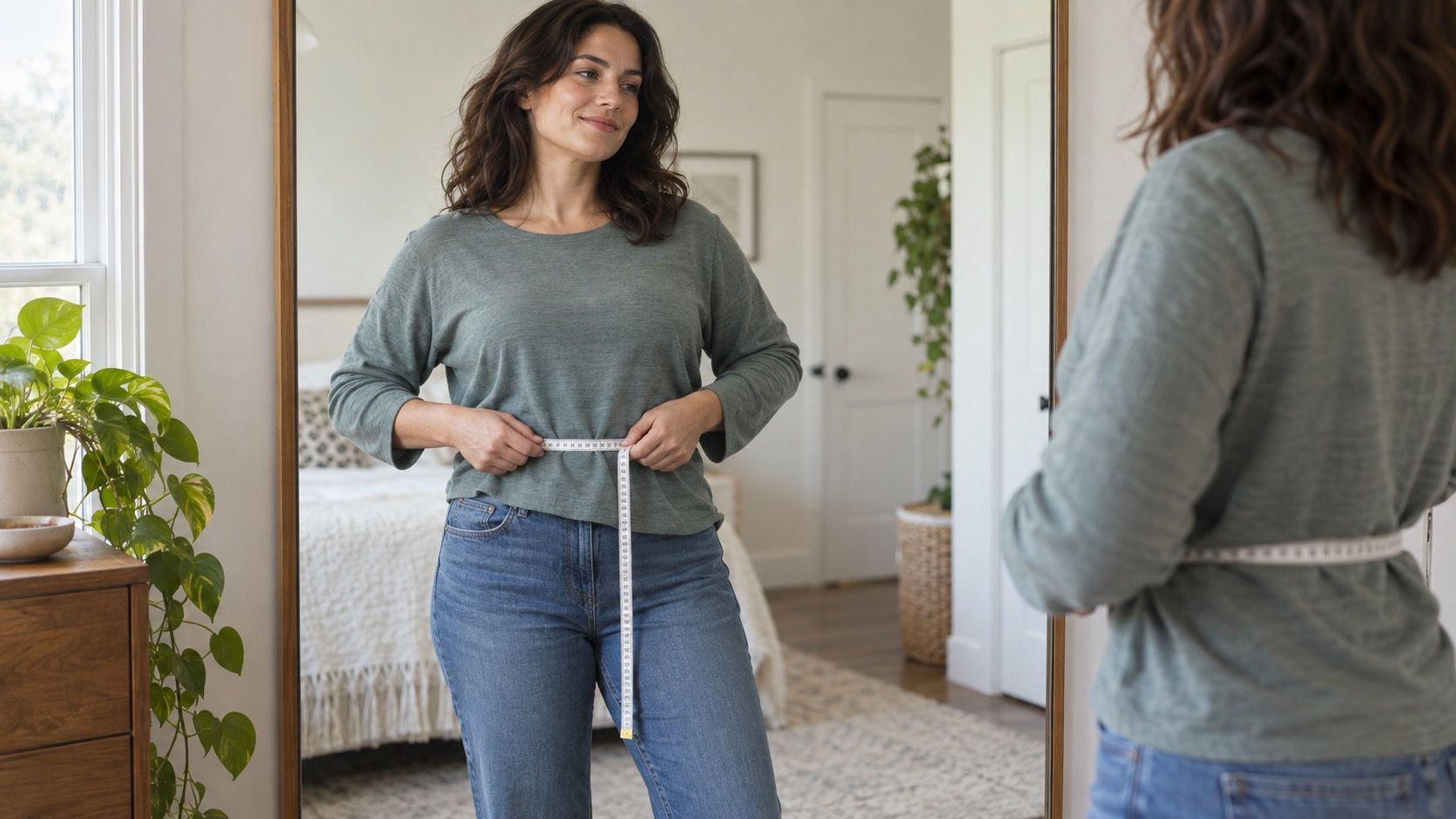
Choose ordinary close-fitting clothes or underwear: enough to see the outline, not so much compression that it changes it. Stand on level floor in front of a full-length mirror, with bare feet about hip-width apart. Do not pull your shoulders back like a soldier and do not slump. The relaxed stance you use while waiting for the kettle is the one clothes must fit.
Use a flexible measuring tape, not a metal builder's tape. Keep a notes app or a scrap of paper nearby, because relying on memory leads to the familiar guesswork of “was that 37 or 39?” If possible, ask someone to help with the shoulder measurement. Working alone is fine, but twisting to reach your back can move the tape and produce an impressive number with no practical meaning.
Take four measurements without chasing perfection
Measure the bust around its fullest part, with the tape level across the back. For the waist, find the narrowest point of your torso where the tape sits comfortably; it is often above the navel and not necessarily the waistband of your favorite trousers. Measure hips around the fullest part of your seat and upper hips, again checking in the mirror that the tape has not climbed at the back.
Shoulders are different because they are a width, not a circumference. Run the tape across the back from the outside edge of one shoulder to the other, where a well-fitted shirt seam would ideally end. Keep your arms loose. This is one reason a body shape calculator measurements result can be approximate: calculators may compare a shoulder width with three circular measurements as if all four figures were interchangeable.
| Measurement | Where to place the tape | Small check that prevents errors |
|---|---|---|
| Bust | Fullest part of the chest | Look sideways: the tape should stay level across the back |
| Natural waist | Narrowest relaxed point of the torso | Exhale normally; leave enough room for one finger |
| Full hip | Widest part around hips and seat | Take a step back from the mirror to check the tape is horizontal |
| Shoulders | Outer shoulder edge to outer shoulder edge across the back | Ask for help if you need to twist to see the tape |
Compare the proportions, not the isolated numbers
Put the figures beside each other and look for broad relationships. Are shoulders noticeably wider than the fullest hip? Do bust and hips sit in a similar range? Is the waist substantially smaller than both, or only a little smaller? There is no universal cutoff that turns a body into an hourglass, pear, rectangle, apple, or inverted triangle. A few centimeters can matter in a fitted dress and mean almost nothing in an oversized sweatshirt.
Now compare the numbers with your reflection. If hips and shoulders measure close but your shoulder line is visually strong because it is square or broad, note that. If the waist measurement is modest but high-waisted trousers always reveal a clear inward curve, note that too. How to find your body shape is less like solving a formula and more like combining two pieces of evidence that should roughly agree.
Use photos as a second opinion, not the judge
A front-facing photo can reveal proportions that are hard to see while you are standing in the mirror, but camera distance changes bodies. Set a phone at roughly chest height several steps away, use the ordinary lens rather than a dramatic wide angle, and wear the same simple outfit used for measuring. Take one front photo and one from the side. A low camera on a bathroom counter is great at exaggerating legs and shoulders; it is not an expert on your silhouette.
Look for shoulder slope, waist position, and where the hip line reaches its fullest point. Avoid using a photo taken while you have shifted one hip, held a bag, or raised an arm. One image can be misleading; two or three on different days are better. The question is not whether the photograph looks good. It is whether it confirms the fit clues you already notice in shirts, jeans, and jackets.
When the result feels mixed, record the useful clues
Mixed results are normal, especially when your bust, shoulders, and hips are fairly close. Rather than forcing a label, write a plain-language note: “shoulders need room,” “waist is higher than most trousers,” or “hips are the widest point in rigid fabric.” These notes answer the practical question behind what is my body shape far better than a label alone.
Repeat measurements once, at a similar time of day. A different bra, a full meal, menstrual-cycle changes, and posture can change a circumference slightly. If the second set is close, use an average or a small range. If it is not, check the tape position before assuming your body has changed overnight. Consistency matters because the next step is choosing a better garment, not winning an argument with a calculator.
Test the result against real clothes
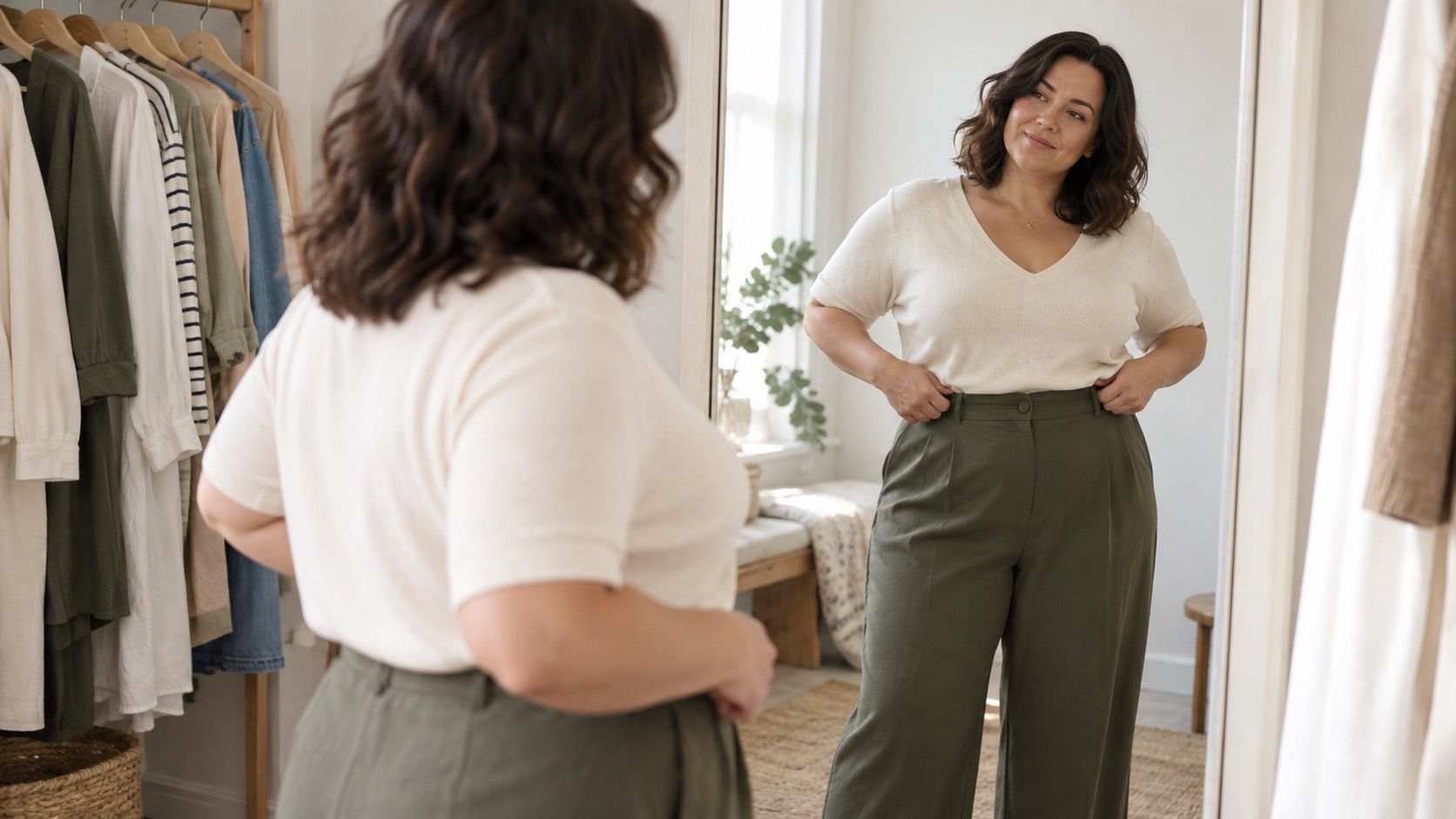
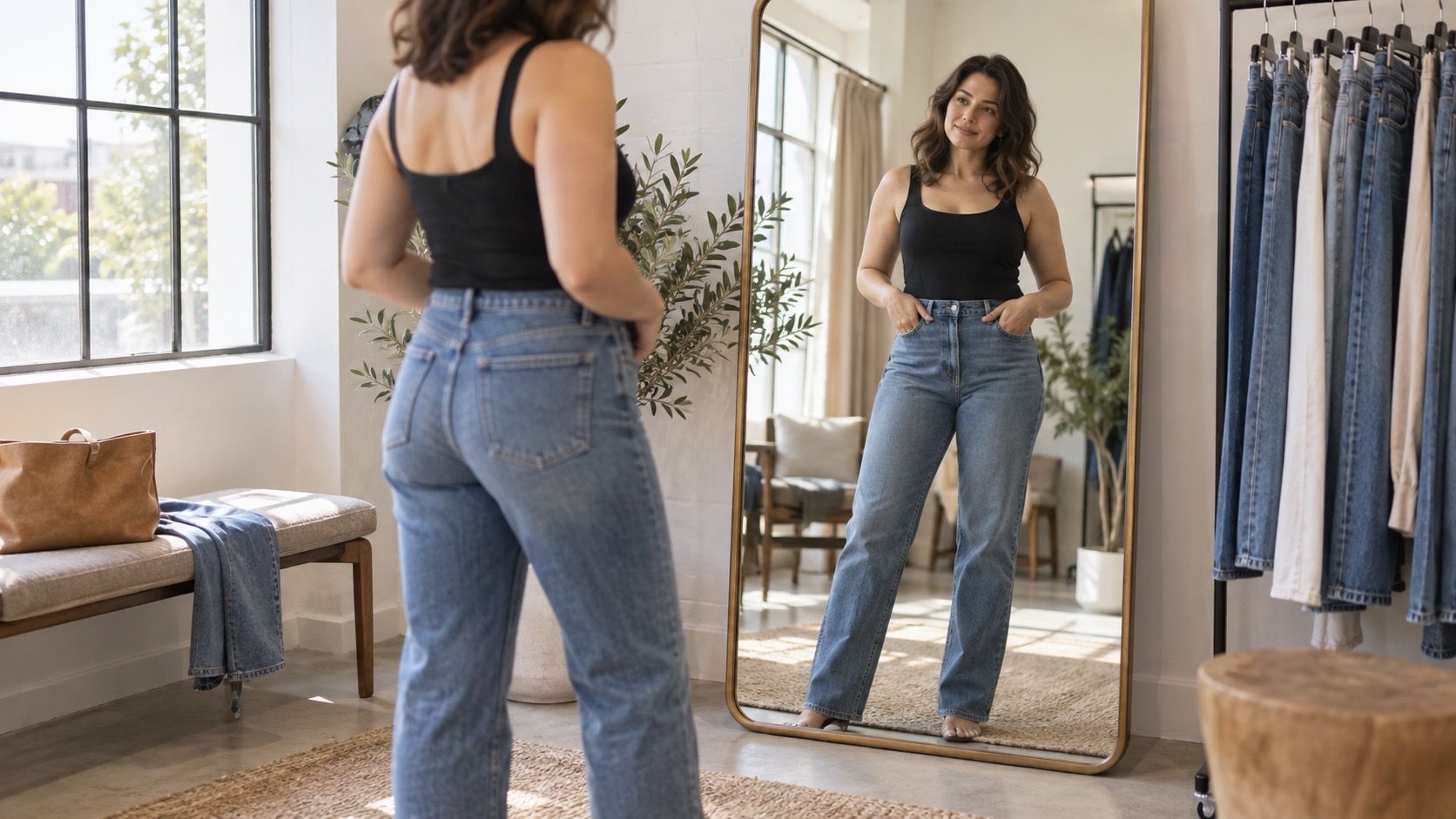
Open your wardrobe and pull out one item that always works and one that nearly works. Notice where each has ease: shoulder seams, bust darts, waistband, rise, hip, and hem. A blazer that fits everywhere except the shoulders tells you more than a category name. Jeans that fit the hips but gap at the waist suggest a proportional difference worth shopping for, perhaps with a contoured waistband or roomier hip cut.
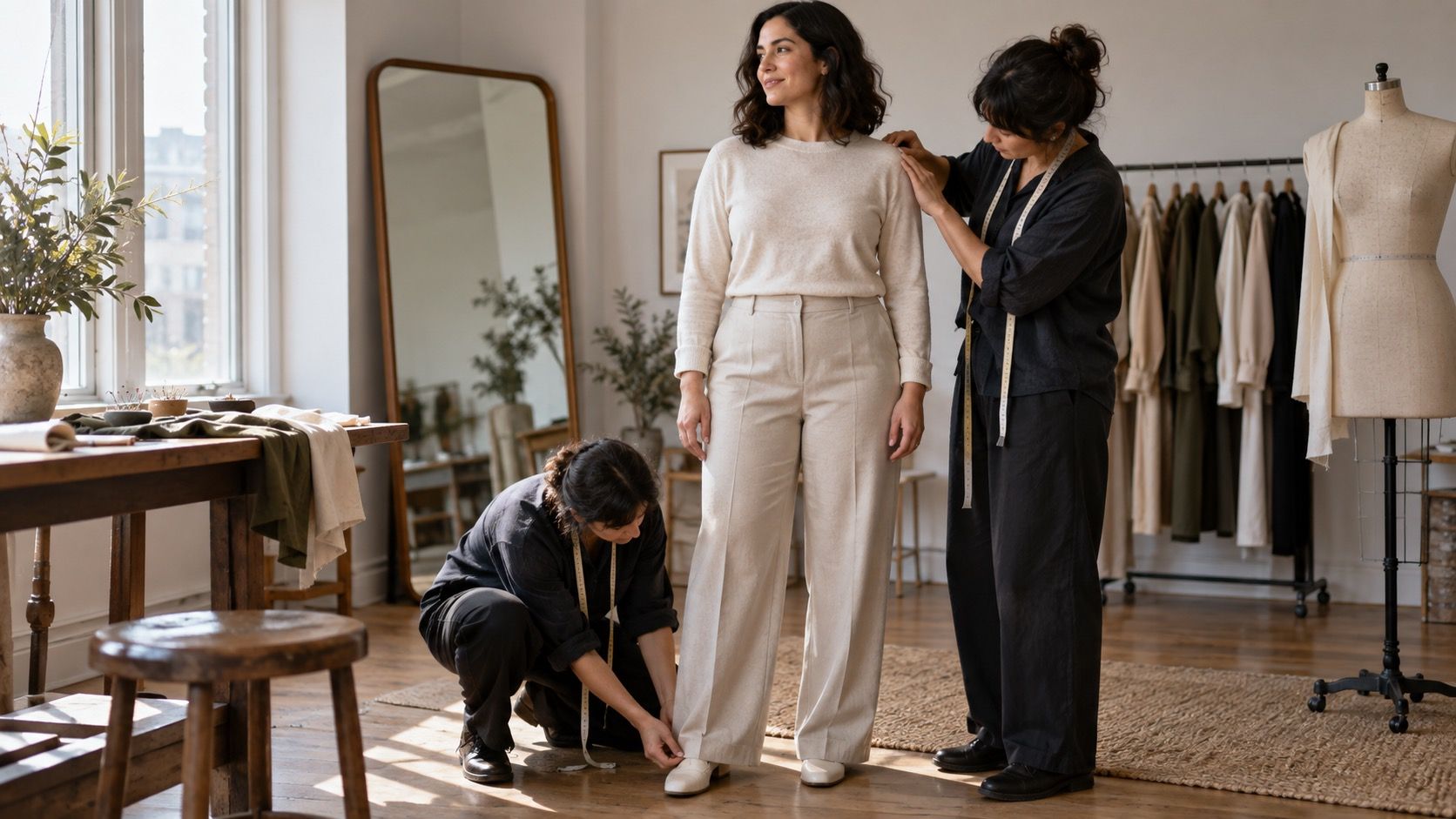
Take the measurements with you when shopping, but treat them as a starting point. Brand size charts vary, fabrics stretch, and a skilled alteration can solve a waist or hem issue more easily than a tight upper back. Once you can name the pressure point, fitting rooms become less mysterious. You are no longer trying to make your body suit the label; you are checking whether the garment has been built to accommodate it.