An inverted triangle body shape is usually described as shoulders that read wider than the hips. It can be a helpful shopping shorthand, especially when sleeves pull or jackets hang from the shoulder strangely. It should not turn into a project to make your upper body disappear. Clothes need to fit the shoulders you have, then you can decide whether you want contrast, softness, or a strong straight line.
Check the shoulder seam before judging the whole outfit
For broad shoulders, the shoulder seam is the first honest test. It should end near the point where your shoulder turns down, not halfway along the upper arm and not pulled toward your neck. A blazer can have a lovely waist and still look wrong if that seam is off. Lift your arms as if you are reaching for a shelf. If the back binds or the front rises, try another cut before experimenting with belts or accessories.
Some people with a V shape body type women label as “inverted triangle” naturally prefer a clean, sharp shoulder line. Others find a dropped shoulder or raglan sleeve easier to wear. Neither choice is more correct. The useful distinction is structure. A crisp shoulder pad adds width and direction; a soft knit sleeve follows the body. Put on both with the same pair of jeans and the difference becomes obvious without any complicated theory.
Necklines can change the mood without changing your body
Necklines are often treated as a balancing trick, but they are really a framing choice. A modest V-neck can open the center of the chest and make a tailored shirt feel less rigid. A scoop neck has a softer, wider line. A crew neck keeps the top compact and can look excellent under an open jacket. The right one depends on your face, comfort level, and the rest of the outfit, not on a diagram of an inverted triangle.
Pay attention to details near the shoulder. Cap sleeves, epaulettes, dense ruffles, and wide horizontal stripes all draw the eye outward. That may be exactly the point of a party top. On an ordinary day, one obvious shoulder detail is usually enough. A blouse with a quiet neckline and smooth sleeve lets earrings, hair, or a patterned skirt do the talking if you want the outfit to feel less top-heavy.
Build the lower half around movement and comfort
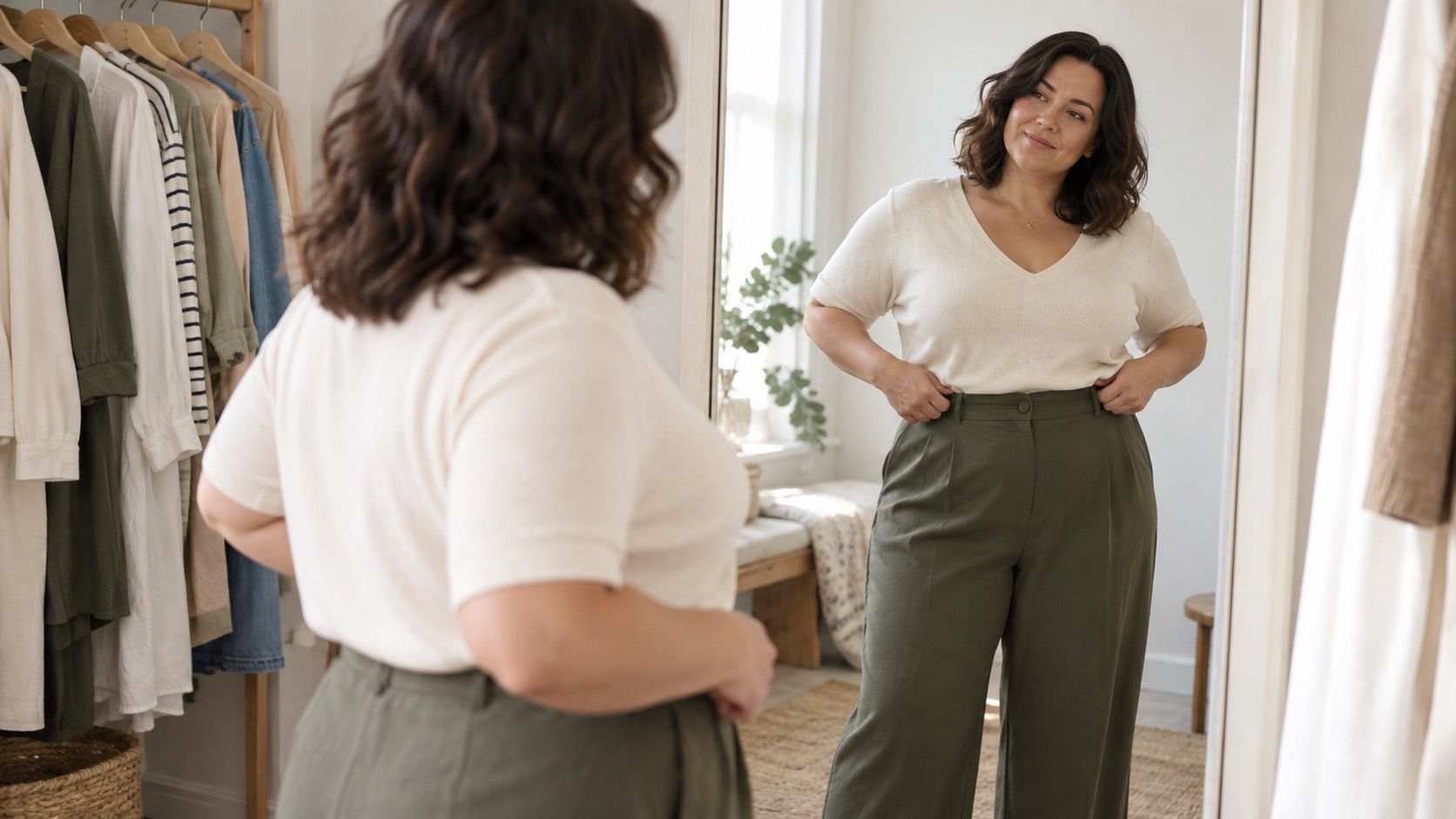
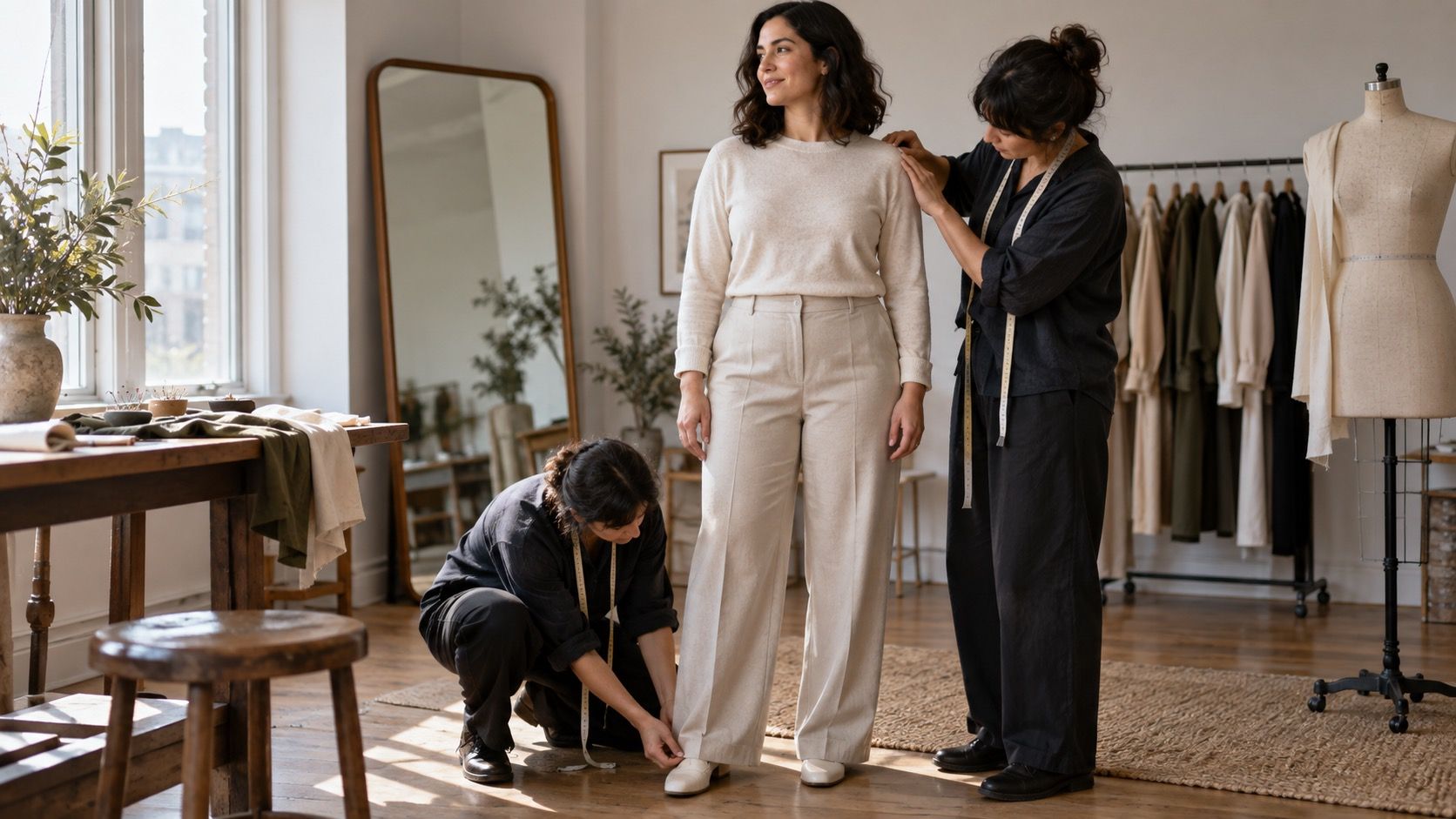
Wide-leg pants are popular advice for an inverted triangle body shape because they add visual weight below the waist. They are also simply comfortable when the rise and inseam are right. The waistband should stay flat when you sit, and the hem should clear the floor in the shoes you wear most. A dramatic palazzo leg can look great in a photo but become a nuisance near stairs, bike pedals, or a wet pavement.
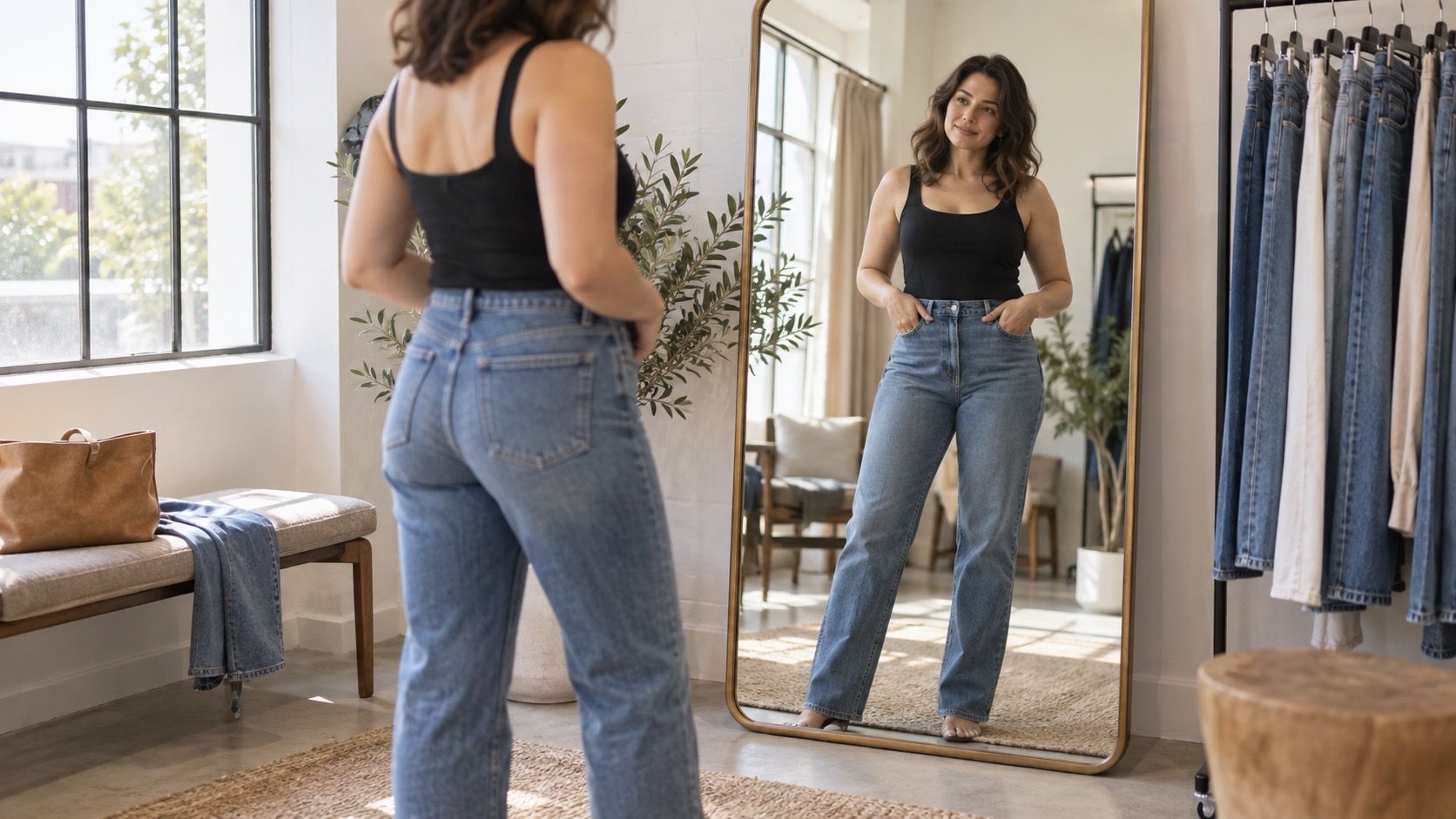
A-line skirts, bias-cut midi skirts, and trousers with a gentle pleat can give the lower half more movement. None of them is mandatory. Straight jeans and a slim skirt can be just as good when you enjoy a more vertical silhouette. If you are trying a fuller bottom, keep the top relatively close to the body at first. A voluminous sweater with a full skirt can work, but it takes more attention to fabric and length than a fitted tee and trousers.
| Option | Try it when | Check before keeping it |
|---|---|---|
| Wide-leg trousers | You want a grounded lower line | Rise stays flat; hem works with your real shoes |
| A-line skirt | You want movement at the hips | Waistband does not twist when walking |
| Straight jeans | You prefer a long, simple silhouette | Top has enough shape for your taste |
| Printed trousers | You want the lower half to be a focal point | Print scale feels right from a few steps away |
Use dresses and outerwear as complete shapes
A dress saves you from having to negotiate a top and bottom separately, but it still has to move. An A-line dress with a defined waist often feels easy because the skirt has room while the bodice remains clear. A slip dress can make a beautiful long line, although a flimsy fabric may cling differently after an hour of walking. Bring the layer you expect to wear over it when you try one on; a jacket can change the entire proportion.
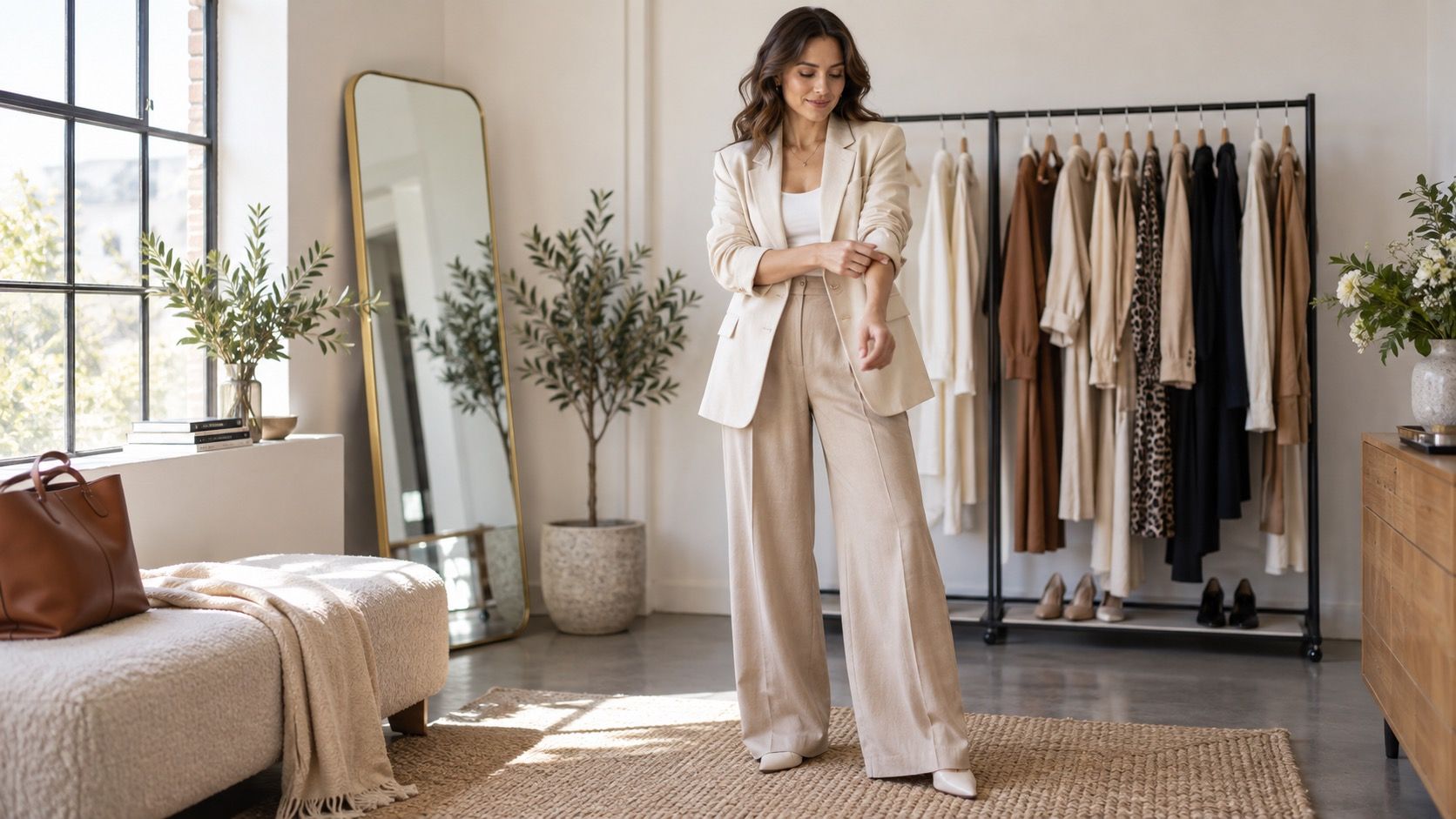
For coats and blazers, look at the front while they are open and closed. A single-breasted coat with a softer shoulder can be less fussy than a double-breasted style with strong lapels, yet a structured jacket is not automatically off limits. The practical question is whether it feels like you or like a borrowed uniform. If you are constantly pushing the lapels inward or pulling the sleeve heads down, the garment is asking too much of you.
Details at the waist can connect the two halves without pretending to redraw your figure. A half-tuck, a visible waistband, or a jacket that ends near the hip gives the eye a place to rest. Test these choices from the side as well as the front. A gathered waistband that looks fine standing up can bunch under a jacket, and a long untucked top can shorten the leg line if it ends at the widest part of the hip.
Shoes change the read of wide-leg pants and skirts more than styling charts admit. A low-profile sneaker keeps a trouser casual and may make the hem feel longer; a small heel or pointed flat gives a cleaner finish. There is no need to buy shoes for the category. Use the pair you already reach for, then choose the hem around that real-life decision.
Balance is optional; confidence in the cut is not
Most guides make the goal sound like mathematical balance. Real dressing is less tidy. You might choose a sleeveless fitted top and straight trousers because you like the cleanness. Another day, a soft blouse and a full skirt may feel more relaxed. The broad shoulders body shape label can explain why certain cuts sit differently, but it cannot decide what feels good on your body.
Use a mirror for fit and a phone photo for proportion. Take the photo from a few paces back in daylight, then leave it for ten minutes before deciding. This tiny pause cuts through the fitting-room panic that makes every shoulder look too wide and every trouser leg too large. Keep what lets you move normally and makes sense with the rest of your wardrobe. The rest is just clothing advice, not a rulebook.