A pear body shape usually means the hips look wider than the shoulders, often with a waist that is fairly easy to see. It is also called a triangle body shape, though that tidy name misses a great deal. Some people have a fuller hip with narrow shoulders; others have strong thighs, a small bust, or a long torso. Clothes do not care about the label nearly as much as they care about where the fabric has to travel. The useful part is learning which garments give your hips room without making the rest of the outfit feel borrowed.
Look at the clothes you already argue with
Before measuring anything, pull out the jeans that pinch, the blazer that looks good only when left open, and the dress you wear without thinking. They usually reveal the pattern. With a pear shape, bottoms may be tight at the hip and loose at the waist, while tops in the same labelled size can be comfortable or even roomy. A fitted sheath dress may pull across the seat although the shoulders are fine. That is a construction issue, not a failure of your body to match the rack.
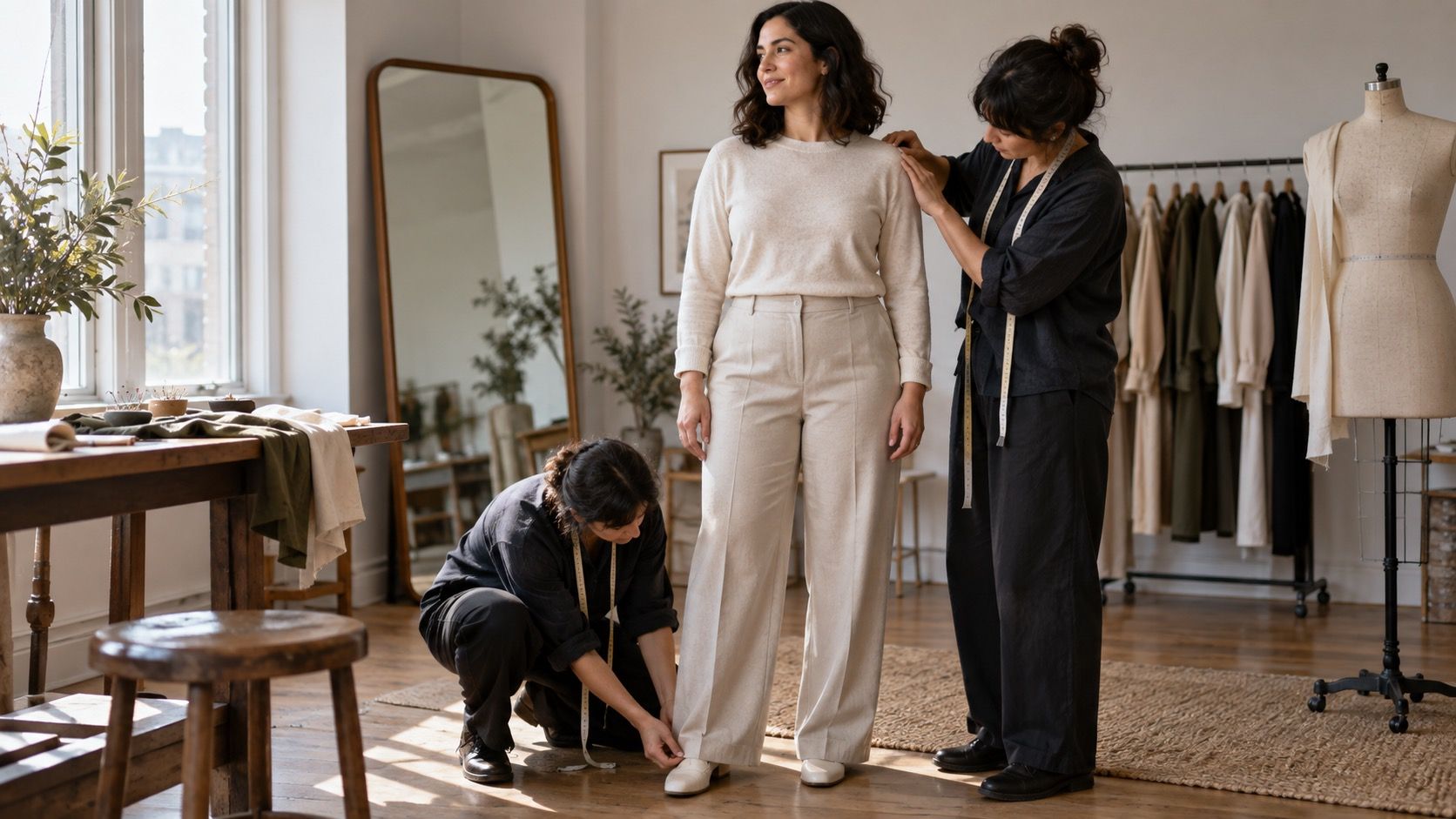
Look from the side as well as the front. A waistband that rolls when you sit, pockets that flare open, or a skirt lining that climbs after a few steps are all worth noticing. I have seen plenty of fitting-room advice that tells people to simply size up. Sometimes that is right. Sometimes it leaves an extra two inches at the waist and shoulders, then the garment looks tired by noon. Alterations or a different cut can be the calmer solution.
Measure the hip and shoulder relationship without making it a diagnosis
For a quick check, measure the fullest part of the hips and the bust, then note where your shoulders sit in relation to the hip line in a mirror. Do it in close-fitting clothes, with the tape level and your feet planted normally. The numbers are only a shopping aid. A pear body shape does not require a particular difference in inches, and bodies change through the month, across seasons, and with activity. If a garment fits, no percentage calculation gets to overrule it.
When you use a size chart, choose a bottom by the hip measurement first. Then check the listed waist and rise. Brands that cut trousers for curvier hips often give more room through the seat and thigh; others use a straight block and ask the waistband to do too much work. For tops, use your bust and shoulder fit. A seam that lands off the shoulder can make even a simple crew-neck tee feel wrong, while a modestly structured shoulder can make the whole outfit feel more settled.
| Item | Detail to try | Fitting-room check |
|---|---|---|
| Trousers | Curved waistband or a little stretch at the hip | Sit down; the back waist should not gap or dig in |
| A-line skirt | Waistband that sits at your preferred rise | Walk quickly and check that the skirt does not twist |
| Blouse | Shoulder seam in the right place, with a visible neckline | Raise both arms; the hem should not ride up sharply |
| Dress | Room through the hip with a clear but comfortable waist | Check the back view and take a normal stride |
Use tops and necklines to change the balance only if you want to
Many pear shape outfit ideas start with a simple visual trick: draw attention upward. That can mean a boat neck, a square neck, a collar, a textured knit, or sleeves with a little shape. It does not mean you need ruffles or loud shoulders every day. A clean crew neck with well-placed sleeves can do enough. The point is that the upper half should feel intentional, especially if you are wearing plain dark trousers below.
Try tops both tucked and untucked. A cropped cardigan or a shirt that ends near the high hip can make the waist visible without adding bulk. A longer top can work too, but its hem needs to fall somewhere deliberate, not exactly at the widest point of the hip if it keeps catching there. This is one of those details that looks fussy in writing and obvious in a mirror. Move around, put your hands in your pockets, and see where the fabric comes to rest.
Choose bottoms by movement, not by the number on the label
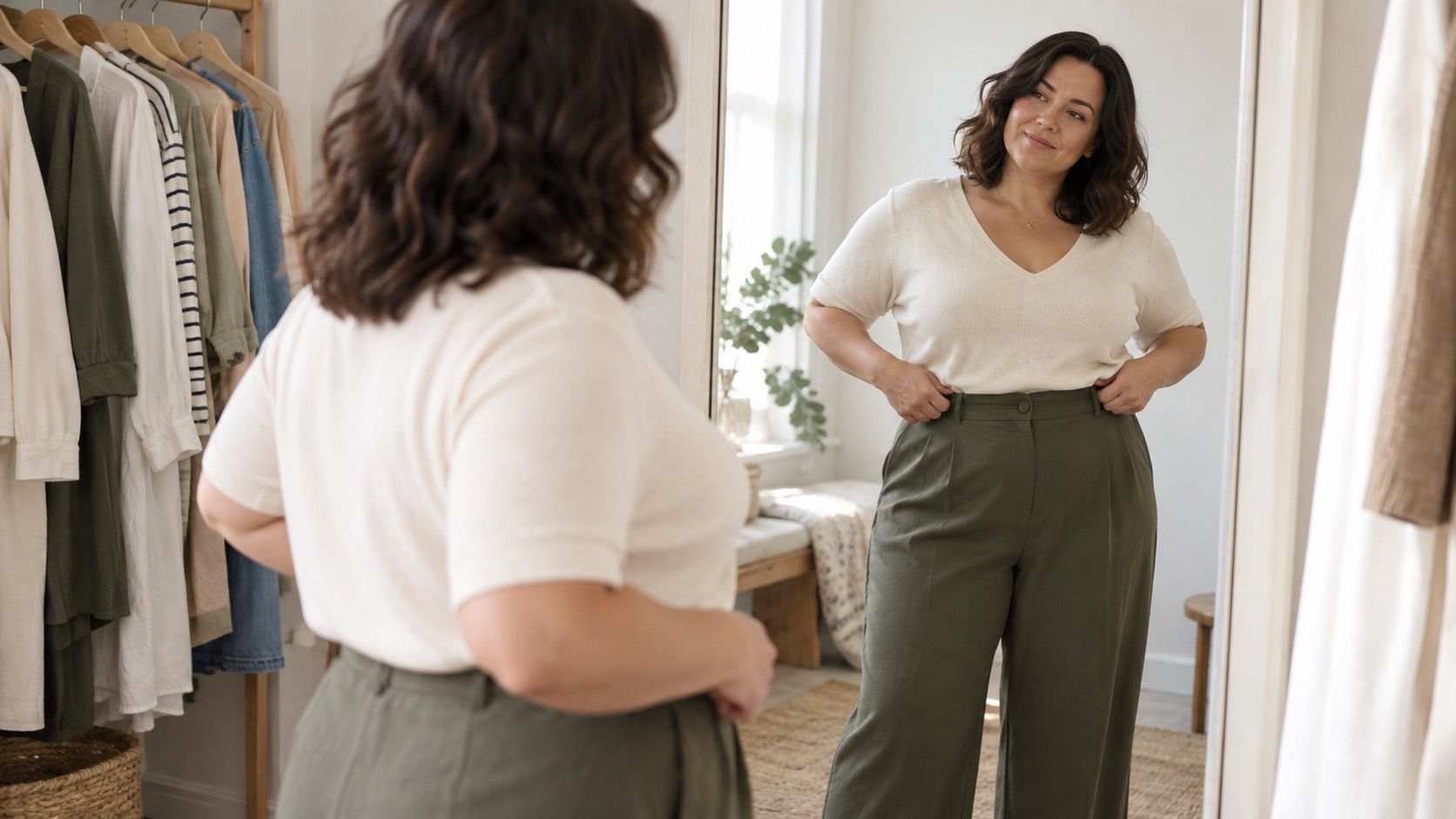
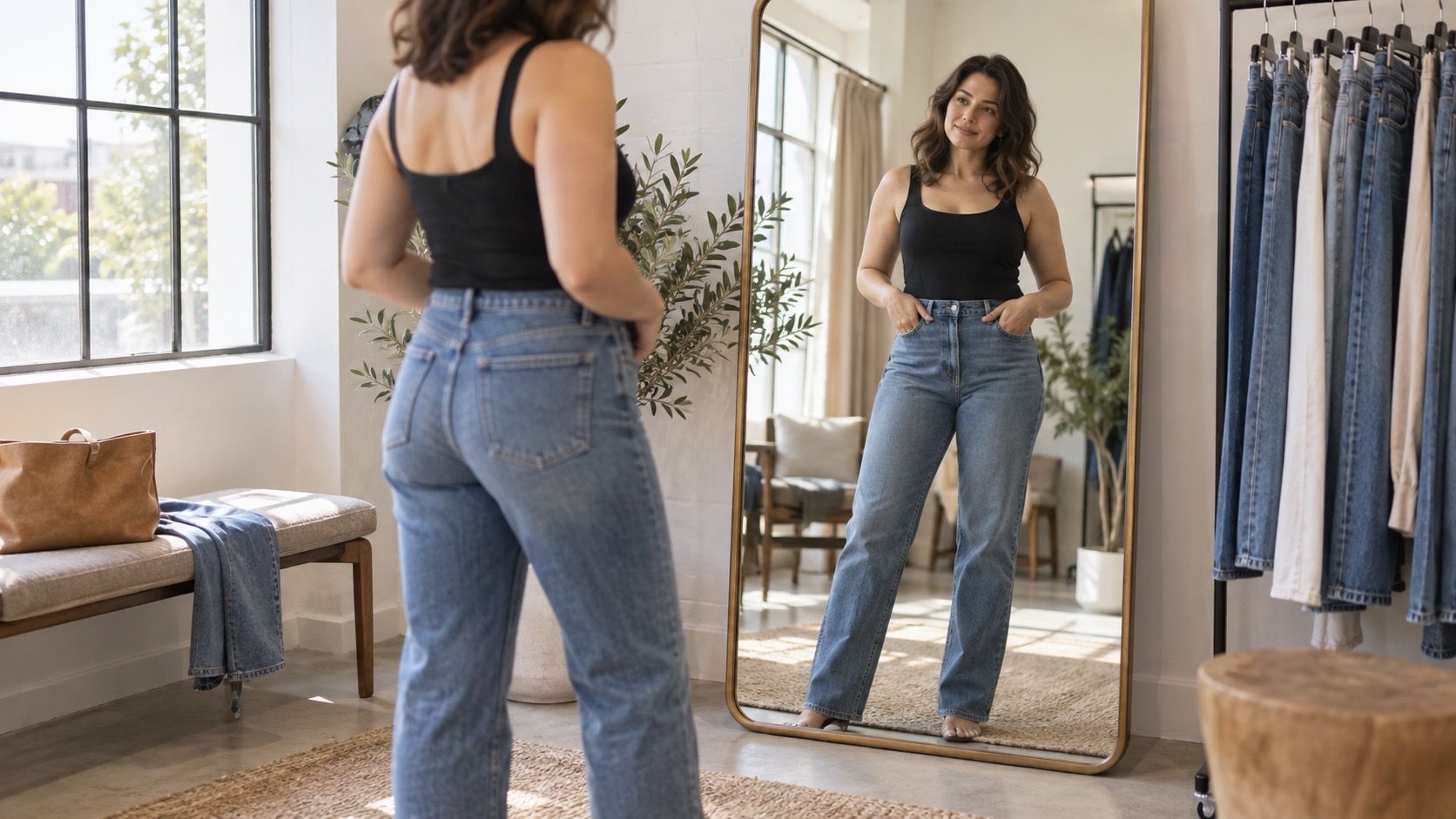
Wide-leg trousers are often comfortable on a triangle body shape because the fabric does not cling at the thigh, but the rise and drape still matter. A very thin, fluid fabric can pull at the hip and then collapse below it. A slightly heavier woven trouser may hang straighter. With jeans, look at pocket placement and the width of the leg opening. Back pockets set very far apart can change the visual line; more importantly, shallow pockets that turn inside out are simply annoying.
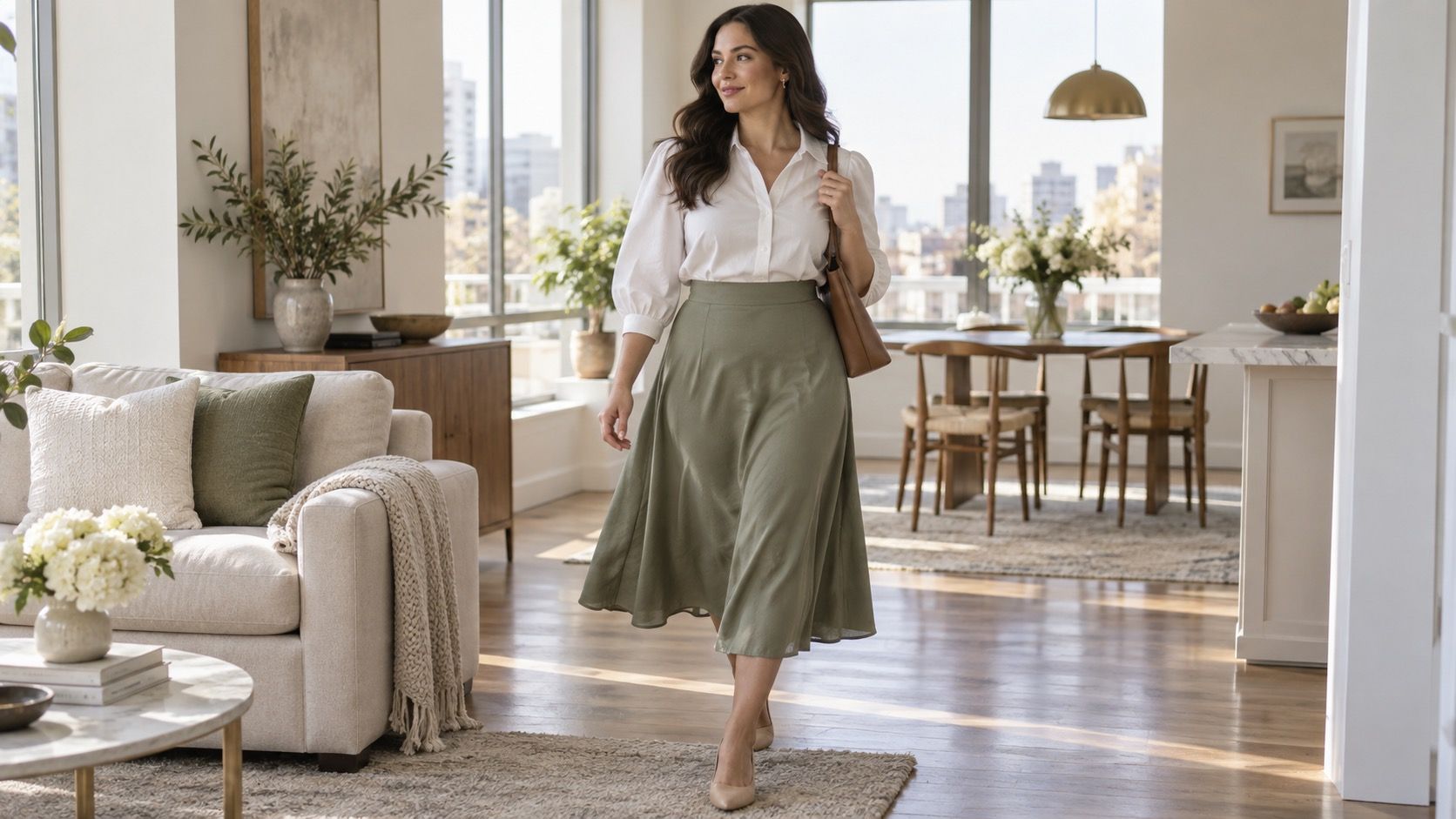
An A-line skirt is a dependable option because it has room for the hips without requiring a tight waistband. Midi lengths are worth trying with the shoes you actually own: a hem that is pleasant with boots may feel awkward with flat sneakers. Pencil skirts can work as well when the fabric has enough ease and the back vent opens properly. Test a flight of imaginary stairs in the fitting room. If you cannot take a normal step, leave it there.
Dresses and layers need a second look from the back
Dresses that skim over the hip and then define the waist tend to be easier than rigid shift dresses, but there are exceptions. A wrap dress can pull open at the chest or twist at the waist. A fit-and-flare dress may have a skirt that starts too high for your torso. A shirt dress can look simple until the buttons strain across the seat. None of these are forbidden; they just need a few minutes of real movement before you decide they are good.
For jackets and coats, start with the shoulders. If they fit there, a tailor can sometimes adjust the waist or side seams, while widening a narrow shoulder is more trouble. Short jackets that end around the waist can make a useful break between top and bottom, though a longer straight coat can look just as good when worn open. The common advice to stop all layers at the narrowest point is too rigid. On a cold day, a coat needs to close, sit, and let you carry a bag without turning into a styling exercise.
Build a wardrobe that does not require constant correction
The most practical pear shape wardrobe has reliable bottoms, a few tops that fit at the shoulder, and dresses you can wear for more than ten minutes. Start with one trouser cut that works, one jean, and one skirt if you like skirts. Then use colour, necklines, and layers to make outfits feel different. You do not need to create balance every time you leave the house. A simple fitted tank with relaxed trousers can be exactly right.
Ignore rules about hiding hips, avoiding skinny jeans, or always making the shoulders look wider. They flatten personal style into a before-and-after photo. The better test is whether the clothes stay in place through a workday, a meal, and a walk home. Keep notes on brands whose hip-to-waist cut suits you, and do not be surprised if you need different sizes on top and bottom. That is normal ready-to-wear shopping, not a problem that needs a clever name.