A rectangle body shape usually means the shoulders, waist, and hips sit in a fairly straight line. That description can be useful when a jacket seems boxy or a dress feels unfinished, but it is not a verdict on what you should wear. The better question is what kind of shape you want from one outfit on one ordinary day.
Start with the fit issue in front of you
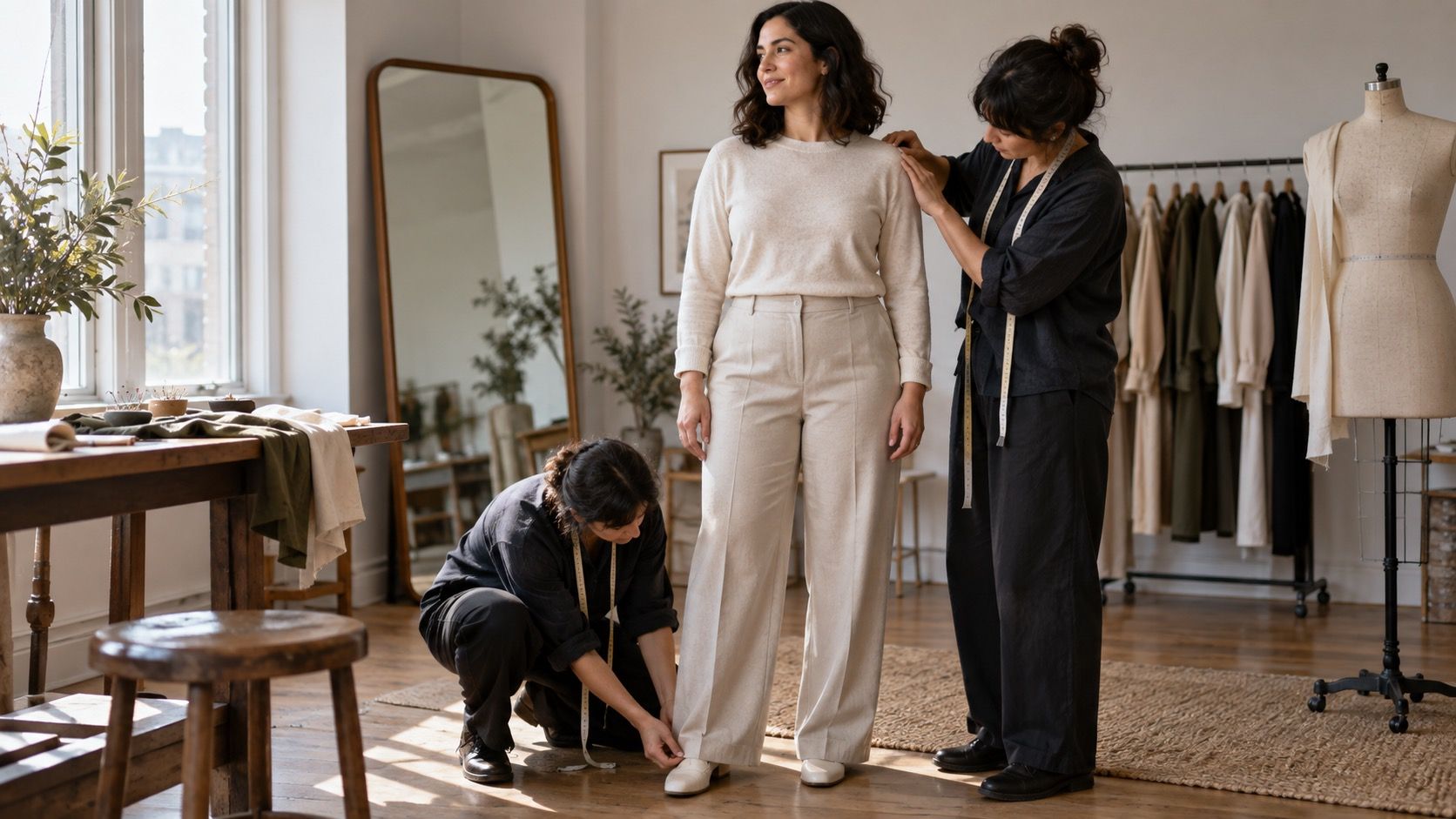
People with a straight body shape often get told to create curves, as if every outfit needs to perform that job. I would begin somewhere less dramatic: look at the garment that is bothering you. A shirt that pulls across the shoulders needs a different size or cut, not a belt. Jeans that gap at the back may need a higher rise, a curved waistband, or a small alteration. Those are fit problems, and styling tricks cannot repair them.
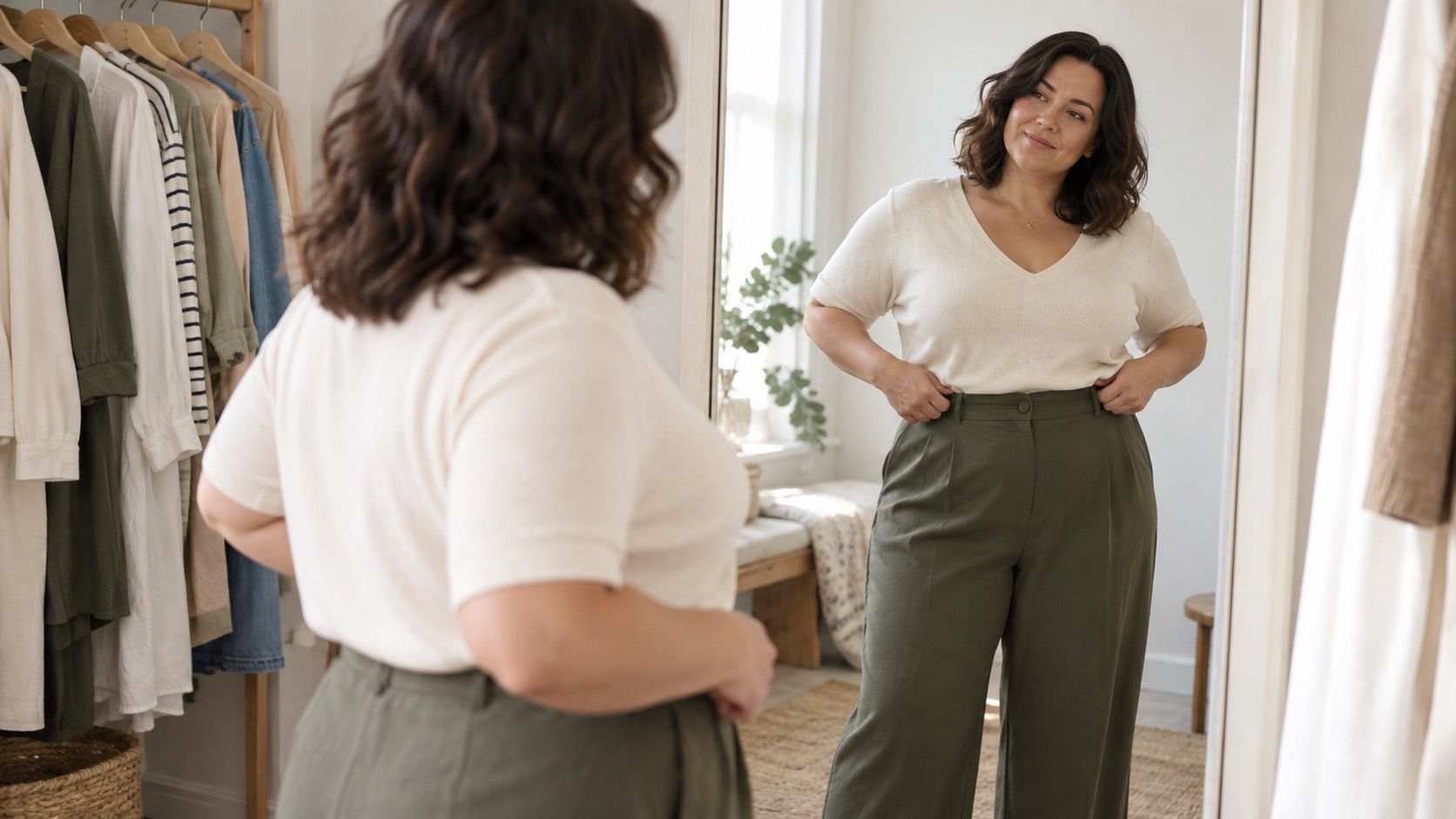
Once the basic fit is sound, a rectangle shape gives you plenty of room to choose your silhouette. A clean column of trousers and a knit can look intentional. So can a fitted waist with a fuller skirt. The common thread is proportion, not a rule about disguising a straight torso. Stand a few steps from the mirror, then sit down and raise your arms. If the outfit only works while you are perfectly still, it is probably working too hard.
Use seams and layers when you want a clearer waist
A waist seam, wrap overlap, or gentle tuck changes the eye line more quietly than a tight belt. Look for dresses with shaping through the midsection rather than a band placed at the narrowest possible point. A soft belt worn a little lower can be more convincing than a stiff one cinched hard at the ribs. The difference is comfort: you can breathe, eat lunch, and stop thinking about the belt every ten minutes.
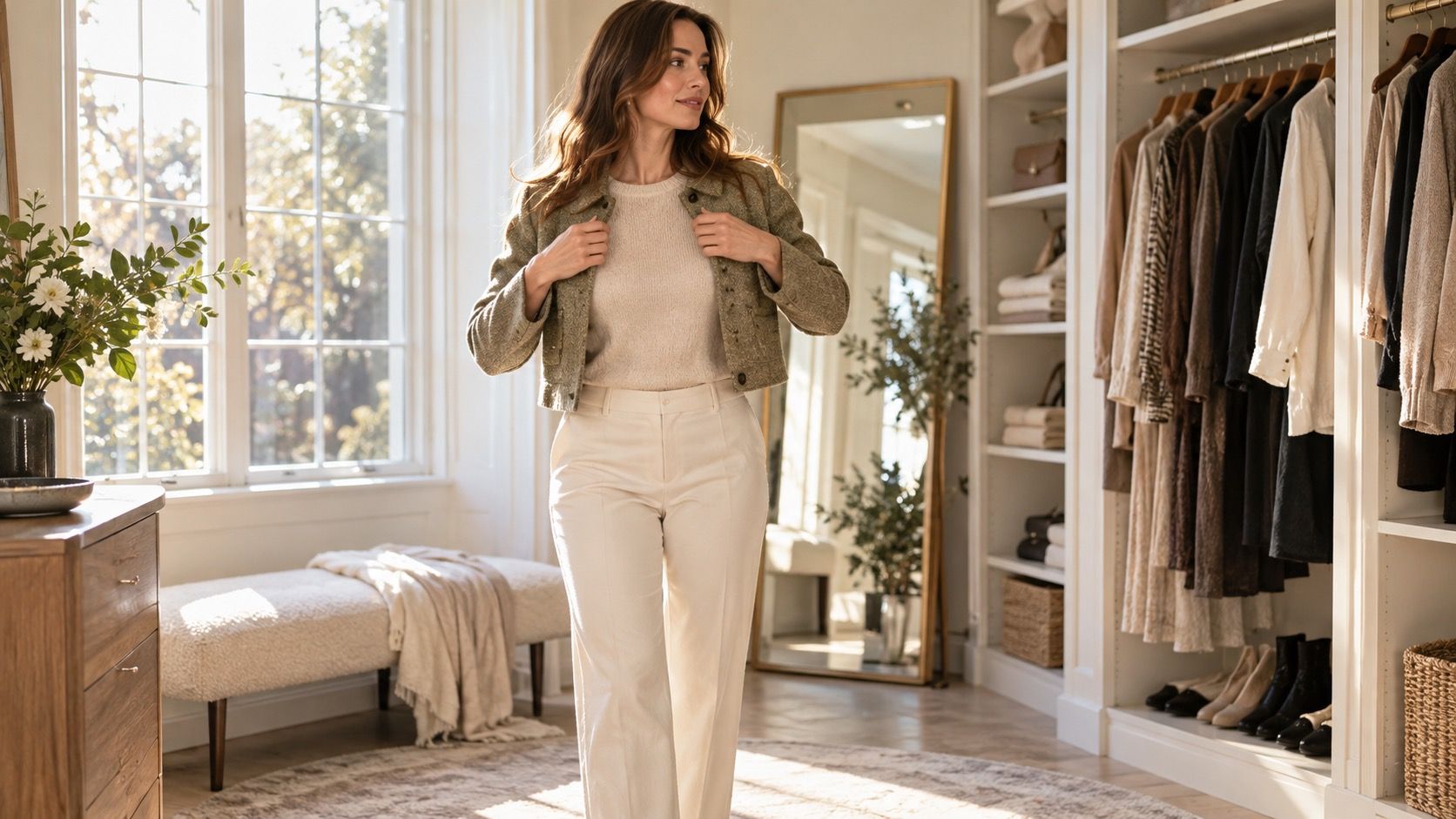
Layering also creates a proportion break. An open cardigan over a close-fitting tee leaves two vertical lines down the front; a cropped jacket ends near the waist and gives the outfit a natural pause. The jacket should not be so short that it cuts across the bust, though. Try it with the trousers or skirt you actually plan to wear. A layer that looks sharp over a dress can make mid-rise jeans feel oddly short-waisted.
| Piece | What to check | Useful effect |
|---|---|---|
| Cropped jacket | Hem lands near your natural waist, sleeves move easily | Creates a break between top and bottom |
| Wrap or seamed dress | Waist stays in place when seated | Adds definition without squeezing |
| Open cardigan | Front edges hang straight, not pulled apart | Frames the center of the outfit |
| High-rise trousers | Waistband sits comfortably and does not roll | Makes a tucked top feel deliberate |
Choose where volume belongs, rather than adding it everywhere
Volume is most useful when it has one clear destination. A puff sleeve with straight-leg denim can give the top half a little presence. A fitted knit with wide-leg trousers shifts the attention lower. Both can work for rectangle body shape outfits because they create contrast. Add oversized sleeves, a bulky scarf, a full skirt, and a large bag all at once, and the outfit tends to look like the clothes arrived before the person did.
Fabric matters here. Crisp poplin holds a sleeve away from the body, while fine jersey falls back into a straighter line. Pleats can add movement around the hips, but shallow pleats may flatten after a long day; test them by sitting on a chair in the fitting room. Pockets do not automatically add flattering volume either. Large patch pockets on thin fabric often wrinkle, while a sturdier trouser with a clean front can look more balanced.
Dresses, denim, and the awkward in-between days
Dresses are where generic advice becomes especially unhelpful. A shift dress can look spare and elegant on a straight body shape, particularly in a fabric with some structure. If it feels too plain, try a dress with a defined shoulder, a button placket, or a skirt that moves when you walk. You do not need every detail at once. A strong print plus a waist tie plus ruffles can make the garment feel busier than you feel.
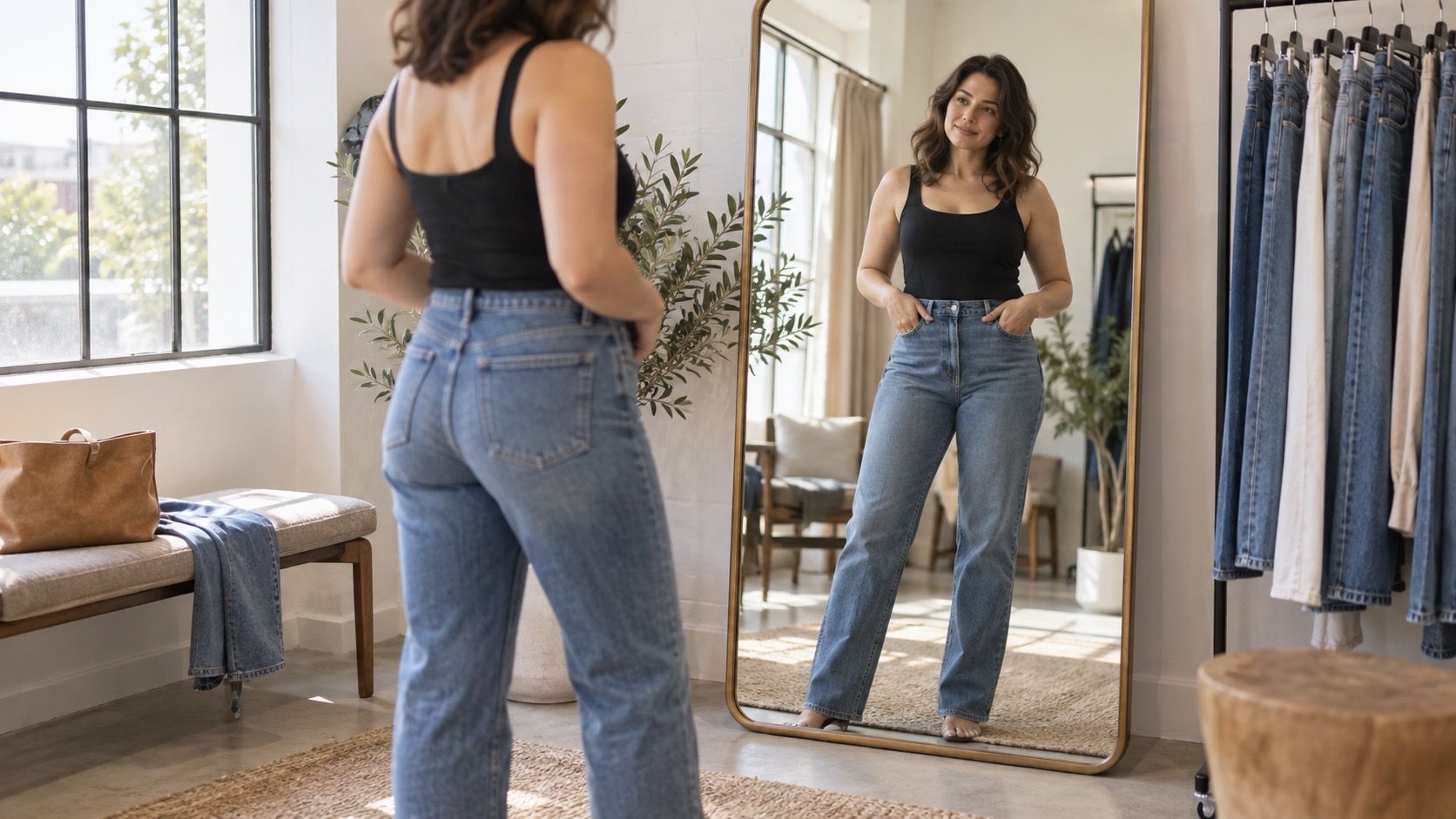
With denim, rise and leg shape usually matter more than pocket placement. High-rise straight jeans are an easy starting point because they create a clean line under a tucked shirt. A barrel leg or a wide leg can work well too, provided the hem is not dragging and the top has enough shape to hold its own. Low-rise jeans are not forbidden, but they remove the visual waist break; pair them with a short knit or a fitted tank if that is what you want.
For a workday, a blazer with light waist shaping and trousers in a similar color can look calm rather than corporate. Check the shoulder seam first. If it extends past your shoulder, the blazer may read oversized in a way that swallows the rest of your frame. A small amount of structure is usually enough. Very padded shoulders and a pinched waist together can feel more like costume than clothes.
Color and contrast can do some of the same work as cut. A darker trouser with a lighter, fitted top separates the outfit at the waist even without a belt. A matching set keeps the line long. Neither option is more flattering in the abstract; they simply give different results. Try them with the same shoes before deciding what feels most like you.
Keep the parts of your natural line that you like
The straightness of a rectangle silhouette is not a flaw waiting for correction. Some people love the look of a long, uninterrupted column; others prefer a waist definition on days when they want more contrast. Personal style can change with the occasion, the weather, and your tolerance for restrictive clothing. A fitted dress may feel right for dinner and annoying by noon on a train.
Try one adjustment at a time: tuck the front of a shirt, add a cropped layer, switch a straight jean for a wider leg, or choose a dress with a seam at the waist. Take a quick photo in normal light. That is often more reliable than a fitting-room mirror, which has a talent for making every small doubt feel urgent. The goal is not to make your body look like another category. It is to make the clothes look like they belong to you.