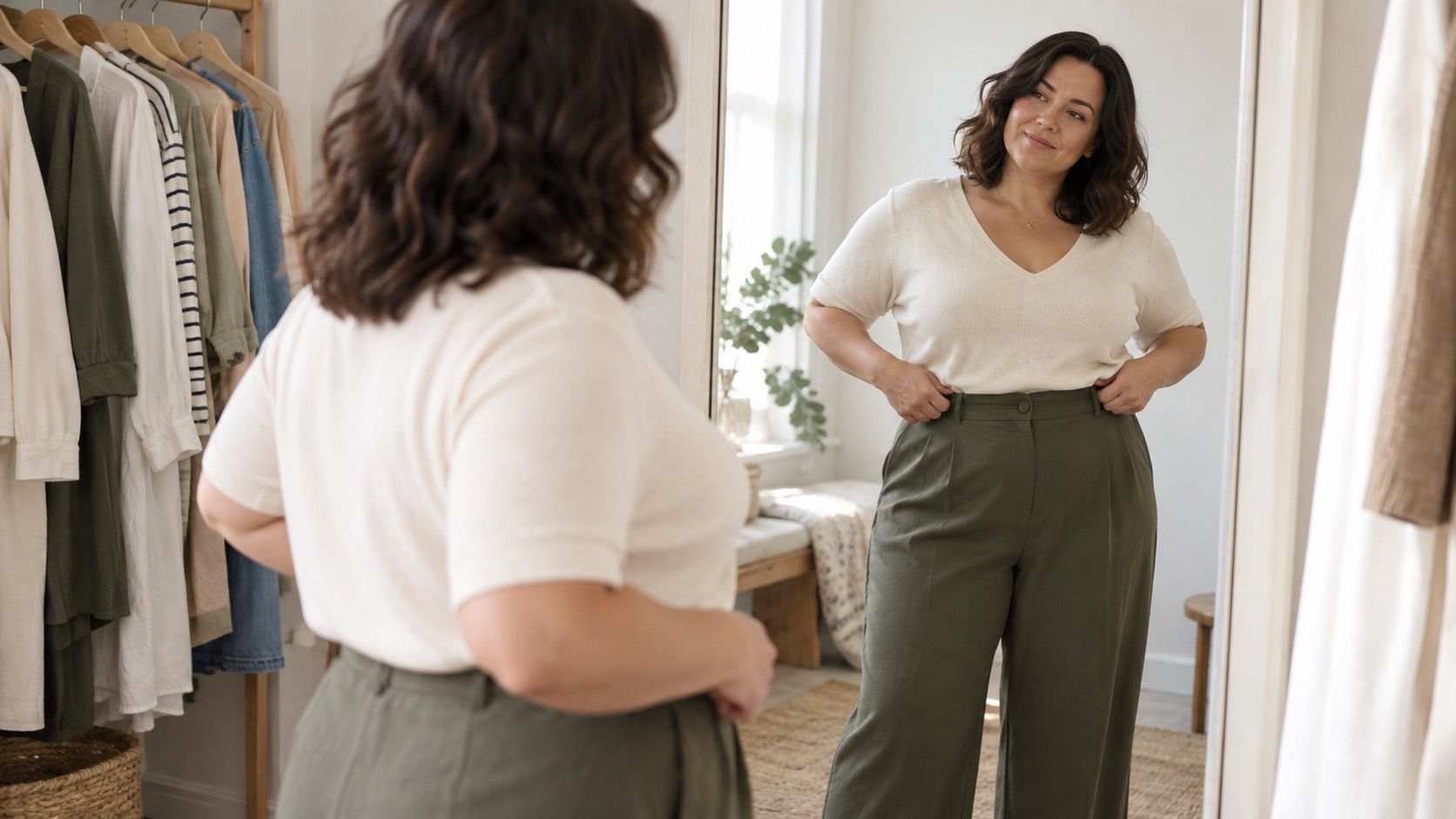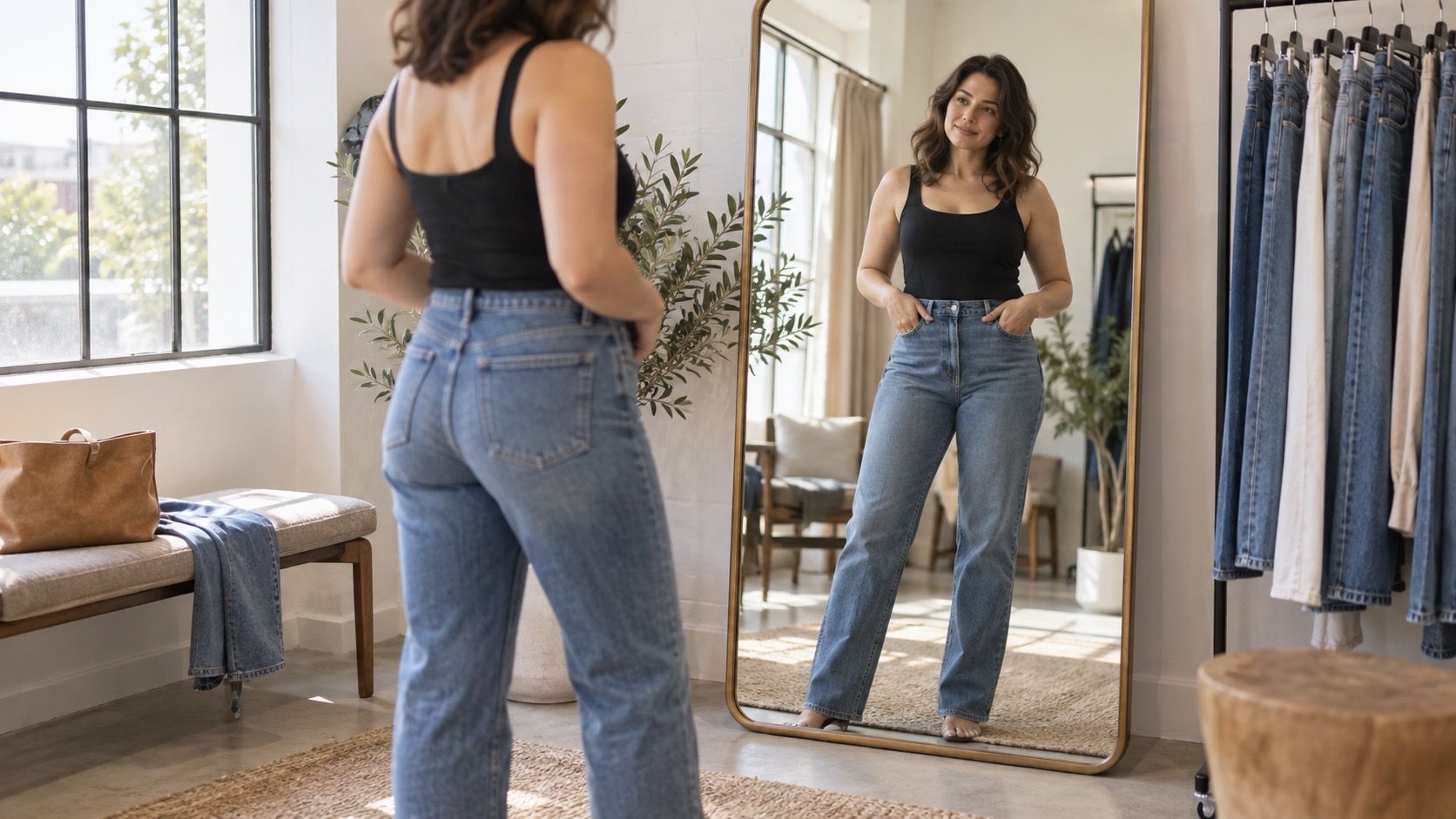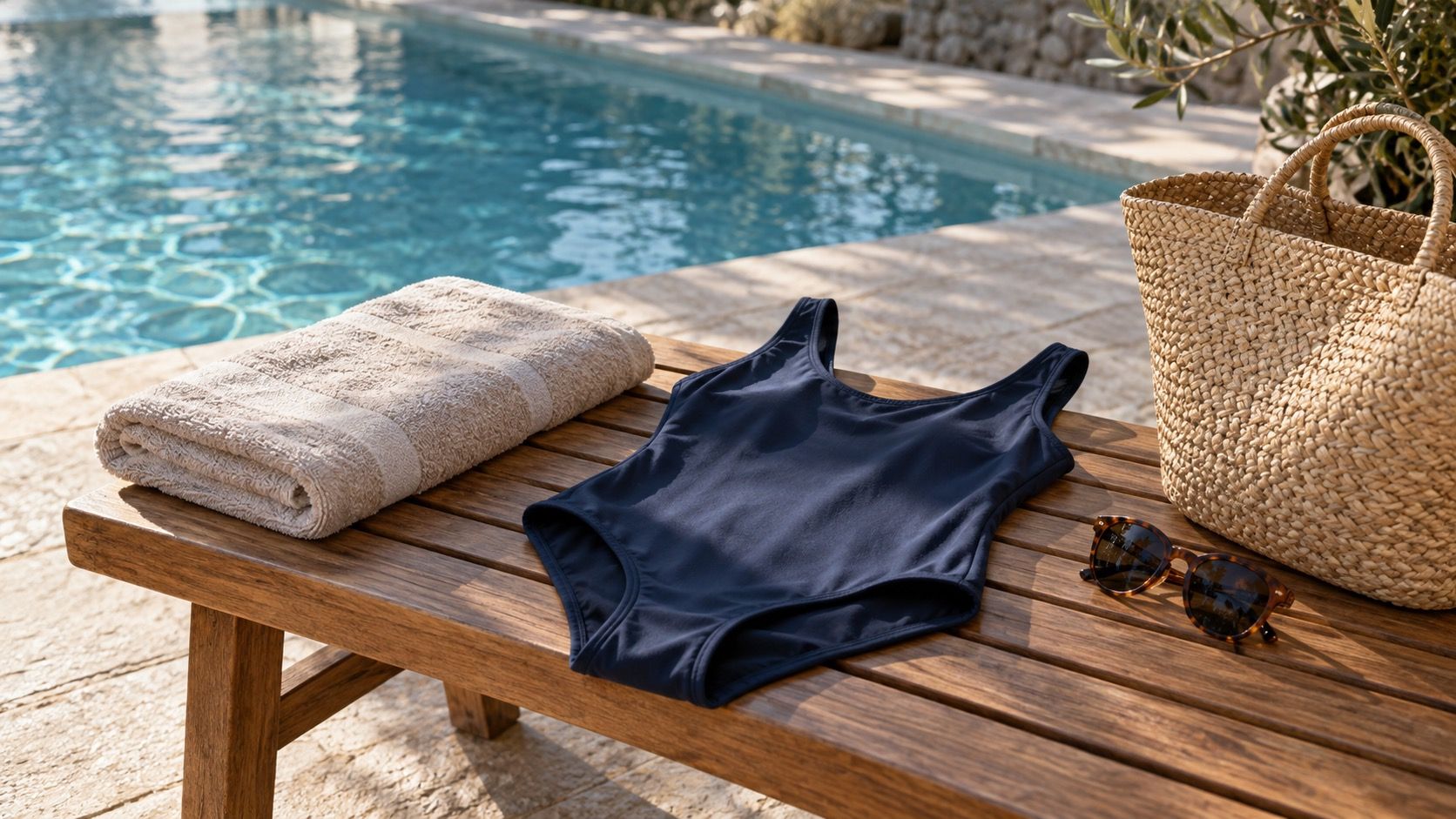
Swimwear for body shape gets discussed as if one label can settle the question. It cannot. A swimsuit has to stay in place in water, cope with sunscreen and heat, and let you sit on a rough pool edge without making you regret your morning. Those practical tests matter more than a list of supposedly flattering necklines.
Fit comes before flattering advice
Start with the unromantic checks. The fabric should lie close to the body without creating painful grooves at the shoulders, hips, or ribs. In a bikini bottom, make sure the waistband is not rolling as you walk. In a one-piece, look for a smooth line across the front and back rather than fabric that pulls into narrow horizontal marks.
Try the size above and below your usual one. Swimwear sizing is inconsistent, and many people keep choosing the smaller size because a changing room mirror makes compression look neat. Water changes the equation. A suit that feels barely possible when dry often becomes uncomfortable after it has been wet, sandy, and worn for several hours.
The best swimsuit for body type is therefore a misleading promise. You may prefer a sporty high neck for swimming laps and a soft square-neck one-piece for reading by a hotel pool. Both can suit the same body. The job is to match the suit to the day, not to find a single permanent answer.
Check torso length before judging a one-piece
A one-piece that cuts into the shoulders or creeps upward at the leg opening may simply be too short in the torso. Pulling the straps looser rarely solves this for long. Look for long-torso sizing, adjustable straps, a tie-back, or a style with more vertical give through the center panel. These details are more useful than trying to force a different body category onto yourself.
Raise both arms, twist at the waist, then sit down. If the suit shifts sharply at the bust or pulls at the crotch, leave it behind. Standing still can hide a lot. I have seen a perfectly sensible-looking one-piece become a negotiation after the first reach for a beach bag.
Shorter torsos can face the opposite issue: excess fabric at the waist or a low back that gapes. A higher leg opening, a belt detail, or a firmer fabric may give the suit enough structure. But do not buy a suit that needs constant adjustment just because the front looks polished for ten seconds.
| Fit concern | Useful detail to try | Quick test |
|---|---|---|
| Shoulder digging in | Long-torso cut, adjustable straps, tie-back | Raise both arms and sit down |
| Loose fabric at the waist | Firmer lining, smaller torso length, shaped seams | Twist gently and check for gaping |
| Bottom riding up | Wider side seam or more coverage | Walk, squat, and climb a step |
| Needing more bust hold | Underband, cups, or adjustable straps | Bend forward and move your arms |
Find support that still lets you breathe
Bust support is not limited to underwire. A firm underband, sewn-in cups, double lining, wider straps, or a well-cut halter can all help, depending on what feels comfortable to you. The test is movement. Bend forward, reach up, and turn sideways. If you immediately need to tug the neckline into place, the suit will ask for the same attention all afternoon.
Underwire can feel secure for lounging, but it may be less pleasant if you swim, paddleboard, or lie face down on a towel. A high-neck top with a strong shelf bra can be easier for an active beach day. A triangle top with sliding cups gives flexibility but may need more adjustment. None of these is universally better; they solve different problems.
Straps tell a story quickly. Narrow straps can be comfortable if the band does most of the work. If the straps are carrying everything, they will dig in. Adjust them to the point where the bust feels held, then take your hands off the suit. That last part is important. A swim top should not require a permanent grip.
Choose coverage and leg line for your own plans
Coverage is often framed as something you should choose to correct a shape. It is more sensible to choose it according to comfort, activity, and how much adjusting you are willing to tolerate. A bottom with fuller coverage can be excellent for swimming and walking along a windy coast. A higher-cut leg can feel lighter in hot weather. Both can look good on a wide range of hips.
Leg openings change the line of a suit, but they also affect comfort. A high-cut opening may lengthen the visible leg, yet a cut that is too narrow at the crotch can rub after a long day. Check the lining and seam placement rather than relying on the front photo. You will notice a bad seam long before anyone notices a clever optical effect.
Mix-and-match separates are useful when your top and bottom need different sizes or levels of coverage. A textured high-waist bottom may work with a simple supportive top; a patterned top can sit well with a plain swim bottom. Keep the color balance in mind, then ignore the old idea that your bottom half must always be made less visible.
Read the fabric label and test recovery
A suit can feel soft and still fail quickly. Look for a fabric with enough elastane to stretch and recover, plus lining where you want opacity and support. Cheaper suits sometimes feel fine in the fitting room but turn loose after a few swims, especially around the neckline and leg openings. Chlorine, salt, sunscreen, and heat are hard on elastic fibers.
Pinch a small section of the fabric and let it go. It should return smoothly rather than stay stretched or ripple. Check pale colors under the fitting-room light, especially in a one-piece. A suit that looks opaque when dry may become more revealing in water. If you can, hold the fabric away from the body and look through the lining.
Care affects fit too. Rinse swimwear after swimming, press it in a towel instead of wringing it, and dry it out of direct heat. This is not glamorous advice, but it gives a good suit a longer life. Replacing a stretched-out top halfway through a holiday is a bad kind of souvenir.
Move before the tags come off
Do a small routine before deciding: sit, squat, reach for something overhead, bend forward, and walk a few steps. If you are buying for a particular trip, imagine the actual setting. A rooftop pool means sitting and being photographed. A surf lesson means straps, coverage, and security. A quiet spa weekend may call for something entirely different.
Look at the suit in daylight if possible. Shop lighting can flatter every color and conceal thin fabric. Take a quick photo from the side and back, then put your phone away for a minute and notice how you feel. If you are already planning cover-ups to avoid wearing it, it is not the right one.
A bathing suit fit guide should give you permission to test, compare, and walk away from a bad cut. Choose the suit that supports the parts you need supported, stays comfortable in motion, and lets you spend the day swimming or resting rather than conducting fabric repairs in public.